Venezuelan oil exports progressing slowly under supply deal with U.S.
Venezuelan oil exports under a flagship $2 billion supply deal with the U.S. reached about 7.8 million barrels on Wednesday, vessel-tracking data and ...
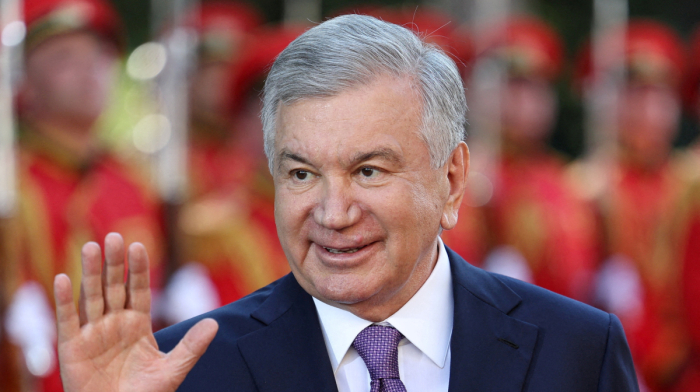
Uzbekistan has begun preparations to launch its first artificial satellite and train its first astronaut, President Shavkat Mirziyoyev announced, describing the move as a major milestone in the country’s scientific and technological development.
Speaking during his annual address to parliament, Mirziyoyev said the initiative marked the first time independent Uzbekistan had embarked on a space programme.
“Today I would like to announce another important piece of news,” he said.
“For the first time in the history of independent Uzbekistan, we have begun work on launching an artificial satellite and preparing the first Uzbek astronaut. This will provide a powerful impetus for the country’s scientific and technological development and raise national progress to a new level.”
The announcement comes as part of a broader push to strengthen Uzbekistan’s digital and innovation capacity.
The president said four data centres would open next year in Tashkent, Bukhara, Fergana and the Tashkent region.
He also announced plans to establish two supercomputers and artificial intelligence laboratories at 15 universities, supporting more than 100 AI projects across sectors including medicine, transport, agriculture, geology, finance and public security.
A new Digital Technologies Centre will be created to support young talent, enabling students and researchers to develop projects in areas such as quantum technologies, drones and robotics.
Mukhiddin Ibragimov, deputy director of Uzcosmos, said the president’s remarks signalled a long-term shift in national ambition.
“The statement about launching our first satellite and sending the first Uzbek astronaut to space is a turning point,” he said.
“It shapes our ambitions for the next five to ten years and reflects a growing belief in the role of space in technological development. If a country wants to develop, it must rely on technology, and space can be a powerful source of inspiration for young people.”
Uzbekistan’s move into space reflects a wider strategy to use science and technology as drivers of economic growth, positioning the country as an emerging participant in global space and innovation efforts.

Several locally-developed instant messaging applications were reportedly restored in Iran on Tuesday (20 January), partially easing communications restrictions imposed after recent unrest.
There was a common theme in speeches at the World Economic Forum on Tuesday (20 January). China’s Vice-Premier, He Lifeng, warned that "tariffs and trade wars have no winners," while France's Emmanuel Macron, labelled "endless accumulation of new tariffs" from the U.S. "fundamentally unacceptable."
Dozens of beaches along Australia's east coast, including in Sydney, closed on Tuesday (20 January) after four shark attacks in two days, as heavy rains left waters murky and more likely to attract the animals.
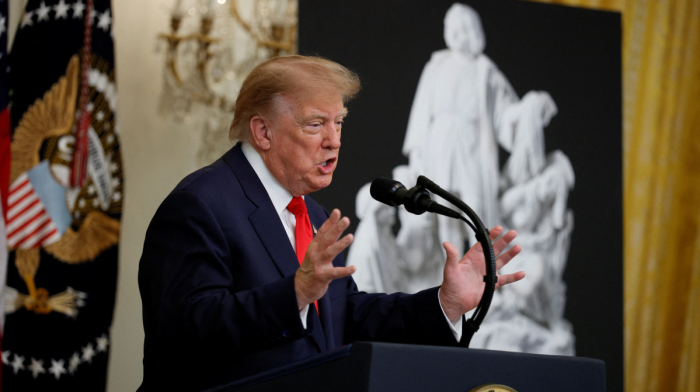
U.S. President Donald Trump said Washington would “work something out” with NATO allies on Tuesday, defending his approach to the alliance while renewing his push for U.S. control of Greenland amid rising tensions with Europe.
At the World Economic Forum’s “Defining Eurasia’s Economic Identity” panel on 20 January 2026, leaders from Azerbaijan, Armenia and Serbia discussed how the South Caucasus and wider Eurasian region can strengthen economic ties, peace and geopolitical stability amid shifting global influence.
Azerbaijan’s State Oil Fund, State Oil Fund of Azerbaijan (SOFAZ), has signed a long-term strategic cooperation agreement worth up to $1.4 billion with Brookfield Asset Management on the sidelines of the World Economic Forum in Davos, officials said.
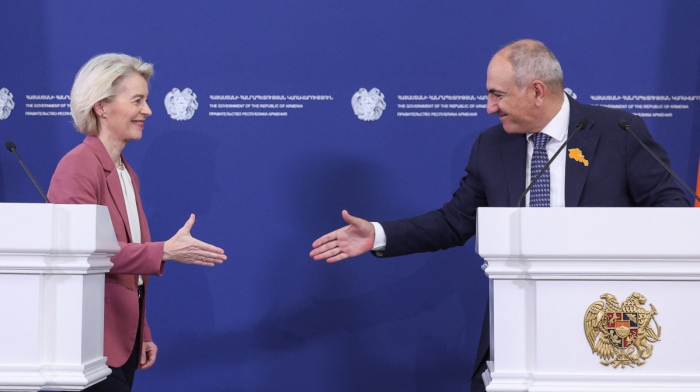
Armenia and Azerbaijan will interconnect their energy systems, enabling mutual electricity imports and exports as part of a wider regional transit initiative, Armenian Prime Minister Nikol Pashinyan said.
Mine-clearing machines produced in Azerbaijan by ImProtex are being used to support demining operations across the country, as efforts continue to address landmine contamination left by past conflicts.
Qarabağ claimed a late 3–2 victory over Eintracht Frankfurt in the UEFA Champions League on Wednesday night, scoring deep into stoppage time to secure a dramatic home win in Baku.
As part of the Frontline episodes, this AnewZ documentary investigates Libya fifteen years after the revolution and the fall of Gaddafi — a state caught between militias, foreign powers, energy interests and diplomatic manoeuvring.
You can download the AnewZ application from Play Store and the App Store.
What is your opinion on this topic?
Leave the first comment