The AnewZ Opinion section provides a platform for independent voices to share expert perspectives on global and regional issues. The views expressed are solely those of the authors and do not represent the official position of AnewZ
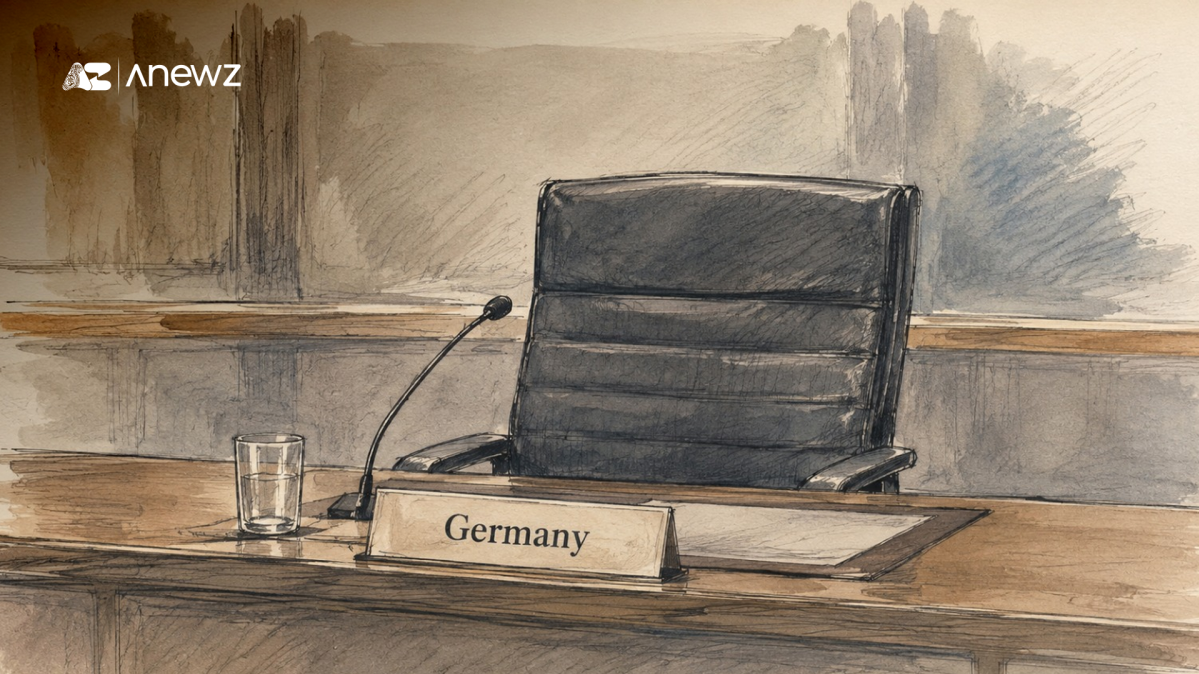
Germany's failure to secure a United Nations Security Council seat has exposed growing questions about its diplomatic influence and moral authority, highlighting the challenges facing Chancellor Friedrich Merz as he seeks to redefine Berlin's role in an increasingly fragmented world.
When Friedrich Merz entered the Chancellery in 2025, many observers expected a more assertive Germany. After years of economic stagnation, energy shocks, geopolitical uncertainty and domestic political fragmentation, Merz promised renewed leadership at home and abroad. His message was clear: Germany should once again act as Europe's economic engine and political anchor.
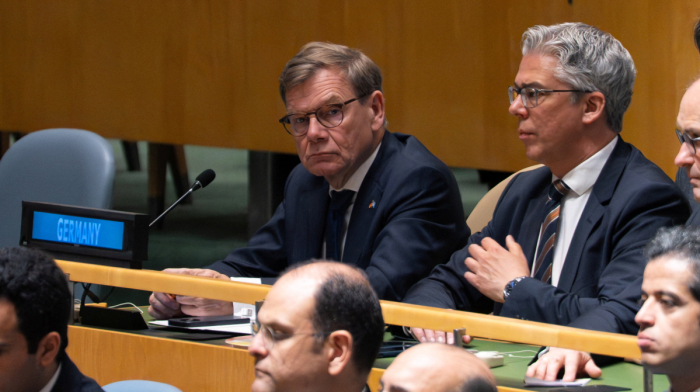
Only months into his tenure, however, Berlin suffered an unexpected diplomatic setback. Germany failed to secure a non-permanent seat on the United Nations Security Council for 2027–28, losing to Portugal and Austria despite years of campaigning and despite being one of the UN's largest financial contributors.
The result triggered debate inside Germany and beyond. Was this merely a procedural defeat, the result of a difficult campaign, or did it reveal deeper questions about Germany's global standing and moral positioning in an age increasingly shaped by debates over international conscience?
The answer lies somewhere between these explanations. Germany's defeat was not solely about Israel, nor solely about Ukraine, nor merely about campaign mistakes. It reflected a wider tension between Germany's self-image as a normative power and the increasingly fragmented geopolitical realities of the 21st century.
More than Israel: The limits of Germany's diplomatic narrative
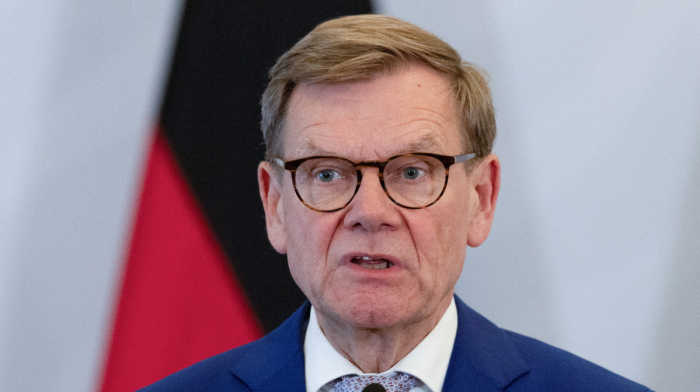
Many commentators immediately linked Germany's UN defeat to its firm support for Israel. Foreign Minister Johann Wadephul acknowledged that Germany's close ties with Israel and its leading role on Ukraine may have cost Berlin support among some UN member states.
There is truth in this argument. Across large parts of the Global South, Germany's position on Gaza has generated criticism. Berlin's willingness to defend Israel diplomatically while presenting itself as a champion of the rules-based international order has prompted accusations of double standards. Some governments may have viewed the Security Council vote as an opportunity to register their dissatisfaction.
Yet attributing Germany's defeat solely to Israel would be too simplistic. Austria remains one of Israel's strongest supporters within Europe and nevertheless won a Security Council seat. Portugal has also not positioned itself as a leading critic of Israeli policy. The difference between these countries and Germany therefore cannot be explained through Middle East politics alone.
A more convincing explanation lies in Germany's broader diplomatic approach. Many states increasingly perceive Berlin as a power that speaks in universal terms while applying those principles selectively. Support for Ukraine, support for Israel and strong Atlanticist commitments are understandable from Germany's perspective. However, governments in Africa, Asia, Latin America and the Middle East increasingly evaluate these policies through their own strategic interests, not only through Europe's moral and security dilemmas.
Germany may therefore be encountering a world that is less receptive to moral lectures and more interested in diplomacy that combines ethical consistency with practical engagement.
History's burden in a changing international system
Another undeniable challenge is Germany's continuing relationship with history. Since 1945, German foreign policy has been shaped by the legacy of Nazism, the Holocaust and the Second World War. Support for Israel became not merely a policy preference but a foundational element of post-war German identity. Commitment to multilateral institutions and international cooperation also became central to Germany's global role.
For decades, this approach brought considerable benefits. Germany transformed itself from the source of Europe's greatest catastrophe into one of the world's most respected democratic states. Its economic success reinforced this transformation, enabling Berlin to exercise influence through diplomacy, trade, development assistance and institutional engagement rather than military power.
But the international environment is changing.
Many younger states in the Global South, and younger generations around the world, do not share the same historical memories that continue to shape German policy. While Germany understandably remains conscious of its historical responsibilities, many governments are more focused on present-day conflicts, economic development, debt relief, energy security and great-power competition.
The Security Council defeat may therefore represent more than a temporary embarrassment. It may indicate that Germany's traditional foreign policy narrative no longer resonates as strongly as it once did.
Merz, Trump and the G7 challenge
The timing of Germany's diplomatic setback is particularly significant because it coincides with one of the most challenging G7 environments in recent memory.
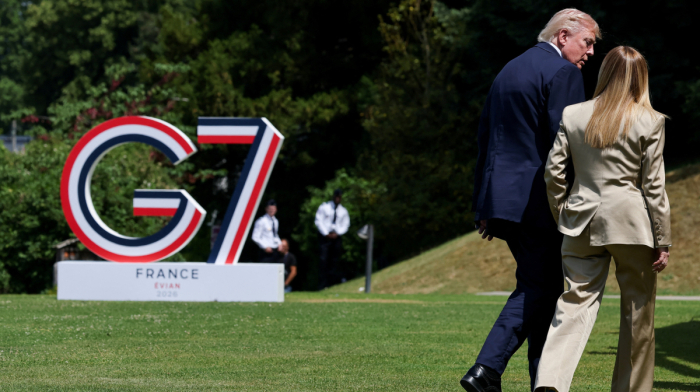
The 15–17 June G7 summit in Évian-les-Bains, France, is taking place amid simultaneous crises involving Ukraine, the Middle East, Iran, energy security, China and artificial intelligence. Unlike previous summits, leaders are expected to rely more on targeted statements on specific issues, reflecting increasingly divergent priorities among members.
For Merz, the summit represents both a challenge and an opportunity.
The challenge is obvious. Germany must navigate a relationship with President Donald Trump, whose return to the White House has reopened questions about NATO burden-sharing, trade policy and Western unity. European leaders increasingly recognise that Washington's priorities may differ substantially from their own, particularly regarding Ukraine and relations with Russia.
At the same time, Merz has an opportunity to redefine Germany's leadership role within Europe. Unlike his predecessor, Olaf Scholz, he has signalled a desire for stronger transatlantic ties while also advocating a more robust European position on defence and economic competitiveness.
The question is whether Germany can successfully balance these objectives. A Europe that remains dependent on American security guarantees but increasingly uncertain about American strategic commitments requires careful leadership. France and Italy continue to push for greater European autonomy, while Spain has advocated a more independent and humanitarian European posture. Many Central and Eastern European states, by contrast, still prioritise the American security umbrella. Germany sits at the centre of these debates.
Merz's political instincts suggest he prefers close cooperation with Washington. Yet the realities of Trump's second presidency may force Berlin to invest more heavily in European capabilities regardless of its preferences.
Germany's search for a new role
The emerging international system demands strategic flexibility, broader engagement with the Global South and a more nuanced understanding of how power operates beyond Europe. Even though Germany remains an industrial giant and a leading economic power, economic weight does not automatically translate into diplomatic influence.
The UN vote demonstrated that even one of the world's largest contributors can struggle to convert prestige into support. Whether Merz can adapt Germany to this reality may become one of the defining questions of his chancellorship.
This perception problem extends beyond official diplomacy. Merz's public interventions, and the wider domestic debate over Germany's Middle East policy, have sometimes reinforced the impression of a political leadership impatient with criticism. Whether fair or not, such moments complicate Berlin's efforts to present itself as a neutral defender of international law. In an age when diplomatic reputations are shaped not only by official statements but also by viral images, televised confrontations and digital scrutiny, domestic politics can quickly become foreign policy.
Germany's UN defeat was not a referendum solely on its support for Israel. Rather, it revealed growing international doubts about Germany's claim to moral leadership under Merz. The Global South, as well as younger generations, increasingly evaluate major powers through ethical consistency, strategic behaviour and contemporary actions rather than historical narratives alone.
For Germany, the lesson is clear: moral authority cannot be inherited indefinitely. It must be renewed through consistency, humility and the ability to listen to a world that no longer accepts European leadership as automatic.














What is your opinion on this topic?
Leave the first comment