Hungary’s veteran nationalist leader Viktor Orbán has lost power to the centre-right Tisza party in Sunday’s national election after 16 years in office, marking a major political shift that has drawn reactions across Europe and the United States.
The end of Viktor Orbán’s rule is expected to have major implications not only for Hungary, but also for the European Union, Ukraine, and broader geopolitical dynamics.
Many European leaders are now hoping for a shift away from Hungary’s previously adversarial stance within the EU, which had included blocking key financial support packages, including a €90 billion ($105 billion) loan for war-torn Ukraine.
EU policy and Ukraine support expectations
EU officials and analysts suggest that a change in leadership could unlock stalled decisions on Ukraine funding and bring Hungary closer to the European mainstream.
Mujtaba Rahman, Managing Director at Eurasia Group, said Peter Magyar is likely to follow through on promises to tackle corruption and reduce political influence over state institutions.
He added that Hungary is expected to “cautiously move more into the European mainstream on most subjects,” including allowing progress on Ukraine financing.
EU funds and political realignment
Defeat for Orbán could also mean the eventual release of EU funds to Hungary suspended over reforms that Brussels said undermined democratic standards, something closely watched by financial markets.
European Commission President Ursula von der Leyen welcomed the election outcome, stating, “Hungary has chosen Europe. Europe has always chosen Hungary.”
Ukrainian President Volodymyr Zelenskyy congratulated Magyar and expressed readiness to work together to strengthen European security, saying, “It is important when a constructive approach is victorious.”
Analysts say Orbán’s departure could also weaken Moscow’s influence within the EU, as he had been one of President Vladimir Putin’s key allies in Europe.
Russia, the U.S., and broader geopolitical impact
Orbán’s loss is also seen as a setback for Russian interests and for right-wing political allies internationally, including figures in President Donald Trump’s political circle.
His campaign had received support from both the Kremlin and several far-right European leaders, as well as endorsements from U.S. political allies.
At the same time, concerns were raised during the campaign about alleged cooperation between Orbán’s government and Moscow, claims which he denied, insisting his policies were aimed at protecting Hungary’s sovereignty and traditional values.
In the United States, reactions were split. Some Democrats framed Orbán’s defeat as politically symbolic ahead of upcoming elections, while Republican Senator Roger Wicker described the result as a rejection of “the malign influence of Vladimir Putin.”
European leaders react to election result
European leaders broadly welcomed the outcome as a sign of democratic resilience.
German Chancellor Friedrich Merz expressed relief on Monday that the outcome of elections in Hungary were so clear, saying Peter Magyar's win over nationalist leader Viktor Orbán showed that democratic societies are still resilient to Russian propaganda.
"This (win) demonstrates that our democratic societies are evidently much more resilient against Russian propaganda and further external interference in such elections," said Merz at a press conference in Berlin.
Czech Prime Minister Andrej Babiš congratulated Magyar while noting Orbán’s long tenure, saying he “earned the trust of the majority of Hungarians” and expressing hope for continued cooperation.
Polish Prime Minister Donald Tusk described the result as evidence that Europe is not moving inevitably toward authoritarianism, saying, “First Warsaw, then Bucharest, Chisinau, now Budapest.”
Slovak Prime Minister Robert Fico also congratulated Magyar and pledged “intensive cooperation,” while acknowledging Orbán’s past role and stressing continued collaboration on energy and regional interests.
He confirmed Slovakia’s readiness to work closely with Hungary’s new leadership while maintaining strong bilateral ties.
The Saudi-led coalition in Yemen said late Monday that it intercepted and destroyed two ballistic missiles launched by the Houthi group toward Khamis Mushait in southwestern Saudi Arabia.
Yemen’s Houthis have claimed responsibility for the recent drone and missile strikes on Saudi Aramco facilities in Dhahran and Riyadh and at King Khalid International Airport in Saudi Arabia, vowing to carry out more attacks in the coming days.
Thousands of young Georgians leave the country each year in search of better economic opportunities, with many moving west.As questions grow over Georgia’s European path, AnewZ spoke to people who have emigrated about what it would take for them to return.
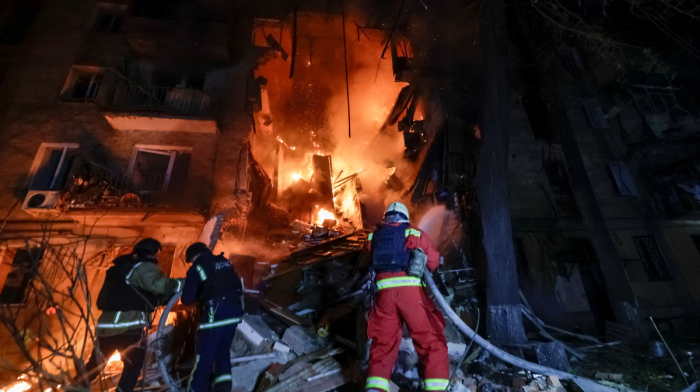
Ukrainian President Volodymyr Zelenskyy says Russia hit at least six energy targets in deadly strikes across Ukraine, showing Moscow is unwilling to accept the energy ceasefire announced by U.S. President Donald Trump.
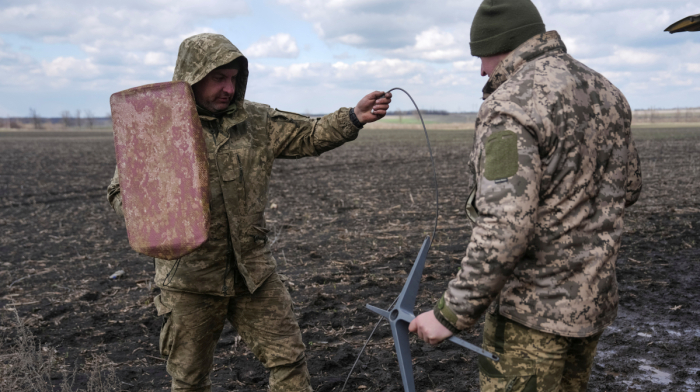
Ukraine's soldiers have had their access to Starlink satellite internet restricted. Kyiv's troops use the terminals, made by Elon Musk's SpaceX, to pilot drones. A source in Ukraine's Defence Ministry said the restrictions would make it harder for Kyiv's army to down Russian drones.
Ukraine's soldiers have had their access to Starlink satellite internet restricted. Kyiv's troops use the terminals, made by Elon Musk's SpaceX, to pilot drones. A source in Ukraine's Defence Ministry said the restrictions would make it harder for Kyiv's army to down Russian drones.
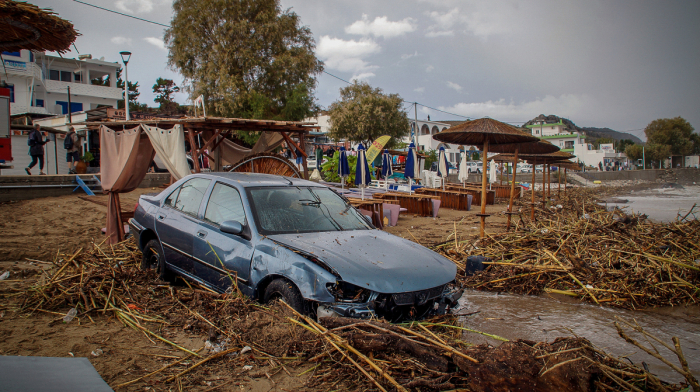
A 62-year-old man died on Wednesday after floodwaters swept his car into the sea on the Greek island of Rhodes, as torrential rain flooded roads, stranded vehicles and disrupted transport across the island.
A failure by the U.S. and Iran to reach an agreement on a UN-backed fertiliser shipping plan for the Strait of Hormuz within weeks could trigger a food security crisis in parts of Asia and Africa, a senior UN official has warned.
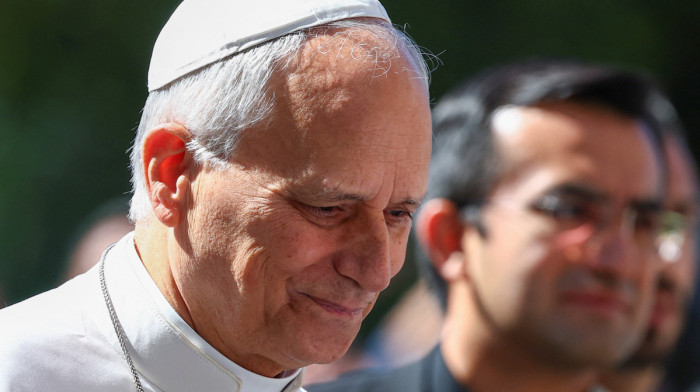
Pope Leo has been diagnosed with lung adenocarcinoma, the most common type of lung cancer, after surgeons removed the lower lobe of his right lung. The Vatican says the tumour was detected during a routine health check, but its stage and whether it has spread remain unknown.
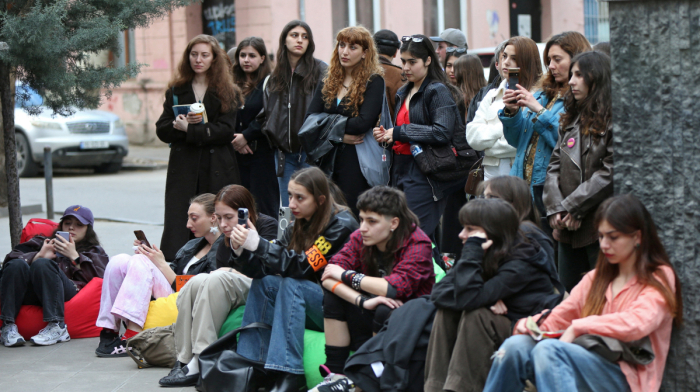
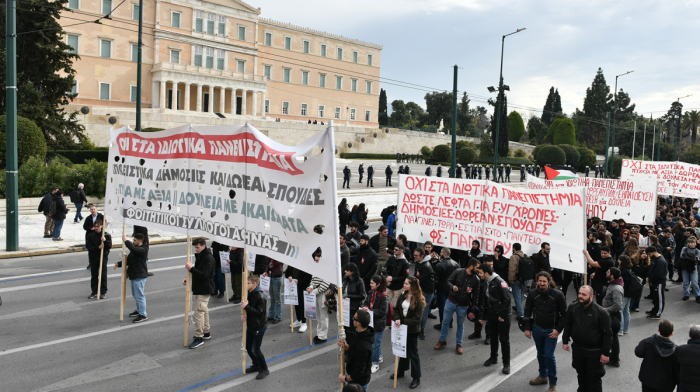
Greek students braved heavy rain to pitch tents outside parliament in Athens on Tuesday, demanding affordable housing and more education funding as rising living costs put university places beyond the reach of some students.
Download the AnewZ app
You can download the AnewZ application from Play Store and the App Store.











What is your opinion on this topic?
Leave the first comment