A mountain gorilla has given birth to twins in war‑torn eastern Democratic Republic of Congo (DRC), a national park said on Wednesday, calling the event “a major event” for the endangered subspecies.
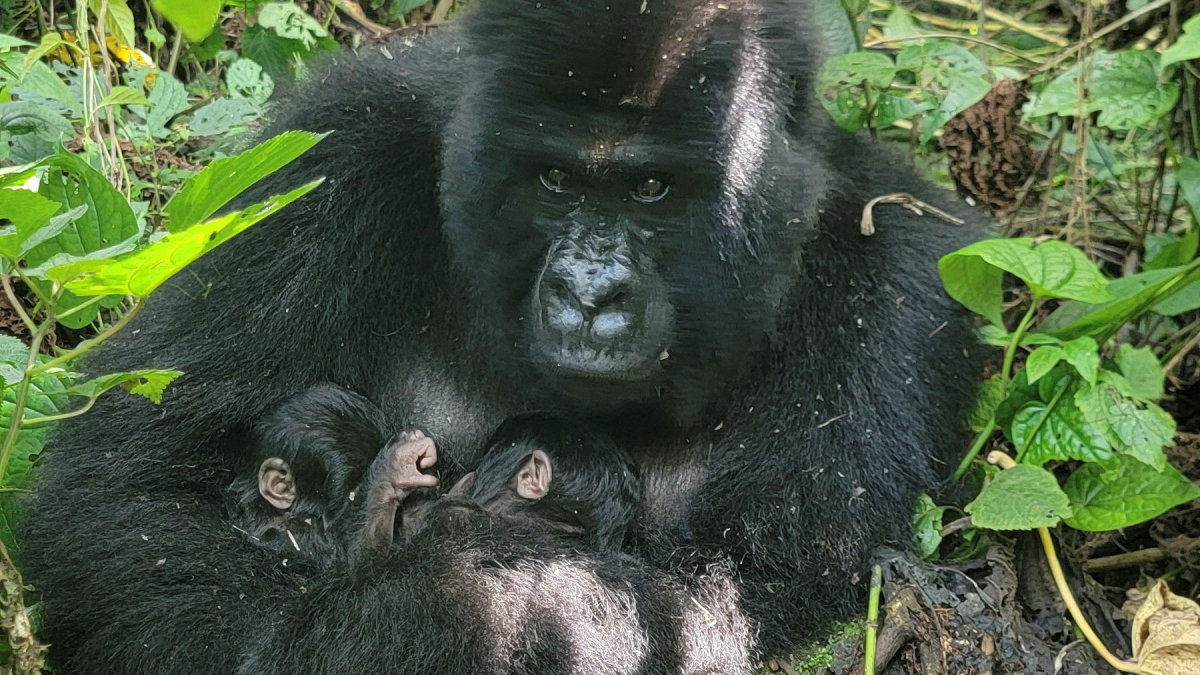
The twin males were born to a 22‑year-old female named Mafuko. The births were discovered on 3 January, and Virunga National Park said the infants “appeared to be in healthy condition at the time of the observation.”
The park warned that caring for twin gorillas can be especially challenging, “particularly during the early months when infants are entirely dependent on their mother for care and transport.” The newborns are being closely monitored to ensure their survival.
Pictures released by the park showed Mafuko holding both infants, sitting on the ground and partly obscured by branches. Mafuko was born into the Kabirizi family but joined the Bageni family six years after her mother was killed by “armed individuals” in 2007.
“The birth of these twins represents a major event for the dynamics of the Bageni family and for ongoing conservation efforts to support the continued growth of the endangered mountain gorilla population within Virunga National Park,” the statement said.
Mafuko has now had seven offspring, including a previous set of twins which died a week after birth in 2016. The Bageni family now numbers 59 members, making it the largest in the park, the statement added.
Conflict effect on wildlife
The Virunga National Park region in eastern DRC has long been affected by armed conflict and rebel activity, complicating conservation efforts and endangering both people and wildlife.
The area around the park has seen renewed fighting in recent years, particularly involving the March 23 Movement (M23), a Rwanda‑backed rebel group that has seized control of significant territory near the park, including key towns such as Rutshuru, Bunagana and Kibumba. However Rwanda deny backing the group.
M23’s advance into these areas, including parts of the provincial capital, Goma, has forced the suspension of tourism and limited ranger patrols in rebel‑held zones.
The rebel group's resurgence is rooted in decades of instability in eastern Congo, where multiple armed groups have operated since the First and Second Congo Wars in the 1990s and early 2000s.
Other groups, such as the Democratic Forces for the Liberation of Rwanda (FDLR) and various local militias, have historically controlled or contested areas of the park and its surroundings, often profiting from illegal resource trades and contributing to insecurity.
The ongoing conflict has taken a heavy toll on wildlife and conservation work. Rebels and other armed actors restrict access to certain park sectors, enabling increased poaching and illegal exploitation of natural resources, and have been implicated in attacks on rangers.
As a result, biodiversity in Virunga has declined and hundreds of rangers have been killed over the decades protecting the park.













What is your opinion on this topic?
Leave the first comment