Columbia student from Azerbaijan detained by U.S. immigration agents, sparking campus protest
A student from Azerbaijan was detained by U.S. immigration agents inside a Columbia University residential building on Thursday morning, was released ...
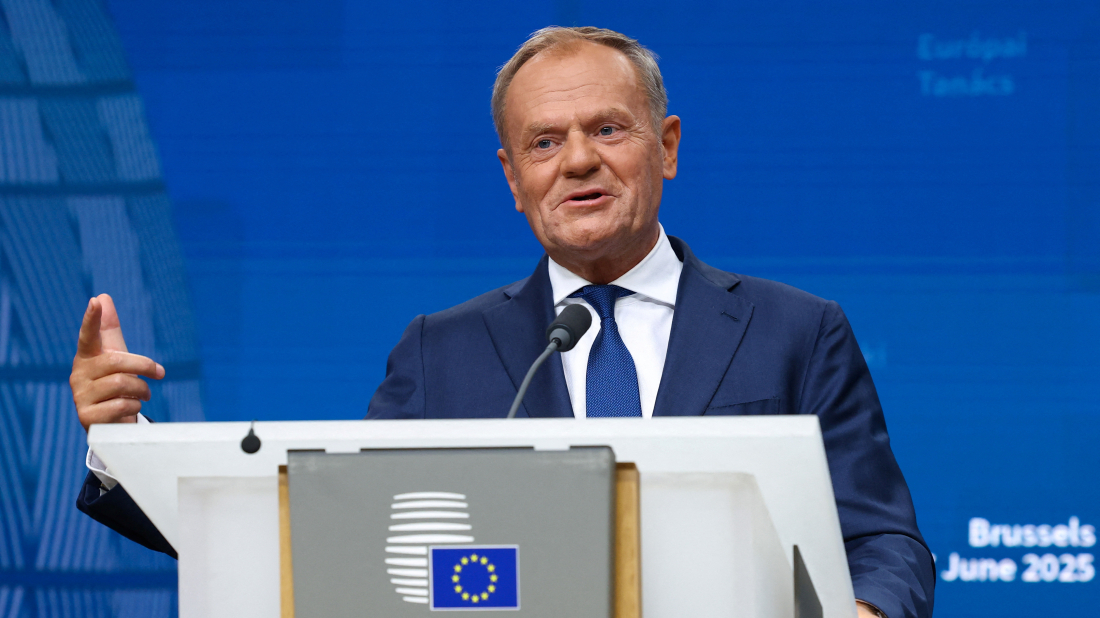
Poland’s six-month presidency of the EU Council ends Sunday, with Prime Minister Donald Tusk highlighting defence spending and migration policies as key outcomes.
Poland will formally conclude its presidency of the European Union Council on June 30, after leading EU discussions since January 1, 2025.
At a press conference in Brussels on Thursday, European Commission President Ursula von der Leyen acknowledged the challenges of the term, telling Prime Minister Donald Tusk, "Your presidency has been difficult, but you have made it."
Tusk focused his closing remarks on defence, saying Poland helped shift the EU’s mindset on security amid the current geopolitical climate.
"The EU was built on the belief that war would never return to Europe," Tusk said. "Breaking this naïve faith was not easy."
Tusk cited key achievements including securing 150 billion euros under the SAFE programme to boost Europe’s arms industry, and financial support for the 'Shield East' initiative along the EU’s eastern borders.
However, the presidency was not without controversy. Tusk’s government passed a law allowing temporary suspension of asylum applications, a move criticized by human rights groups as risking abuse and worsening conditions at the Polish-Belarusian border.
Tusk defended the law as an "unprecedented solution" to help Europe manage illegal migration.
European and Polish politicians reflected on the presidency’s difficult balance between security priorities and humanitarian concerns.

A F-16 fighter jet of the Turkish Air Force crashed near a highway in western Türkiye early on Wednesday (25 February), killing its pilot, officials and media reports confirmed.
Chinese President Xi Jinping and German Chancellor Friedrich Merz agreed on Wednesday in Beijing to strengthen economic cooperation while addressing trade imbalances, market access concerns, and the war in Ukraine, during Merz’s first official visit to China since taking office.
U.S. President Donald Trump declared a “golden age” for America in his first second-term State of the Union on Tuesday evening, delivering the longest-ever address at more than 90 minutes. Here are the main takeaways.
President Donald Trump delivered the first State of the Union address of his second term to Congress on Wednesday (25 February), declaring that America’s “golden age” had begun and that the country was experiencing a “turnaround for the ages.”
Start your day informed with AnewZ Morning Brief. Here are the top news stories for the 25th of February, covering the latest developments you need to know.
Mexico’s President Claudia Sheinbaum on Thursday thanked FIFA and its president, Gianni Infantino, for reaffirming that the country’s 2026 World Cup host venues will remain unchanged, following violence that erupted after the killing of a major cartel leader.
A student from Azerbaijan was detained by U.S. immigration agents inside a Columbia University residential building on Thursday morning, was released later the same day after New York City Mayor Zohran Mamdani raised her case directly with President Donald Trump.
Argentina and Uruguay on Thursday became the first founding members of the Mercosur bloc to ratify a long-awaited free trade agreement with the European Union, paving the way for one of the world’s largest free trade zones.
Nuclear negotiations between the United States and Iran in Geneva have been described as “positive”, according to a report by Axios citing a U.S. official.
The United States is expected to deploy six additional aerial refuelling aircraft to Israel as Washington continues to strengthen its military presence in the Middle East while nuclear negotiations with Iran remain under way.
You can download the AnewZ application from Play Store and the App Store.
What is your opinion on this topic?
Leave the first comment