Russia and Germany have held their first ministerial-level meeting since Moscow launched its full-scale invasion of Ukraine in 2022, signalling a rare diplomatic contact between two countries whose relations have deteriorated sharply over the course of the war.
The talks took place on the sidelines of the United Nations General Assembly in New York, bringing together Russian Foreign Minister Sergey Lavrov and his German counterpart Johann Wadephul. While neither side reported any major breakthrough, the meeting provided an opportunity to discuss both the conflict in Ukraine and a growing list of disputes affecting bilateral ties.
Diplomatic contact amid deep tensions
Relations between Berlin and Moscow have remained strained since Russia's invasion of Ukraine. Germany has become one of Ukraine's key European supporters, providing military, financial and political backing while supporting sanctions against Russia.
The diplomatic chill intensified further following an August incident involving a drone near Leipzig/Halle Airport in eastern Germany. Berlin has publicly blamed Russia for the attempted attack, an accusation Moscow rejects.
Against that backdrop, the New York meeting marked a rare face-to-face exchange between senior officials from both countries.
Lavrov later downplayed the significance of the discussions, suggesting Germany's position had not changed from what Berlin had already expressed publicly. Nevertheless, officials confirmed that the ministers addressed both bilateral relations and the ongoing war in Ukraine.
Black Sea exports take centre stage
One of the key issues discussed was the future of Black Sea trade routes.
Germany used the meeting to press for progress on grain exports, arguing that disruptions to agricultural shipments continue to affect food security in many parts of the world, particularly in developing countries.
Berlin also stressed the importance of securing critical energy infrastructure and reducing risks to maritime navigation in the region.
The issue has gained urgency amid broader international efforts to restore stable trade flows through the Black Sea after repeated attacks on vessels, ports and related infrastructure.
Moscow, for its part, said it has been discussing maritime security proposals with several countries, including Türkiye, India and Egypt. Russian officials argue that any lasting arrangement would also require direct engagement with Ukraine over attacks affecting shipping in the region.
Germany reiterates position on Ukraine
According to German officials, Wadephul used the meeting to restate Berlin's opposition to Russia's military campaign and to call for an immediate halt to hostilities.
Germany has consistently argued that any path towards a settlement must include an end to attacks on civilian infrastructure and renewed diplomatic engagement.
The German foreign minister also reportedly warned against further escalation involving European states and NATO, emphasising that incidents attributed to Russia would not alter Berlin's commitment to supporting Kyiv.
The meeting's sensitive nature was underscored by the fact that Wadephul later briefed European partners on the discussions.
Bilateral disputes continue
Beyond Ukraine, relations between the two countries remain burdened by a growing number of disputes.
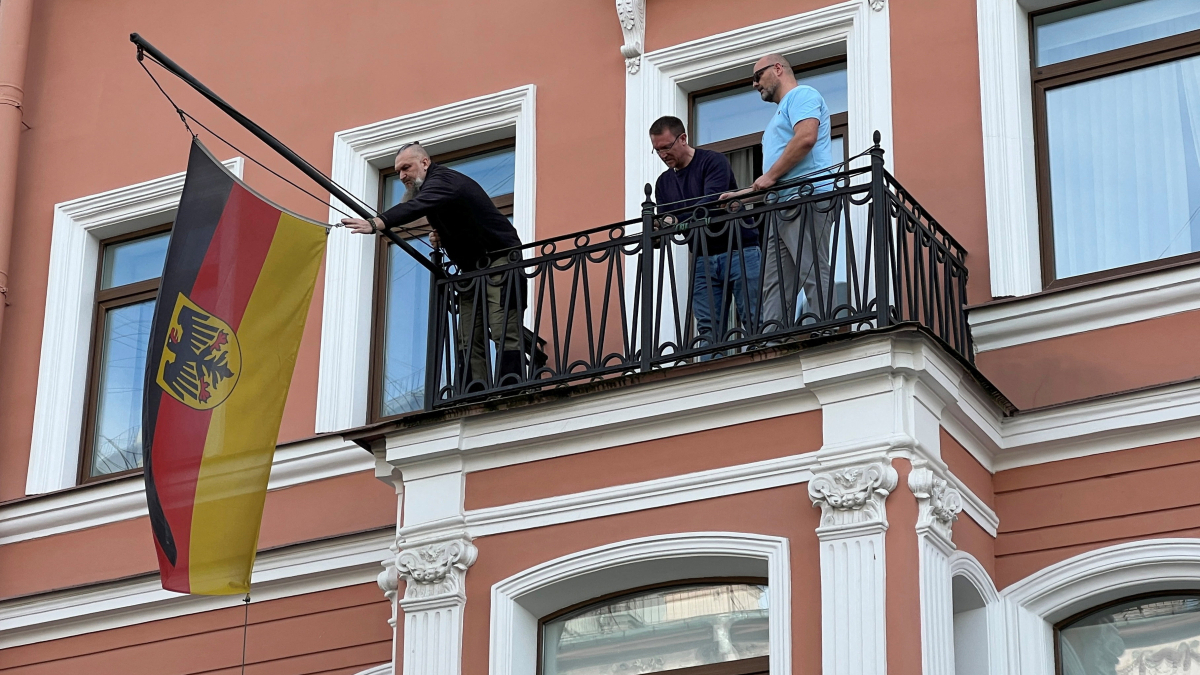
Earlier this month, Germany announced measures against Russian diplomatic and cultural institutions after concluding that Moscow was responsible for the attempted drone operation linked to Leipzig. Russia has dismissed those allegations, accusing Berlin of promoting anti-Russian narratives and provocation.
The disagreement reflects a broader breakdown in trust between the two nations, whose economic and political ties were once among the strongest in Europe.
Before the war, Germany was one of Russia's most important trading partners and a major consumer of Russian energy exports. Since 2022, however, much of that relationship has been dismantled through sanctions, diplomatic expulsions and competing security policies.
No breakthrough, but dialogue resumes
Despite the absence of any major agreement, analysts view the meeting as a notable development simply because direct contact has become increasingly rare.
The discussions suggest that even amid continued confrontation over Ukraine, both sides remain willing to maintain limited diplomatic channels on issues ranging from trade and maritime security to broader regional stability.
Whether the dialogue produces any tangible progress remains uncertain. For now, the encounter highlighted both the deep divisions separating Moscow and Berlin and the recognition that key international challenges still require communication between the two governments.
Read more about Germany and Russia:












What is your opinion on this topic?
Leave the first comment