Germany's far-right Alternative for Germany (AfD) has scored a historic victory in Saxony-Anhalt, emerging as the strongest party in the eastern state and putting it closer than ever to forming a regional government.
The AfD was projected to win about 44.4 per cent of the vote, according to early results. In comparison, Chancellor Friedrich Merz's conservative CDU fell to roughly 18.4 per cent – its worst performance in the state since reunification.
The result is a major political setback for Merz and his governing coalition, while highlighting the AfD's growing strength in eastern Germany.
Despite its record result, the party is not expected to have enough seats to govern alone. With Germany's mainstream parties refusing to form coalitions with the AfD, the election is likely to lead to difficult negotiations and potentially prolonged political uncertainty.
'We have made history'
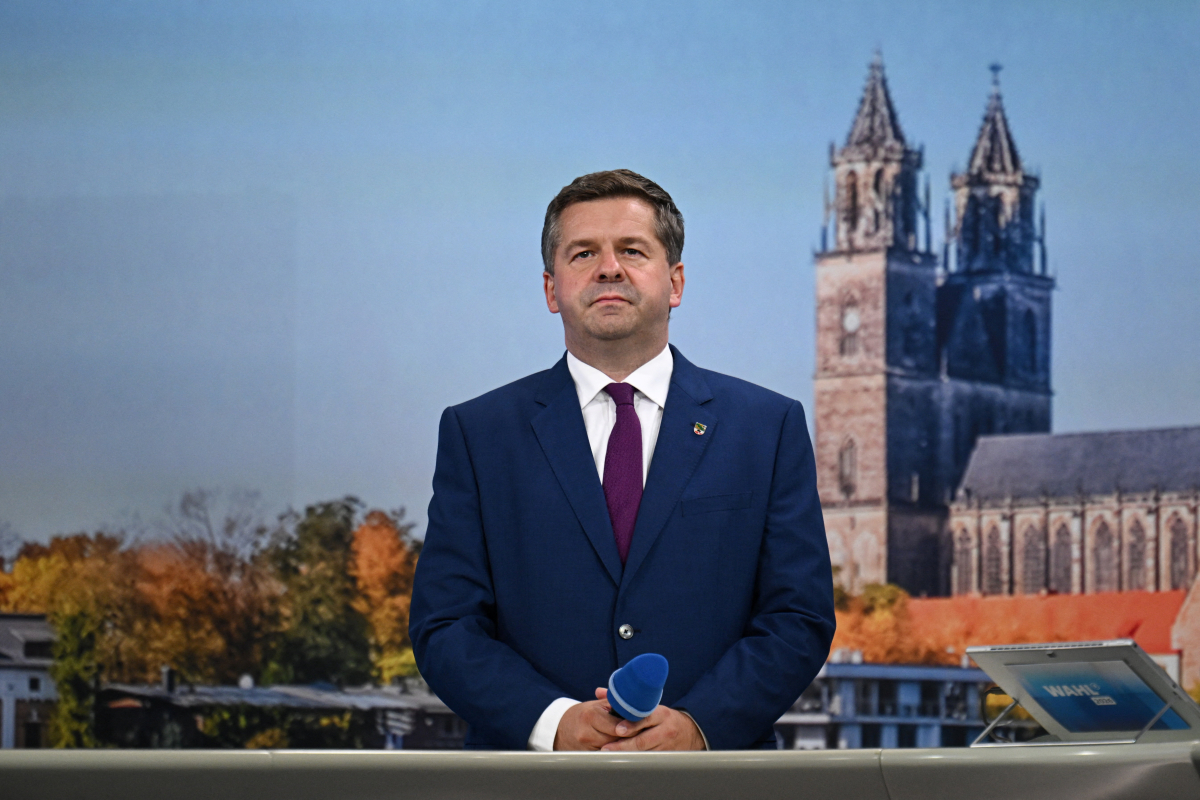
AfD lead candidate Ulrich Siegmund, 35, celebrated the result as a turning point for his party.
”We have made history in this country,” Siegmund told supporters in Magdeburg, where the party held its election-night gathering.
He said voters had made clear that they wanted political change and that they wanted the AfD to deliver it.
The party's national leaders, Alice Weidel and Tino Chrupalla, joined Siegmund in celebrating the result. Weidel called it a “historic result” and said the AfD had received a “very clear mandate to govern”.
Chrupalla went further, declaring: “Ulrich Siegmund will be the new minister-president of Saxony-Anhalt.”
For now, however, that outcome remains far from certain.
CDU faces a difficult choice
The scale of the AfD's victory represents a sharp rebuke for Merz's conservatives, who have struggled to win over voters amid economic concerns and frustration with the federal government.
An ARD poll found that 87 per cent of voters in Saxony-Anhalt were dissatisfied with the federal government.
”This election result is, above all, a vote of no confidence in the federal government,” said Marcel Fratzscher, president of the German Institute for Economic Research.
Merz has promised to revive Germany's sluggish economy through reforms and increased investment, but his government has faced growing pressure over the cost of living, immigration and the country's economic outlook.
The AfD made those frustrations central to its campaign, presenting itself as an alternative to what it describes as an established political class that has lost touch with ordinary voters.
AfD's hardline agenda
The party's rise is particularly significant in Germany because of the country's history with Nazi rule.
The AfD has campaigned on sharply restricting immigration, changing Germany's approach to Russia and reducing support for Ukraine. It also wants to leave the euro and has proposed changes to schools, cultural institutions and public broadcasting.
In Saxony-Anhalt, its campaign focused heavily on immigration, public safety and national identity.
”We need change in Germany and in Western Europe,” said Antony Lee, an AfD supporter at the election-night event. “I am a father, I am an entrepreneur, and I know that things cannot continue like this in Germany.”
The party has rejected accusations of extremism as attacks on its supporters. However, the AfD is classified as a right-wing extremist organisation by Saxony-Anhalt's domestic intelligence agency.
'We do not work with extremists'
The biggest obstacle to an AfD-led government is the refusal of other major parties to work with it.
Saxony-Anhalt's CDU leader Sven Schulze ruled out cooperation with the AfD after the election.
”I have no intention of working with the AfD,” he told broadcaster MDR.
CDU Secretary General Franziska Hoppermann also rejected any coalition with the party, saying:
“We do not work with extremists – and above all not with the far right.”
Weidel warned that the CDU would pay a political price for maintaining its so-called “firewall” against the AfD, arguing that the conservatives would “never again win an election” if they refused to cooperate with her party.
A wider warning for German politics
Saxony-Anhalt is a relatively small state, with just over two million inhabitants, but its election carries significance well beyond its borders.
The AfD is already Germany's most popular party nationally, according to recent opinion polls, and is looking towards the next federal election in 2029 as its chance to challenge for national power.
Sunday's result strengthens that ambition while exposing the growing difficulty of forming governments without either the AfD or increasingly complicated multi-party alliances.
Thousands of people meanwhile demonstrated against the AfD in cities including Berlin, Frankfurt and Mainz. A further protest was planned at Berlin's Brandenburg Gate, with police expecting about 5,000 people.
For Germany's mainstream parties, the challenge is now twofold: containing the AfD politically while addressing the economic and social frustrations that are driving increasing numbers of voters towards it.
European reaction and political uncertainty
The AfD’s victory has sparked concern across Europe, with France’s European Affairs Minister Benjamin Haddad calling it a “very grave moment for Europe”. He warned that nationalism and xenophobia cannot provide answers to voters’ concerns, while French Finance Minister Roland Lescure described the result as a “very, very worrying signal” of a broader populist wave.
Polish Prime Minister Donald Tusk criticised those celebrating the AfD’s success, saying only “idiots or traitors” could welcome such an outcome in Germany. However, Dutch far-right leader Geert Wilders congratulated the party, while US President Donald Trump shared the projected AfD result on Truth Social without adding any comment.
The election has also increased pressure on Germany’s political firewall against the AfD. While mainstream parties continue to reject cooperation with the far-right party, the left-wing populist Sahra Wagenknecht Alliance (BSW) has said it could abstain in a third-round vote for state premier. Under those rules, AfD candidate Ulrich Siegmund could potentially win with a simple majority of votes cast, without the BSW formally voting for him.
The outcome could become a wider test for Germany’s political system as the country heads towards future regional and federal elections, with growing debate over whether the firewall against the AfD can hold.
Read more:

















What is your opinion on this topic?
Leave the first comment