Russia and Germany are locked in their most serious diplomatic dispute since the start of the war in Ukraine, after Berlin accused Moscow of carrying out a drone attack on a key logistics airport in August.
Dispute sparked
In early August, two drones carrying explosives were found near Leipzig/Halle Airport in eastern Germany, a hub used by NATO to move military supplies to Ukraine. One drone appears to have targeted Ukrainian military transport aircraft on the ground.
A DHL cargo plane was also struck by an unidentified object as it came in to land, damaging its tail and forcing the aircraft to abort the landing.
After weeks of investigation, the German government said on 1 September that it had concluded the attack was carried out by Russia, citing intelligence findings and police investigations.
Row escalates
Germany responded by closing two Russian diplomatic missions in the country. Moscow retaliated within days.
Russia’s Foreign Ministry ordered Germany’s consulate in St Petersburg to close by 18 September and ordered Goethe-Institut cultural centres, which promote German language and culture abroad, to close by 13 September, with staff required to leave the country.
Moscow said Germany had “provoked” the escalation and bore full responsibility for the consequences. It has dismissed the drone allegation as invented.
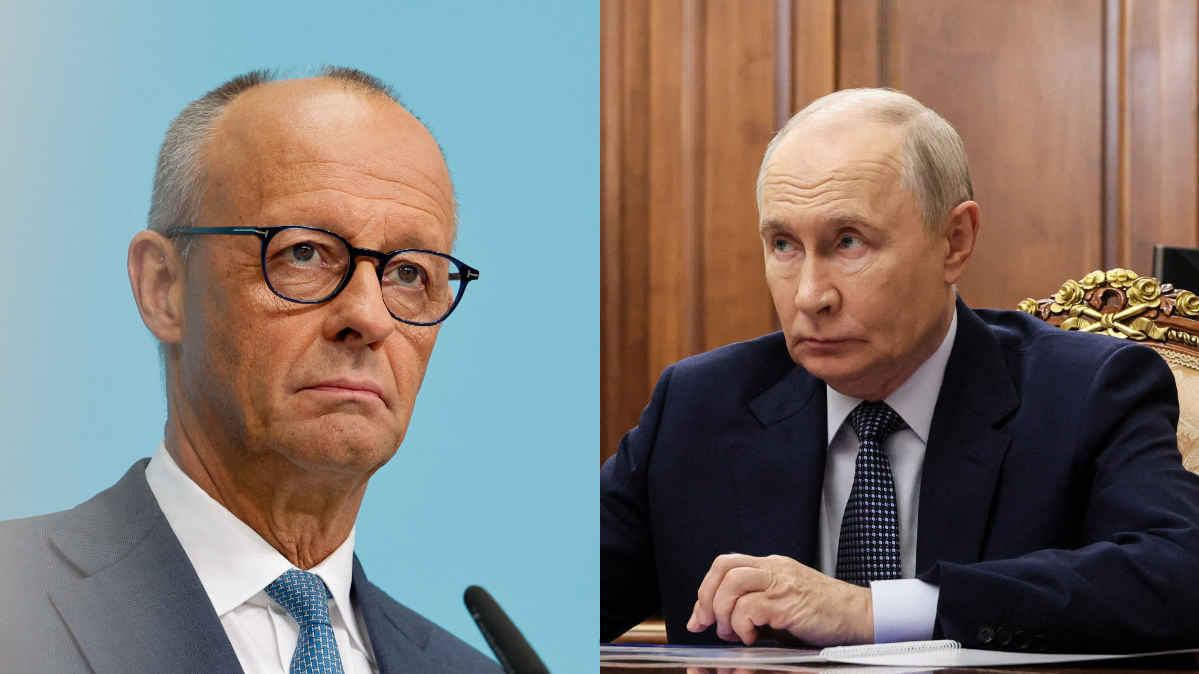
Russian Foreign Minister Sergei Lavrov went further, accusing Germany of moving towards direct confrontation with Russia and suggesting the situation marked the start of “a real war”.
German Chancellor Friedrich Merz rejected any suggestion that Berlin would soften its stance, saying he would not move “a single millimetre” from defending German freedom against Russia.
Concerns about Russian hybrid warfare
The dispute comes amid growing unease across Europe over Russian hybrid warfare, a mix of sabotage, cyberattacks and disinformation that falls short of open conflict.
Finland has completed construction of a 200-kilometre fence along its border with Russia, saying it needs the barrier to guard against such tactics.
Germany is one of Ukraine’s largest backers, having provided more than $50 billion in civilian aid and just under $67 billion in military support since 2022.
Read more from the Russia-Ukraine war:













What is your opinion on this topic?
Leave the first comment