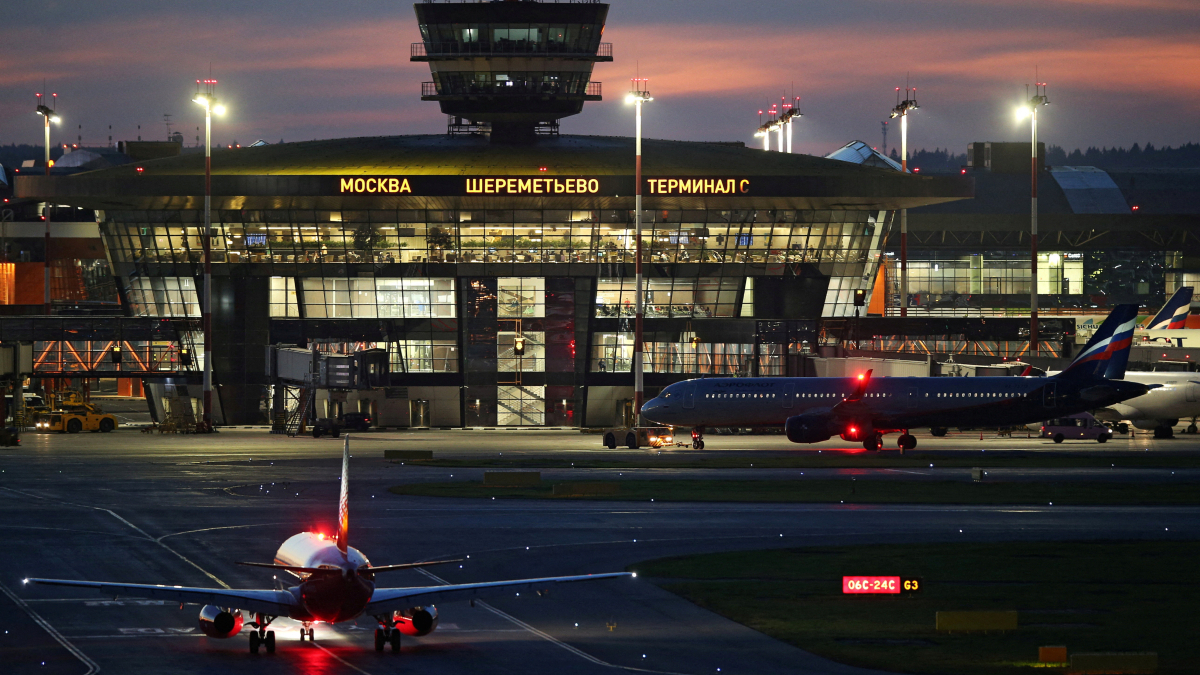
Flights between Central Asia and Russia have faced widespread disruption, with aircraft diverted, turned back or cancelled amid restrictions in Russian airspace and conflicting claims from Moscow and Kyiv over aviation safety.
Uzbekistan flights diverted
Two flights from Uzbekistan were unable to reach Moscow on 3 September because of restrictions in Russian airspace, according to the Telegram channel Novosti Tashkentskogo Neba.
Uzbekistan Airways flight HY-603 departed Tashkent for Moscow but turned back mid-flight and returned to Tashkent, the channel reported. Another Moscow-bound flight, operated by Centrum Air, was diverted to Kazan International Airport.
Other routes were also affected. An Uzbekistan Airways aircraft travelling from Termez to Moscow was diverted to an airport in St Petersburg, while flights between Tashkent and Sochi on 3 September operated via Aktau in Kazakhstan.
Uzbekistan Airways said the decisions were being taken in response to the current situation and in the interests of flight safety.
Disruption spreads across Central Asia
Disruptions were also reported elsewhere in Central Asia. According to Airports of Kyrgyzstan, an Aeroflot flight from Bishkek to Moscow and an S7 Airlines service to Novosibirsk did not depart as scheduled on 3 September.
The company did not disclose the reasons for the disruption.
In Tajikistan, three Ural Airlines flights were reportedly cancelled on 2 September: two from Russia to Tajikistan and one in the opposite direction. No reasons for the cancellations were given.
Moscow and Kyiv differ over air safety
The disruption comes amid sharply differing assessments from Moscow and Kyiv over the safety of Russian airspace.
Anton Kobyakov, an adviser to Russian President Vladimir Putin, said Moscow was taking “maximum measures” to ensure the security of the country’s airspace and described the skies over Russia as “safe”.
His comments came after Ukrainian President Volodymyr Zelenskyy said on 1 September that Russian airspace was becoming “completely dangerous” because of regular drone attacks and urged airlines to take the risks into account.
Zelenskyy said Ukraine did not pose a threat to civilian aviation but argued that airlines should consider the presence of drones in Russian airspace. He said particular attention should be paid to flights to Moscow and St Petersburg and accused Russian authorities of concealing the true scale of the risks to passengers.
Aviation authorities respond
Russia’s Federal Air Transport Agency, Rosaviatsiya, subsequently issued a NOTAM, a notice containing information relevant to aviation personnel, stating that documents published by Ukraine concerning Russian airspace had no legal force.
The International Civil Aviation Organization (ICAO) has also raised concerns about risks to civilian aviation.
In a statement on 2 September, ICAO urged countries to strengthen the protection of civilian aircraft from threats linked to conflict zones, including drones and interference with navigation systems.
Read more:













What is your opinion on this topic?
Leave the first comment