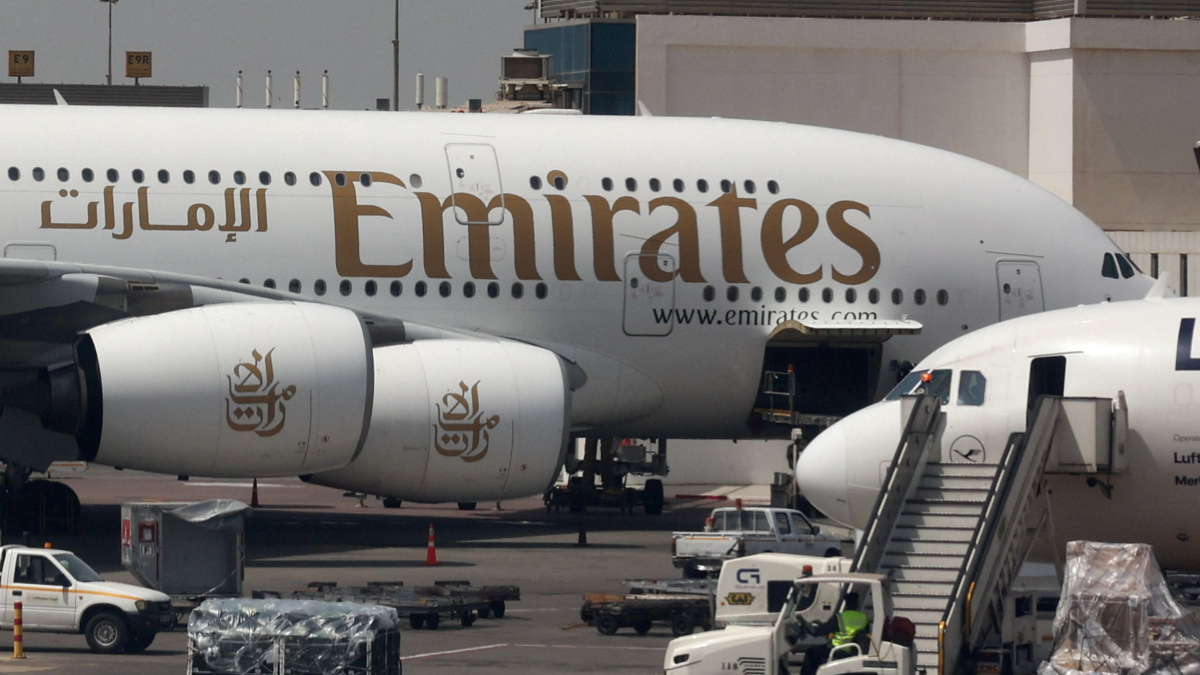
Algeria has ordered the closure of its airspace to all civilian and military aircraft registered in the United Arab Emirates, marking a sharp escalation in tensions after Algiers formally cut diplomatic relations with Abu Dhabi.
The measure, announced by Algeria's Ministry of Defence, is set to take effect at midnight and will bar UAE-registered aircraft from entering or crossing Algerian airspace.
The restriction applies to both civilian and military aircraft. However, Algerian authorities said commercial passenger flights operating to and from Houari Boumediene International Airport in Algiers will be allowed to continue temporarily under the terms of an existing aviation agreement between the two countries.
Officials stated that those flights will remain operational until the agreement expires at the end of 2026.
The airspace closure follows Algeria's decision to formally end diplomatic relations with the UAE after what it described as a prolonged deterioration in bilateral ties.
In a statement, Algeria's Foreign Ministry said repeated efforts to preserve relations had failed and accused the UAE of pursuing actions that it regarded as increasingly hostile and provocative.
Algerian authorities said they had repeatedly warned Abu Dhabi about the potential consequences of its policies but claimed that those concerns had gone unaddressed.
According to the ministry, the situation had reached a point where maintaining normal diplomatic relations was no longer possible.
The government said all available channels aimed at preventing a rupture had been exhausted before the decision was taken.
Why Algeria severed ties with the UAE
Relations between Algeria and the United Arab Emirates have been under strain for several years due to a combination of regional rivalries and foreign policy disagreements.
Algerian leaders have repeatedly criticised Abu Dhabi's role in regional affairs, accusing it of exerting influence in countries such as Libya, Mali and Sudan.
The two governments have also found themselves on opposite sides of key geopolitical issues, notably the Western Sahara dispute, where the UAE backs Morocco's sovereignty claim while Algeria supports the Polisario Front's independence movement.
Tensions were further deepened by the UAE's normalisation of relations with Israel under the Abraham Accords and controversies involving UAE-based media coverage that drew sharp criticism from Algiers.
These accumulated disputes ultimately led Algeria to end diplomatic relations, citing what it described as a pattern of increasingly hostile and provocative behaviour.
The closure of Algerian airspace is expected to affect aviation routes involving UAE carriers and military aircraft operating across North Africa and the Mediterranean region.
While commercial services will continue for several months under existing arrangements, the longer-term future of air links between the two countries remains uncertain.
Analysts say the move represents one of the most significant diplomatic disputes between two major Arab states in recent years.
UAE calls for ties to be preserved
The UAE responded by expressing regret over Algeria's decision and voiced hope that the diplomatic break would prove temporary.
In a statement, the Emirati Foreign Ministry said the UAE remained committed to maintaining constructive relations with countries around the world and stressed the importance of dialogue, cooperation and mutual understanding.
Abu Dhabi also called for the preservation of what it described as the historic and fraternal ties linking the peoples of the two countries.
The ministry emphasised its respect for the Algerian people and said it would continue supporting relations with Algerian citizens living in or visiting the UAE.
Uncertain future for bilateral relations
The diplomatic rupture introduces a new period of uncertainty into relations between the two countries, which have traditionally maintained political, economic and commercial links despite occasional disagreements on regional issues.
Neither side has indicated whether mediation efforts could be pursued to restore ties.
Read more:












What is your opinion on this topic?
Leave the first comment