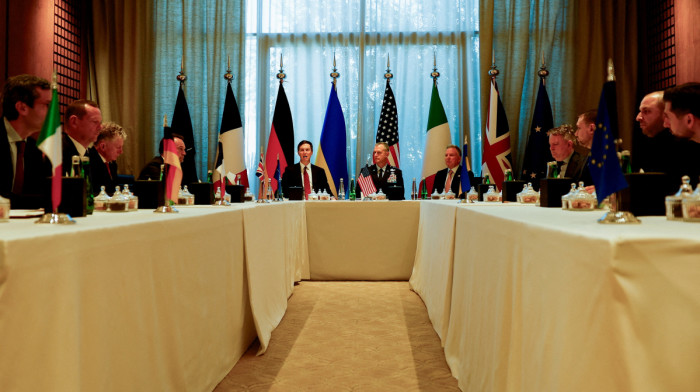
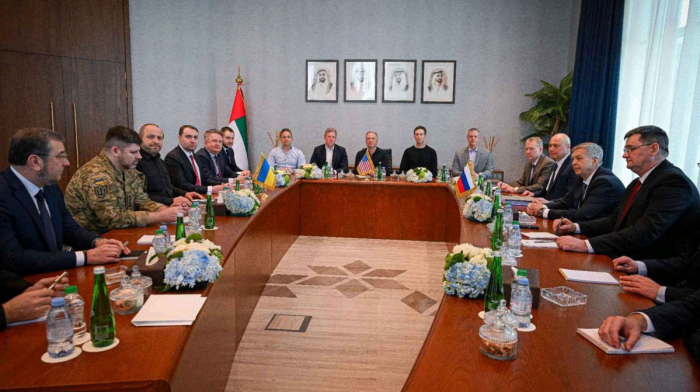
Two days of U.S.-brokered talks between Russia and Ukraine in Abu Dhabi have ended with an agreement on a major prisoner exchange, but key disputes over security and territory remain unresolved.
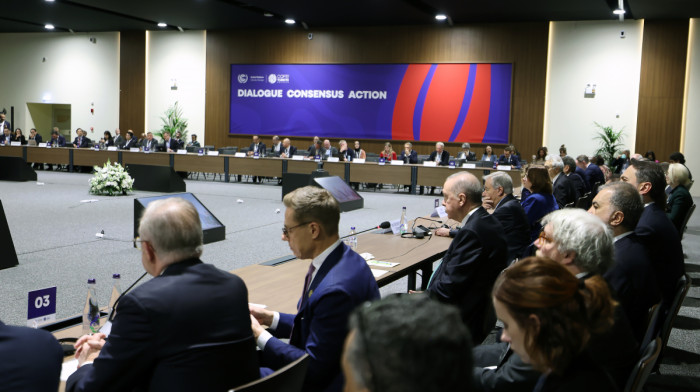
The Russian and Ukrainian delegations have concluded two days of negotiations with U.S. mediators in Abu Dhabi, with a large-scale prisoner exchange emerging as the only concrete agreement.
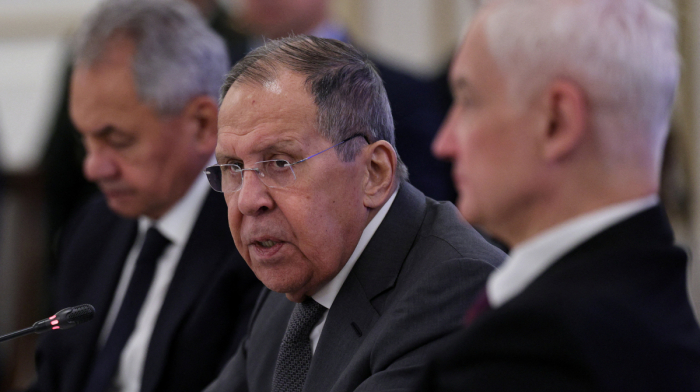
Vladimir Medinsky, Moscow’s chief negotiator, announced the deal on Russian state television after the talks concluded. He said both sides had reached an understanding on some issues and that further rounds would follow. Ukrainian President Volodymyr Zelenskyy, who was briefed after the talks, confirmed what he described as an important humanitarian arrangement for a new exchange.
Prisoner exchanges have continued throughout the war, even when other diplomatic channels have stalled. The agreement therefore offers little indication of progress towards a wider settlement. Both governments can point to the return of prisoners without making concessions on the battlefield or over territory.
The key question now is whether the exchange can pave the way for a broader agreement or remains the only issue on which both sides can find common ground.
Jared Kushner, the U.S. negotiator, described the talks as “very substantive” and “pretty tough”, marking the first time the parties had met in almost eight months.
He identified post-war security arrangements, guarantees for Ukraine and mechanisms to monitor a potential ceasefire as the main issues discussed.
Territory, he said, would be the most difficult issue to resolve, underscoring how far the two sides remain from an agreement on one of the central disputes.
Disagreement over future talks
The Abu Dhabi negotiations also exposed divisions over who should take part in future discussions.
Washington wants European governments involved in a broader, multilateral process. Kushner said he hoped Russian President Vladimir Putin would endorse the proposal when he and Steve Witkoff meet him in Moscow on Thursday.
Zelenskyy also insisted that Europe must be represented at every stage of meaningful diplomacy.
Medinsky, however, appeared to reject the proposal, saying it was unclear what Russia and the European Union would have to discuss because, in his view, European governments had offered no concrete proposals.
The dispute reflects competing approaches to negotiations. A narrower format, with Washington acting as mediator, could give Moscow greater room to negotiate without direct European involvement.
Kyiv, meanwhile, wants European governments at the table because they would play a central role in providing troops, funding and political support for any future security guarantees.
Alexey Drobinin, a senior Russian diplomat, outlined three possible models for security guarantees at a conference in Moscow.
These included a collective defence pact or mutual assistance treaties similar to Russia’s agreements with Belarus and North Korea; political agreements under which countries would refrain from supporting each other’s adversaries, as with Iran; and bilateral non-aggression pacts.
He said such agreements could be reached with individual NATO members, who might then receive additional guarantees from Russia.
Such an approach would allow Moscow to negotiate with NATO members individually rather than with the alliance as a whole.
Conflicting accounts of progress
Despite the humanitarian breakthrough, Russian and European officials offered different assessments of what the negotiations had achieved.
A German government spokesperson said the talks had produced a broad understanding of the framework for future negotiations, potentially opening the way for discussions between Chancellor Friedrich Merz and Putin.
However, the spokesperson clarified that the understanding was shared by European, U.S. and Ukrainian officials, rather than Russia.
That distinction raises questions about the extent of the progress claimed in Abu Dhabi. The mutual understanding cited by Medinsky may be narrower than the framework envisaged by Berlin, while Moscow has yet to indicate whether it accepts the approach outlined by Western officials.
Next steps in peace efforts
Kushner and Witkoff are due to travel to Moscow on Thursday to brief Putin on the Abu Dhabi talks and, in Kushner’s words, “try to finalise the biggest humanitarian release of prisoners”.
They will then travel to Dublin to brief Zelenskyy, who is attending the European Political Community summit alongside other European leaders.
Zelenskyy said the parties would coordinate their positions again following the Moscow meeting.
Asked about the prospect of direct talks between Putin and Zelenskyy, Kushner said such a meeting would be “great”, but that Moscow wanted further progress before agreeing to it.
He acknowledged the deep mistrust between the two leaders and warned that reaching an agreement would take time.
David Arakhamia, who heads Zelenskyy’s parliamentary faction, said he hoped the positive momentum could lead to a settlement before the end of the year.
But with less than two months remaining and the territorial dispute still unresolved, the path to a wider peace agreement remains uncertain.









What is your opinion on this topic?
Leave the first comment