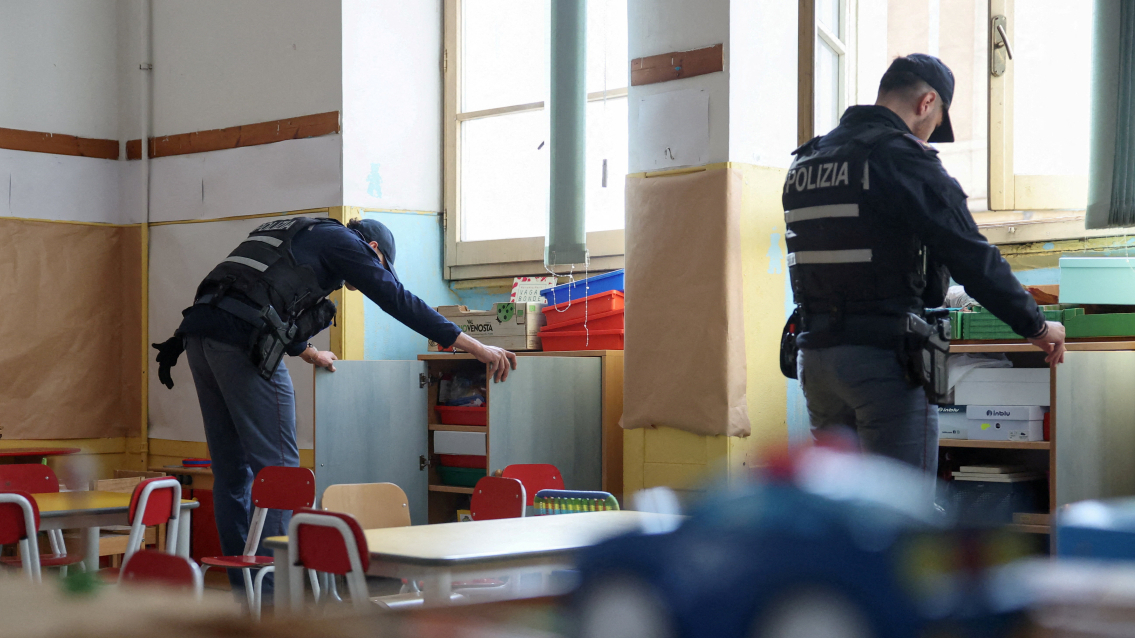
Hundreds of schools in Italy have been evacuated following emailed bomb threats, as similar messages spread to Scotland and Ireland. Police say the threats are not credible.
The Italian government confirmed that at least 300 schools had been evacuated following the alerts, amid a wider wave of threats and cyber-attacks across Europe targeting supermarkets, blood banks, air traffic services and television broadcasters.
Italy: “No danger”
Italian Prime Minister Giorgia Meloni said on social media that the bomb threats posed no danger and confirmed thatpolice and other public bodies were monitoring the situation.
She said she would chair a meeting at government headquarters to assess the situation and coordinate further action.
Education Minister Giuseppe Valditara told Italian broadcaster La7 that the alerts were believed to be hoaxes, with the number of schools affected expected to rise.
“Following a nationwide bomb alert, we wish to inform you that all students have been taken to a safe area and remain under the supervision of teaching staff,” one school in Rome told parents through a messaging app.
Italian police have launched an investigation, a Rome police spokesperson said.
Same signature as newsroom threats
According to an email obtained by Reuters, the message sent to Italian schools was signed “Mikhail Andropov, leader of the Vilayat of Misoginistan”.
The same name appeared in emails claiming responsibility for bomb threats sent last Friday to newsrooms in Ireland and Bulgaria.
Defence Minister Guido Crosetto described the threats as “part of a strategy that is quite clear by now: to spread fear and create anxiety”, according to Italian news agency Adnkronos.
“It is not always the work of foreign countries or hostile entities. There are also attention-seekers and lunatics who, at a time like this, cannot wait to unleash terror in a city or a region,” he said.
Northern Ireland: more than 300 schools targeted
Police in Northern Ireland reported that more than 300 schools had received threatening emails, but said the messages were hoaxes originating from outside the UK.
“We take incidents of this nature very seriously and we understand the concern in the community, school communities and for students and parents,” said Assistant Chief Constable Anthony McNally.
Despite the widespread alerts, the Education Authority advised schools to remain open after police assessed the threats as not credible.
Ireland and Scotland
In the Republic of Ireland, police confirmed they were aware of a “generic communication” sent to several schools but said the threat was not credible and evacuations were unnecessary.
Officers also warned of a recent rise in “increased activity in hoax and non-credible bomb threats” and urged recipients of suspicious messages to contact police.
Meanwhile, Police Scotland said officers had quickly assessed the emails and determined they were hoaxes.
“Our enquiries have established that there is nothing to suggest that they represent a credible threat or that there is any wider threat to the public,” the force said.
Fears of hybrid campaign
The wave of school threats has heightened concerns among European officials about a possible campaign of “hybrid” disruption targeting countries that support Ukraine.
Several European countries have accused Russia of involvement in such activities, allegations Moscow denies.
In a separate incident, France summoned Iran’s ambassador this week after accusing Tehran of carrying out a cyber-attack that disabled refrigerators in hundreds of supermarkets.
Iran’s foreign ministry dismissed allegations that its Revolutionary Guards were responsible, calling them “baseless and hostile”.
Read more:










What is your opinion on this topic?
Leave the first comment