Emails signed “Mikhail Andropov” forced RTÉ to evacuate. Spain’s foreign minister speaks of “psychological warfare” as NATO jets join air patrols.
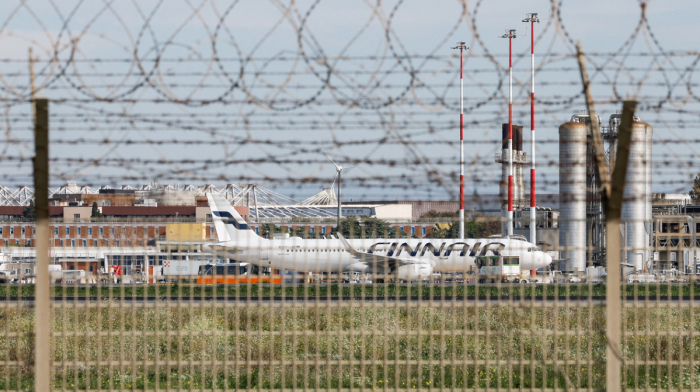
A wave of hoax bomb threats that has disrupted air travel across Europe this week reached newsrooms on Friday. Broadcasters in Ireland and Bulgaria received emailed threats from a sender calling himself “Mikhail Andropov”, who claimed responsibility for the scares targeting passenger flights.
Ireland’s public broadcaster RTÉ evacuated its offices and suspended programming after receiving one of the messages. Bulgaria’s Nova TV was also targeted, and Britain’s Sky said it had received a security threat.
The emails, titled “Message to the West”, described the threats as the opening stage of a series of attacks on transport across Europe.
Reuters could not establish who sent them, where they came from, or whether they were linked to the threats made against any of the dozens of flights affected since Tuesday.
No explosives have been found. Every threatened aircraft, including those targeted on Friday, has landed safely.
“Psychological warfare”
The newsroom threats have deepened concern among European officials that the hoaxes form part of a campaign of “hybrid” disruption against countries that have supported Ukraine. Many officials have blamed Russia for such a campaign, and Moscow has denied involvement.
Spanish Foreign Minister José Manuel Albares said Europe appeared to be facing “hybrid aggression and a form of psychological warfare”.
No country has formally blamed anyone for the threats.
Security experts said on Thursday that the threats might be meant to punish European countries that have armed or funded Ukraine since Russia launched its full-scale invasion in 2022.
They cautioned, however, that individuals might also be laying false trails, making copycat threats or acting on personal grievances.
The direct impact on air travel eased on Friday, despite more than a dozen new hoax threats.
About half a dozen flights were disrupted on Tuesday and more than two dozen on Thursday. Some made unscheduled landings, while others were escorted to their destinations by fighter jets.
On Friday, a Wizz Air flight from Prague to Rome was diverted to Venice, according to a source at an Italian airport authority. Elsewhere, disruption was more limited than earlier in the week.
NATO joins air patrols
Hungarian fighter jets escorted airliners through Hungarian airspace on Friday on flights from Brussels to Sofia and from Prague to Bucharest and Cyprus.
Hungarian Defence Minister Romulusz Ruszin-Szendi said NATO had ordered some air patrols in the area. It was the first report that the alliance had become involved.
The hoaxes follow a series of sabotage attacks and attempted attacks across Europe. Targets have ranged from electricity substations in Germany and defence-related sites in the Baltic region to supermarket refrigerators in France and elsewhere.
Germany has directly blamed Russia for a drone attack on Leipzig airport.
Many European officials describe these incidents as “hybrid” or “grey zone” operations: cheap to carry out, easy to deny and not expected to provoke an armed response.
“Quite often it is Russia”
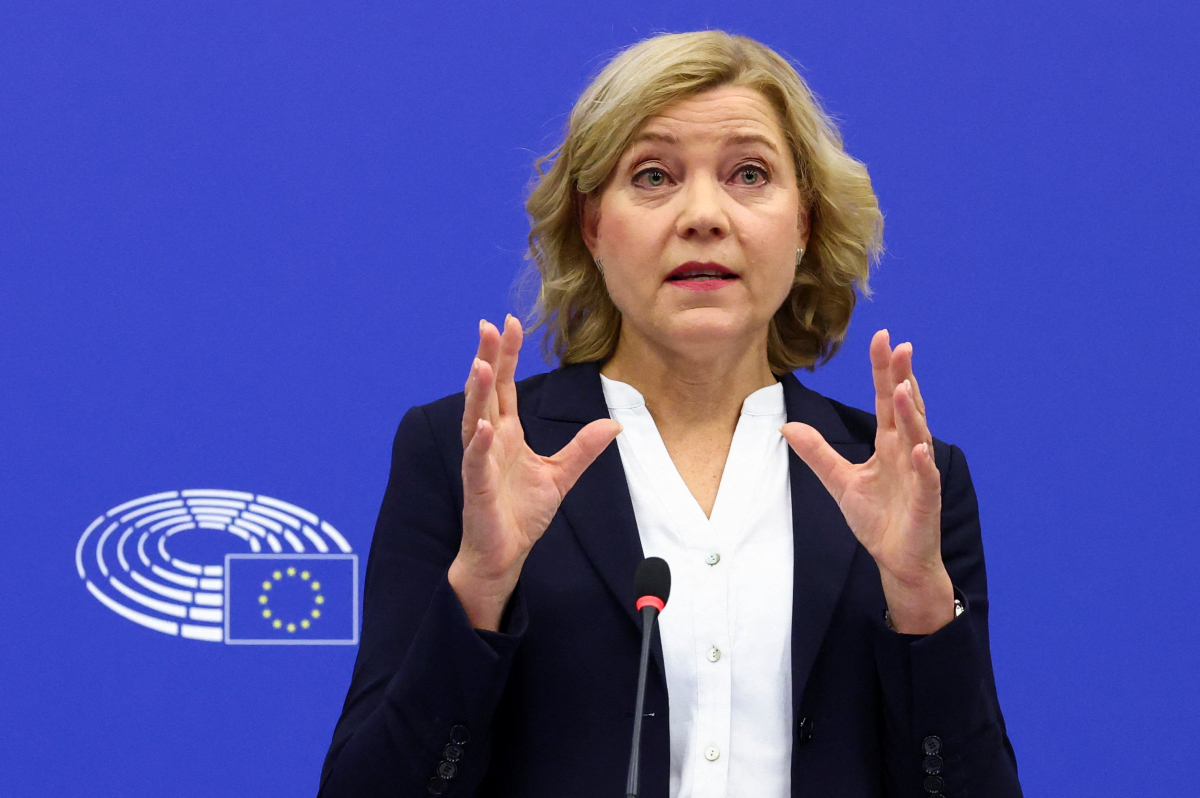
Henna Virkkunen, the European Commission’s technology commissioner, told Reuters on Thursday that since 2022 Europe had faced hybrid operations including sabotage of critical infrastructure, drone incursions, cyber breaches and election interference.
“We are under attack all the time,” she said. “The reason behind these operations is to destabilise our societies and create mistrust among our citizens.”
She added: “It’s not always Russia who is behind different hybrid operations. Quite often it is Russia.”
The question of who is behind the threats has been further muddied by a separate claim. On Thursday, an airport source in Italy said bomb threats had been sent to several airlines and airport operators in Rome and Milan in the name of “fighters of the Male State”. Male State is a far-right, anti-feminist movement that is banned in Russia.
Reuters could not confirm who sent that email. Vladislav Pozdnyakov, the Russian blogger who founded Male State in 2016, said the group no longer existed and had no involvement.
Read more:















What is your opinion on this topic?
Leave the first comment