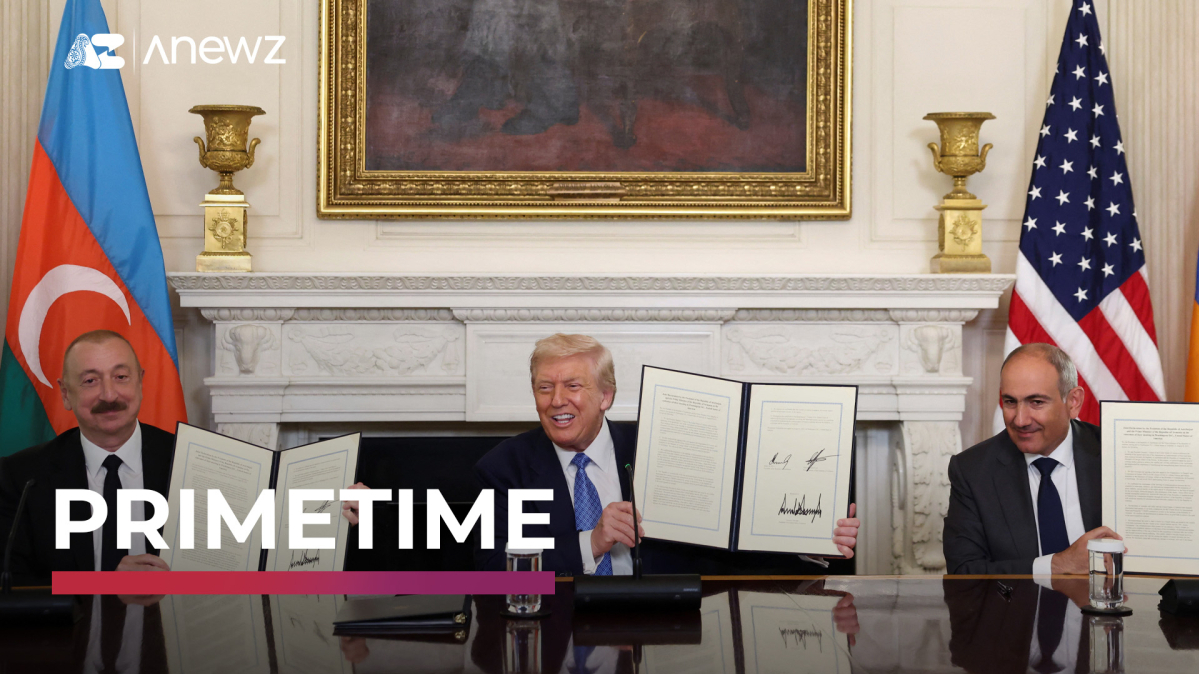
The 8 August edition of AnewZ's PrimeTime led with the one-year anniversary of the Washington Declaration and progress in Azerbaijan-Armenia relations, Türkiye, Saudi Arabia and Pakistan's new defence pact, and continuing diplomatic efforts over the Strait of Hormuz.
Azerbaijan-Armenia peace and connectivity
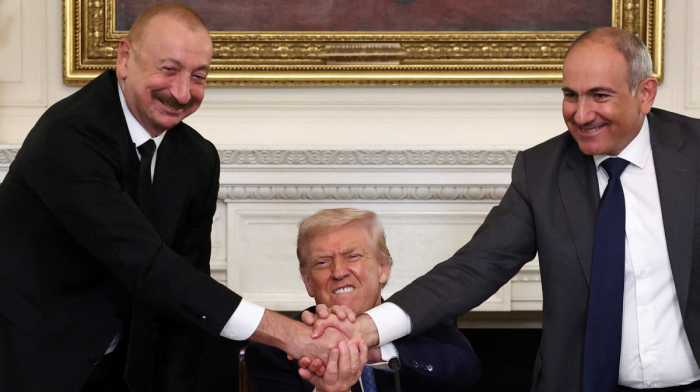
The programme examined developments one year after the Washington Summit, which brought Azerbaijani President Ilham Aliyev, Armenian Prime Minister Nikol Pashinyan and U.S. President Donald Trump together to establish a framework for peace and connectivity.
PrimeTime focused on the shift from political commitments towards practical cooperation, including the reopening of commercial transit, energy supplies between Azerbaijan and Armenia, border delimitation and people-to-people contacts. The programme also examined the Trump Route for International Peace and Prosperity, or TRIPP, a proposed connectivity project linking mainland Azerbaijan with Nakhchivan through Armenia and connecting the South Caucasus to wider East-West trade routes.
Deputy Editor-in-Chief Orkhan Amashov analysed the remaining obstacles to a final peace agreement, including Armenia's constitutional process, the implementation of TRIPP and wider geopolitical pressure. He said economic integration could strengthen the peace process, while warning that delays to connectivity projects or renewed tensions could undermine confidence.
The discussion also examined Iran's opposition to TRIPP, Russia's influence in Armenia and the European Union's efforts to support Yerevan's economic diversification and closer links with Europe. Amashov said the peace treaty could potentially be signed in 2027, depending on developments surrounding Armenia's constitution and the wider normalisation process.
Türkiye, Saudi Arabia and Pakistan defence pact
PrimeTime also covers a new joint defence agreement signed by Türkiye, Saudi Arabia and Pakistan in Mecca, under which an armed attack against one member would be treated as an attack against all three.
The programme explored the significance of the agreement amid heightened regional tensions, with the three countries describing the pact as defensive and not directed against any particular state.
Tolga Bilener, Director of Galatasaray University's Centre for Strategic Research, said the agreement represented an important political signal and a move towards greater regional self-reliance. He highlighted the complementary capabilities of the three countries, while stressing that the pact was not comparable to NATO.
The discussion also considered the implications for Iran and Israel, as well as Türkiye's existing NATO commitments and the broader shift towards a more multipolar regional security architecture.
Regional developments
The programme also reported on migration pressures at Spain's Ceuta enclave, where more than 75,000 people crossed from Morocco, prompting calls for stronger EU cooperation with non-member states and improved external border controls.
PrimeTime examined the impact of Strait of Hormuz disruptions on Afghanistan's agriculture, with the UN Food and Agriculture Organization (FAO) warning that soaring fertiliser prices could threaten the country's 2027 wheat harvest.
The programme also outlined on an Azerbaijani diplomatic complaint to Georgia over the reported detention of Azerbaijani truck drivers, as well as Tajikistan's efforts to secure alternative fuel supplies after a sharp decline in deliveries from Russia.
Global developments
PrimeTime covered continued negotiations over the Strait of Hormuz, with U.S. President Donald Trump saying the conflict with Iran could end soon. Iran and Oman were reported to be moving towards a new framework for managing maritime traffic through the strategic waterway, which normally carries around one-fifth of global oil and liquefied natural gas supplies.
The programme also reported on U.S.-mediated Israel-Lebanon talks in Rome, where negotiators made progress on prisoner procedures and future security arrangements but failed to resolve key disputes over border areas and Israeli withdrawals.
Other stories included intensified Ukrainian strikes on Russian energy infrastructure, efforts by Kyiv to develop its own advanced missile defence capabilities, a U.S. court ruling ordering Meta to pay $567 million over alleged harm to children's mental health, and a reported U.S.-backed construction project in Gaza for Moroccan troops.
The programme also examined the impact of Ukrainian drone strikes on Russia's Wildberries logistics network, with satellite imagery indicating significant damage to warehouse capacity and disruption affecting thousands of businesses across the country.
Read more:


















What is your opinion on this topic?
Leave the first comment