For decades, Japan was one of Asia's most popular destinations for Chinese tourists. From 1 July, however, a steep rise in visa fees is adding fresh pressure to a travel market already weakened by political tensions and falling visitor numbers.
The food, the culture, the shopping and the cherry blossoms drew millions of Chinese visitors across the sea each year. They spent freely, helping to keep Japanese hotels, restaurants and department stores busy. That era has been unravelling for some time. Now, a sharp increase in visa fees is adding another layer of difficulty to a relationship that was already under strain.
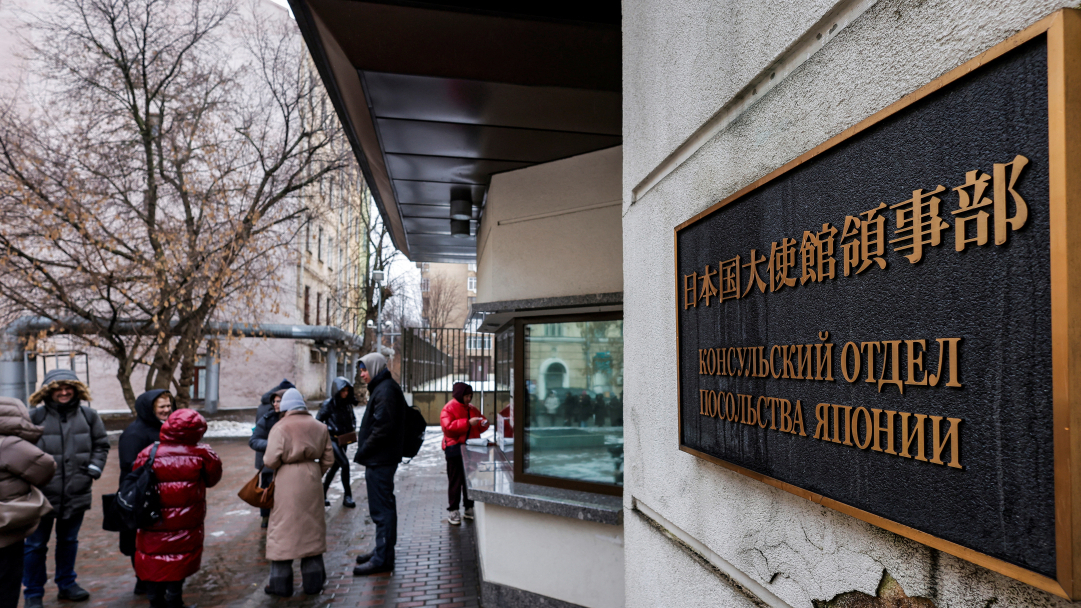
From 1 July, the cost of a single-entry visa to Japan will rise from roughly U.S.$19 to around U.S.$93 - a fivefold increase and the first revision to Japan's visa fees since 1978. A multiple-entry visa will increase from about U.S.$37 to U.S.$186. The change applies to all visa-required nationalities, but in practice it falls hardest on Chinese tourists, who are the only nationality among Japan's five largest inbound visitor markets that still requires a visa.
The immediate financial impact is significant. A family of four from China planning a trip to Japan will now pay ¥60,000 in visa fees alone before booking a flight or hotel. That is roughly U.S.$420 — a meaningful additional expense that could alter the calculations of budget-conscious travellers and casual tourists already weighing Japan against other destinations.
How relations have changed
To understand why this matters, it helps to examine how relations between China and Japan reached this point.
For much of the 2000s and early 2010s, China and Japan maintained a complicated but broadly functional relationship. They were major trading partners, and Chinese tourism became an important economic driver for Japan. Chinese visitors ranked among the country's highest-spending tourists, particularly in luxury retail and electronics. The phrase bakugai("explosive buying") entered the Japanese vocabulary to describe the shopping sprees of Chinese tourists in Tokyo's Ginza district and beyond.
However, relations have cooled for years. Disputes over the Senkaku Islands, known in China as the Diaoyu Islands, have repeatedly flared, with both sides maintaining competing sovereignty claims over the uninhabited chain in the East China Sea. Historical tensions over Japan's actions during the Second World War have never fully healed, while periodic visits by Japanese politicians to Yasukuni Shrine - which honours Japan's war dead, including convicted war criminals - continue to provoke strong reactions in China.
Japan's growing alignment with the U.S. on China-related security policy, including support for Taiwan and participation in semiconductor export controls targeting China, has further deepened political friction.
Chinese arrivals continue to fall
Against that backdrop, Chinese tourism to Japan recovered after the pandemic only to reverse course again. Foreign visitors to Japan totalled 3.559 million in May 2026, down 3.6% year on year, a decline driven largely by falling Chinese arrivals. Mainland Chinese visitors numbered just 313,000 during the month, down 60.4% from a year earlier.
This is not a temporary dip. Chinese arrivals have now fallen for six consecutive months, reflecting geopolitical tensions, growing boycott sentiment among younger Chinese consumers and a perception that Japan is no longer as welcoming as it once was.
Part of the shift is cultural. A new generation of Chinese travellers, who are more confident, more internationally mobile and more politically aware, has increasingly chosen alternative destinations. Southeast Asia, Europe, the Middle East and domestic tourism within China have all benefited from the shift away from Japan. South Korea, despite its own complicated history with China, has more aggressively courted Chinese tourists and recorded a stronger recovery in arrivals. Japan, by contrast, has at times appeared indifferent to the trend.
Economic rationale meets political reality
Japan insists the visa fee increase is driven by economics rather than politics. Officials say the changes reflect inflation and the sharp depreciation of the yen in recent years. As the yen has weakened against both the yuan and the U.S. dollar, Japan's previous visa fees had become relatively inexpensive compared with those charged by other developed countries.
The new fees bring Japan more closely into line with charges imposed by many European countries for similar visas. The government also expects the higher fees to generate an additional U.S.$730 million in annual revenue, which it says is needed to cover rising administrative costs as international tourism has expanded. Officials have also pointed to overtourism in destinations such as Kyoto, Osaka and Mount Fuji as another reason to slow visitor growth by increasing the cost of entry.
Those arguments are reasonable on their own terms. However, they sit awkwardly alongside the broader political context. Japan is increasing the cost of entry for the only major tourism market that still requires a visa, at a time when visitor numbers are already falling and relations between the two governments remain strained. Whether or not the policy is intended to discourage Chinese tourists, its practical effect may be to do exactly that.
Tourism industry watches closely
For Japan's tourism industry, that prospect is a genuine concern. Hotels, department stores, tourist attractions and travel companies in cities that depend heavily on Chinese spending are already watching arrival numbers decline. Increasing costs at the visa stage risks accelerating that trend.
South Korea charges no visa fee for Chinese tourists, while Thailand, Singapore and several European countries are actively reducing barriers to attract more Chinese visitors. Japan is moving in the opposite direction.
For Chinese travellers, the practical message is clear: visiting Japan has just become noticeably more expensive. Whether that ultimately persuades people to abandon trips they were already reconsidering or simply adds another source of irritation to an already complicated relationship is something that visa application figures for July and August are likely to reveal.





















What is your opinion on this topic?
Leave the first comment