U.S. President Donald Trump has signed an executive order calling for a reduction in the number of vaccines routinely recommended for children and endorsing changes to how some immunisations are administered, reigniting debate over U.S. vaccine policy and public health.
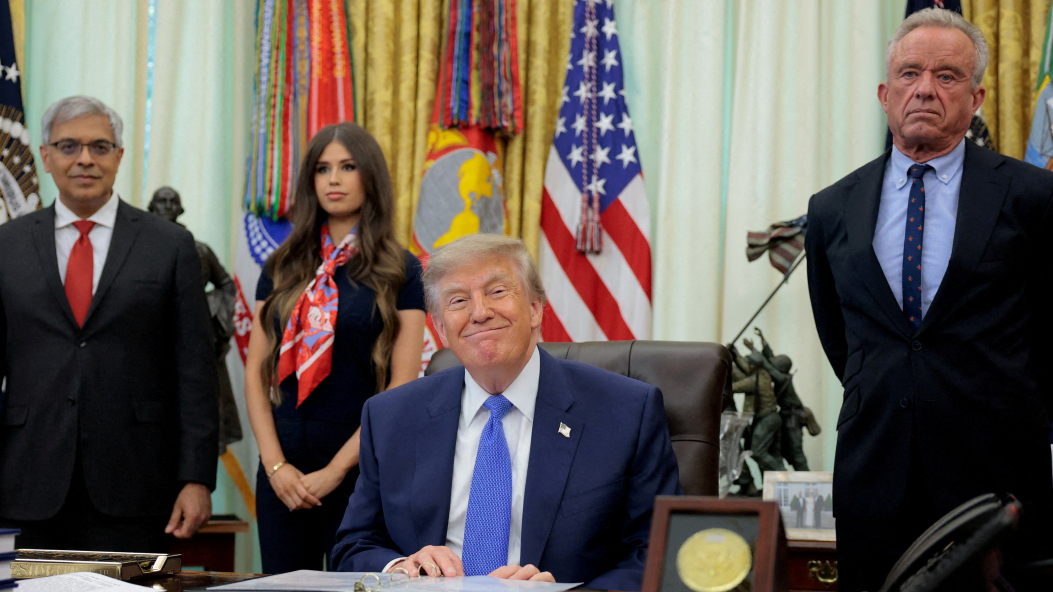
Speaking at the White House on Monday, Trump said his administration would recognise what he described as "gold standard" childhood vaccine recommendations covering 11 core immunisations, rather than the 18 currently recommended by the American Academy of Pediatrics.
Under the proposal, vaccines for diseases such as measles, mumps, rubella, polio, diphtheria, tetanus, pertussis, chickenpox, pneumococcal disease, Haemophilus influenzae type B and human papillomavirus would remain on the recommended schedule.
However, Trump said vaccinations against hepatitis B, COVID-19 and influenza would no longer be routinely recommended for all children.
Focus on MMR vaccine
The order also calls for separating the measles, mumps and rubella (MMR) vaccine into individual shots rather than administering them as a combined vaccine.
Trump argued that children today receive significantly more vaccinations than previous generations and suggested that spacing out injections would be safer.
The president has previously questioned the safety of the MMR vaccine and on Monday again raised concerns, claiming the combined shot could be harmful if administered at once.
Public health authorities disagree. The U.S. Centers for Disease Control and Prevention (CDC) states that there is no scientific evidence showing any benefit from separating the combined MMR vaccine into three separate injections. The CDC also says the vaccine is safe and that the risks posed by measles, mumps and rubella are far greater than the risks associated with vaccination.
Autism claims rejected by scientists
Trump linked the changes to rising autism rates, arguing that today's childhood vaccination schedules differ significantly from those used decades ago.
However, extensive scientific research has repeatedly found no connection between vaccines and autism.
One of the largest studies on the issue, conducted in Denmark and published in 2019, analysed data from more than 650,000 children and found no evidence that the MMR vaccine causes or triggers autism. Numerous other studies conducted over the past two decades have reached similar conclusions.
Medical organisations and public health experts have consistently rejected claims that childhood vaccinations contribute to autism spectrum disorders.
Questions over implementation
Health and Human Services Secretary Robert F. Kennedy Jr. said the proposed changes are intended to give parents greater choice rather than prohibit access to vaccines.
Even so, the federal government's ability to impose the recommendations is limited.
While federal agencies issue vaccination guidance, school immunisation requirements are generally set at the state level. Any major changes to vaccine schedules would therefore require action by individual states rather than the White House alone.
Public health concerns
The announcement has raised concerns among health experts, who warn that reduced vaccination rates could lead to outbreaks of diseases that have largely been controlled through immunisation programmes.
Many specialists argue that increasing the number of doctor visits required for separate vaccinations could lead to missed appointments and leave children vulnerable to infection during the gaps between doses.
The CDC currently recommends two doses of the combined MMR vaccine, with the first administered between 12 and 15 months of age and the second between four and six years old.
Public health advocates fear that changes to longstanding vaccination recommendations could undermine confidence in immunisation programmes at a time when several countries have seen a resurgence of preventable diseases, including measles.
Read more:





















What is your opinion on this topic?
Leave the first comment