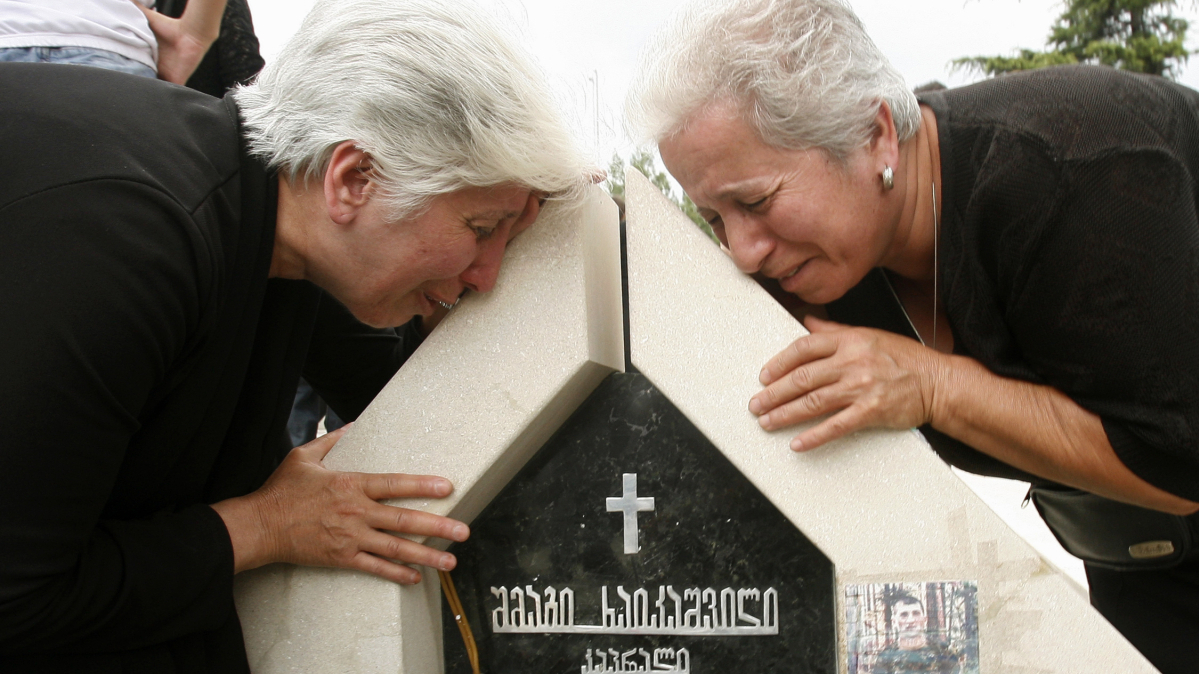
Russia has welcomed what it describes as a shift in Georgia’s approach to the August 2008 war, praising statements that place responsibility for the conflict on former President Mikheil Saakashvili and his government.
In a statement marking the 18th anniversary of the five-day war, Russia’s Foreign Ministry said it welcomed “continuing attempts in Georgian society to reassess the events of August 2008” and described recognition of the Saakashvili government’s responsibility for starting the conflict as justified.
Moscow also welcomed calls from members of the ruling Georgian Dream party for reconciliation with Abkhazia and the Tskhinvali region, also known as South Ossetia.
It urged Tbilisi to negotiate a legally binding non-use-of-force agreement with the de facto authorities in the two regions and begin talks on delimiting what Russia considers their state borders.
Georgian Dream increasingly blames Saakashvili
The statement comes as Georgian Dream has increasingly accused Saakashvili and his United National Movement of responsibility for the 2008 conflict.
Prime Minister Irakli Kobakhidze reiterated that position around this year’s anniversary, accusing the former government of acting against Georgia’s national interests.
The issue has become increasingly prominent in Georgian domestic politics. However, Tbilisi’s official position continues to regard Abkhazia and South Ossetia as Georgian territories under Russian occupation.
On the anniversary, Georgia’s Foreign Ministry again called on Moscow to withdraw its forces and fulfil the EU-mediated ceasefire agreement signed on 12 August 2008.
What did the 2008 investigation find?
The EU-commissioned Independent International Fact-Finding Mission, led by Swiss diplomat Heidi Tagliavini, concluded that large-scale hostilities began with Georgia’s shelling of Tskhinvali on the night of 7-8 August.
However, the report did not assign overall responsibility for the conflict to Georgia alone, examining a longer period of escalating tensions and actions by all sides.
The war ended after an EU-mediated six-point ceasefire. Russia subsequently recognised Abkhazia and South Ossetia as independent states and maintains troops there, while Georgia and most of the international community regard the territories as part of Georgia. The EU continues to describe Russia’s military presence there as an occupation and says it violates Moscow’s obligations under the 2008 ceasefire.
Read more










What is your opinion on this topic?
Leave the first comment