Millions of people across 13 countries are expected to face worsening food insecurity between June and November 2026, according to a new report from the Food and Agriculture Organization (FAO) and the World Food Programme (WFP).
The latest Hunger Hotspots report warns that conflict, economic shocks, climate extremes and a severe shortage of humanitarian funding are pushing several regions closer to famine conditions. Around 266 million people are now experiencing high levels of acute food insecurity across the identified hotspots.
The report identifies Sudan, South Sudan, Yemen and Palestine as the areas of greatest concern, while north-east Nigeria and Somalia are also facing increasingly severe risks.
The UN agencies warned that food assistance and emergency support programmes are facing unprecedented financial constraints.
Funding for food assistance, emergency agriculture and nutrition programmes in food crisis settings fell by an estimated 59 per cent between 2022 and 2025, dropping to its lowest level in nearly a decade.
The report says the decline in funding comes as the number of people facing severe hunger continues to rise, raising fears that humanitarian organisations may struggle to respond effectively.
FAO Deputy Director-General Beth Bechdol said the international community already knows where the next hunger emergencies are likely to occur, but the key challenge is acting quickly enough and at sufficient scale to prevent further deterioration.
WFP Acting Executive Director Carl Skau warned that conflict and disasters are forcing families to make impossible choices about who eats and who goes hungry, stressing that without immediate action millions more could move closer to famine.
Sudan remains the epicentre of the crisis
Sudan continues to face one of the world's worst hunger emergencies.
A risk of famine has been identified in 14 areas across North Darfur, South Darfur and South Kordofan through September 2026. Nearly 19.5 million people, or 41 per cent of the population, experienced acute food insecurity through May.
The number of people projected to face catastrophic levels of hunger is expected to rise to 200,000 during the June to September period.
In South Sudan, 7.8 million people, representing 55 per cent of the population, are expected to face crisis-level hunger or worse between April and July 2026. Approximately 73,000 people are projected to experience catastrophic food insecurity, while four counties remain at risk of famine.
Yemen also remains among the world's most severe food crises. Earlier estimates indicated that more than 18 million people could face crisis-level or worse food insecurity in 2026, including 5.5 million people in emergency conditions and 41,000 people facing catastrophic hunger.
Nigeria and Somalia added to highest-risk category
North-east Nigeria has been added to the list of areas of highest concern after projections showed that around 15,000 people in Borno State could face catastrophic food insecurity between June and August.
Somalia has also entered the highest-risk category, with around six million people projected to experience acute food insecurity. The report warns that Burhakaba District in the Bay region faces a risk of famine following years of drought, conflict and poor harvests.
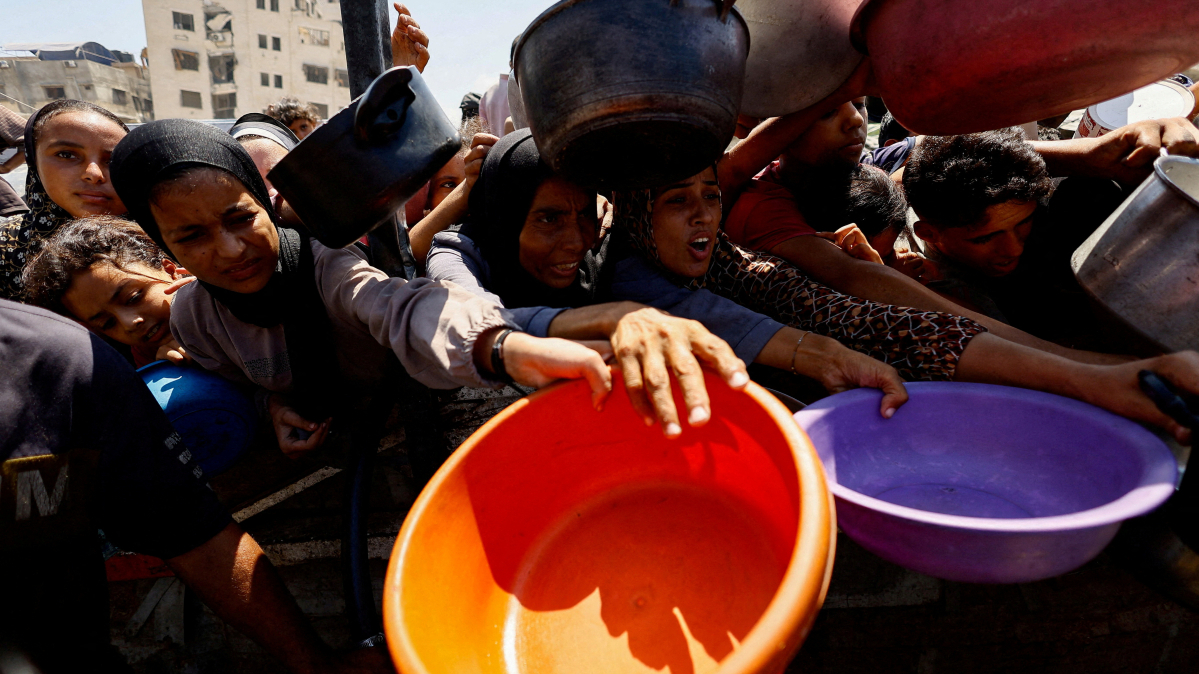
Gaza situation remains fragile
In Palestine, conditions in the Gaza Strip have improved since the October 2025 ceasefire but remain highly fragile, according to the report.
The entire territory faced a risk of famine through mid-April 2026, with around 1.6 million people requiring urgent assistance. More than half a million people were experiencing emergency levels of food insecurity, while nearly 2,000 people were projected to face catastrophic hunger.
The report also lists Afghanistan, the Democratic Republic of the Congo and Haiti as hotspots of very high concern.
Meanwhile, Myanmar and Mali are expected to see worsening conditions due to conflict and economic pressures. Lebanon and Madagascar have also been added to the list because of renewed hostilities and adverse weather conditions.
The UN agencies warned that additional shocks, including the ripple effects of the Middle East conflict and an Ebola outbreak in eastern Democratic Republic of the Congo, could further disrupt livelihoods, markets and humanitarian operations.
FAO and WFP are urging governments and international donors to increase humanitarian assistance, improve access to affected populations, and invest in programmes that strengthen resilience and protect livelihoods.
The agencies stressed that early intervention is significantly more cost-effective than responding after crises have escalated. They warned that without stronger political commitment and predictable financing, hunger emergencies are likely to deepen across some of the world's most vulnerable regions in the months ahead.





















What is your opinion on this topic?
Leave the first comment