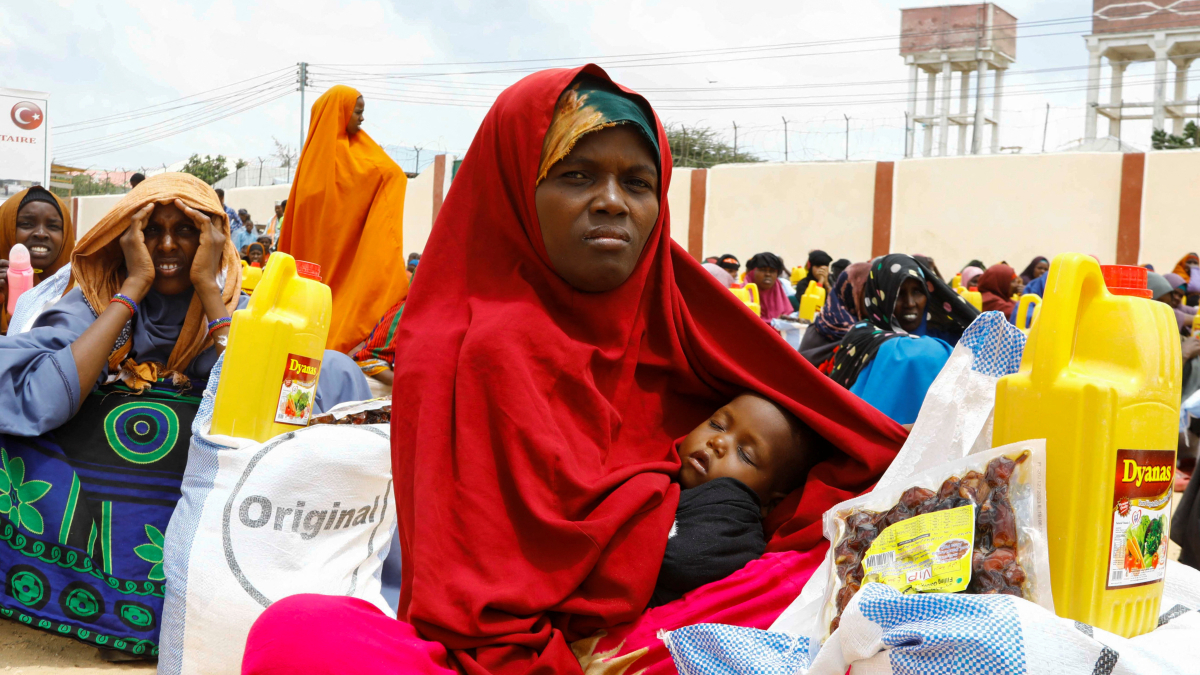
The United Nations World Food Programme (WFP) said on Friday that its life‑saving food and nutrition assistance in Somalia could end by April without urgent funding, leaving millions at risk of severe hunger.
Two consecutive failed rainy seasons, ongoing conflict, and mass displacement have pushed Somalia into one of the most complex hunger crises in recent years.
WFP Director of Emergency Preparedness and Response Ross Smith said the situation is “deteriorating at an alarming rate” and that immediate support is crucial to prevent a humanitarian catastrophe.
The WFP has the operational capacity and field teams ready to respond but urgently needs $95 million to sustain life-saving assistance from March to August 2026, or aid could cease by April.
Millions facing food insecurity
Approximately 4.4 million people – around a quarter of the population – are experiencing crisis-level food insecurity or worse, including nearly one million facing severe hunger.
Nearly two million children are acutely malnourished, with over 400,000 suffering from severe acute malnutrition. In the past five months, about half a million people have been displaced.
Funding shortfalls reduce aid
Funding shortages have forced the WFP to reduce assistance. Earlier this year, 2.2 million people received aid, but support now reaches just over 600,000, leaving only one in seven in need.
Nutrition programmes for pregnant women and young children have fallen from nearly 400,000 in October 2025 to 90,000 in December.
“We are at a critical moment; without urgent action, we may be unable to reach the most vulnerable in time, most of them women and children,” Smith said.
Lessons from past crises
Somalia declared a national drought emergency in November 2025 following severe water shortages, crop and livestock losses, and widespread displacement. The current situation mirrors the 2022 crisis, when famine was narrowly avoided thanks to large-scale international support.
“If our already reduced assistance ends, the humanitarian, security, and economic consequences will be devastating, with effects felt far beyond Somalia’s borders,” Smith added.
The WFP called on donors and governments to provide immediate support to ensure timely food aid reaches the most vulnerable populations.

















What is your opinion on this topic?
Leave the first comment