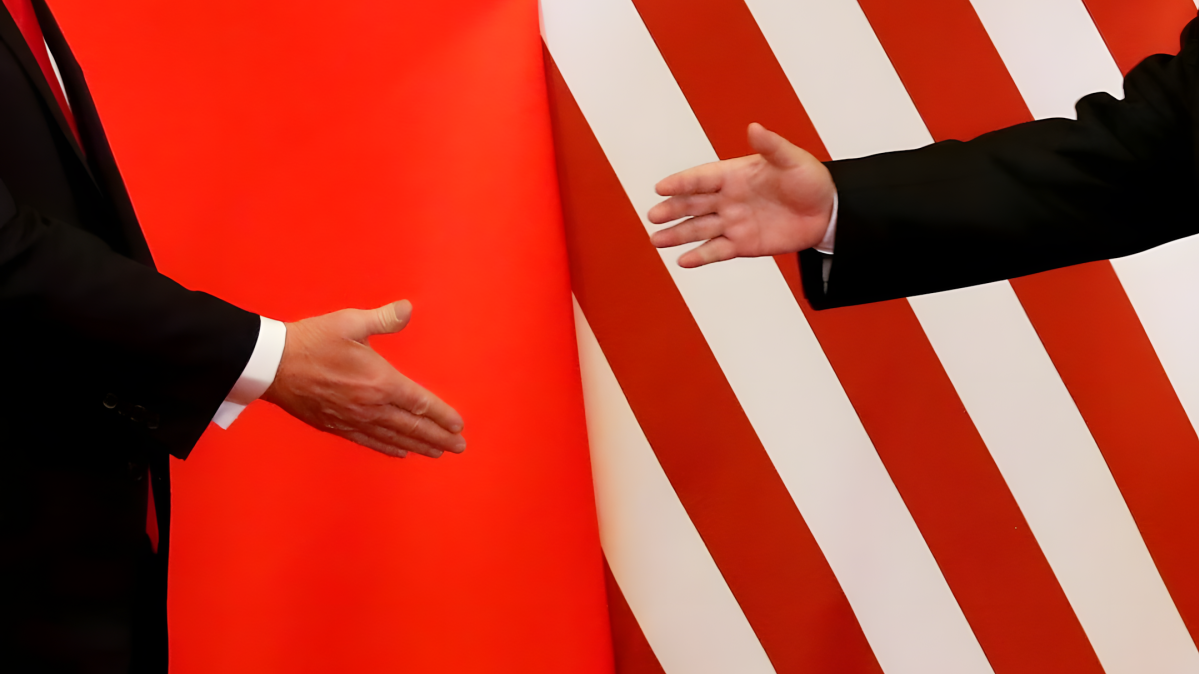
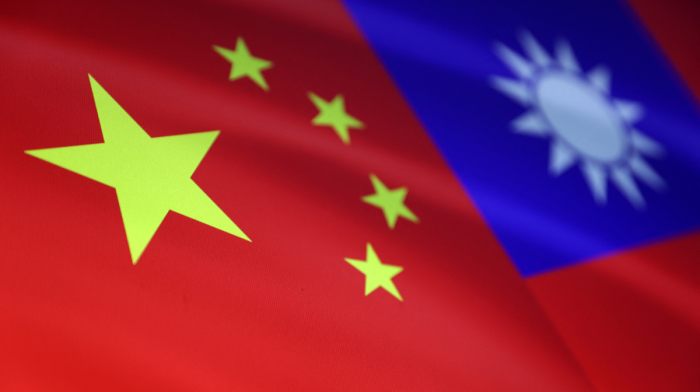
China has warned the U.S. that Taiwan will dominate next month’s summit in Beijing, raising pressure on Washington and concern in Taipei over any shift in long-standing American policy.
The move marks a sharp increase in diplomatic pressure ahead of U.S. President Donald Trump’s visit. The two leaders avoided the issue at their previous summit in South Korea last year, but Beijing is now forcing it to the forefront, heightening concern in Taipei.
Taiwan’s government is watching closely for any sign that Trump - whose transactional approach to foreign policy has unsettled allies - might soften longstanding U.S. security commitments in exchange for trade concessions from China, such as large purchases of U.S. aircraft or agricultural goods.
The logic of major power relations
From Beijing’s perspective, the summit is an opportunity to draw a clear red line.
"Regarding Taiwan, the logic is simple: if the US does not want to fight a major war with China over Taiwan, it should not support Taiwan independence," said Wu Xinbo, dean of Fudan University’s Institute of International Studies and a policy adviser to China’s foreign ministry.
"Trump has no interest in going to war with China. To avoid a major conflict that involves the US, he should make it clear that he won't support independence or take actions that encourage a separatist political agenda."
China’s foreign ministry reinforced the message, describing Taiwan as the country’s absolute "core of core interests" and the foundation of China-U.S. relations. It added: "'Taiwan independence' and peace in the Taiwan Strait are as incompatible as fire and water."
Both sides remain in contact over the summit agenda, though the U.S. State Department declined to comment.
Washington’s position remains delicate. The U.S. follows a “one China policy,” acknowledging but not accepting Beijing’s claim over Taiwan. While it does not support formal independence, it is legally committed to helping Taiwan maintain self-defence capabilities.
Analysts warn that even subtle changes in U.S. language could have significant consequences - affecting Beijing’s assessment of U.S. resolve, unsettling Taipei and raising questions about wider American commitments in Asia.
Arms sales and linguistic pressure
Trump administration officials insist there has been no change in U.S. policy and continue to criticise China’s military and economic pressure on Taiwan.
Privately, officials say Trump has approved more arms sales to Taiwan in just over a year of his second term than Joe Biden did during his presidency.
Beijing, however, is pushing for a shift in wording. At a 2024 summit, Xi asked the U.S. to change its position from “does not support” Taiwanese independence to “we oppose Taiwan independence.” Washington declined.
Sources involved in preparations for the Beijing summit say China has continued to press this point.
Taiwanese officials remain cautious. "We will be watching whether the US makes any changes to its position on Taiwan Strait issues as a result of that meeting," said Shen Yu-chung, deputy minister at Taiwan’s Mainland Affairs Council.
"We will use the remaining time to intensify policy communications with the US."
Taiwan’s foreign ministry also sought to reassure the public, noting that since Trump returned to office, his administration "has continuously reaffirmed its support for Taiwan".
Pressure builds across multiple fronts
China has not ruled out using force to bring Taiwan under its control and has stepped up pressure ahead of the summit.
In December, the People’s Liberation Army conducted large-scale military exercises around the island following a U.S. announcement of an $11 billion arms package for Taipei. More recently, Beijing has offered economic incentives, including trade and tourism measures.
Tensions have also extended into diplomacy. Taipei accused China of pressuring three African countries to deny overflight rights for President Lai Ching-te’s planned visit to Eswatini, leading to its cancellation.
Lai, who says Taiwan is already a sovereign state known as the Republic of China, is viewed by Beijing as a “separatist.”
In response, Raymond Greene, the top U.S. diplomat in Taiwan, has said American commitments remain “rock solid,” including those under the Taiwan Relations Act.
Former Trump adviser Robert O’Brien also rejected suggestions of a policy shift. "He would not become the first American president to lose Taiwan," he said. "That would not be a Donald Trump goal to have in mind. That's not the legacy he wants."
Strategic stakes for Washington
Beyond diplomacy, Taiwan holds significant strategic value for the United States.
Its location makes it a key intelligence asset. U.S. monitoring systems on the island, including radar and listening posts, provide insight into Chinese military activity.
"Does the United States really want to lose one of its best locations for gathering intelligence on China?" a Western security source said.
As the summit approaches, even minor changes in tone or language could have far-reaching consequences for regional stability.











What is your opinion on this topic?
Leave the first comment