The United States' claims about China exerting military pressure on Taiwan are distorted, and demonstrate its "malicious intentions", a government spokesperson in Beijing said on Wednesday.
China has stepped up military activity around democratically governed Taiwan, which it views as its own territory, holding several rounds of war games, most recently with live-fire drills in late December.
"Certain people on the U.S. side are jumping up and down, continuously rehashing the so-called 'mainland threat' or 'military pressure,'" Chen Binhua, a spokesperson for China's Taiwan Affairs Office, told reporters.
This represented "a complete distortion of the facts and harbours malicious intentions," he added, saying Taiwan was an internal affair for China, which would brook no outside interference.
Chen urged the United States to act with great caution, and handle Taiwan-related matters carefully and prudently.
China has repeatedly demanded a halt to weapons sales to Taiwan by the United States, its most important international backer, despite a lack of formal diplomatic ties.
Wednesday's remarks came after the U.S. State Department urged China last week to talk to Taiwan and halt its military and other pressure on the island, after Taiwan opposition leader Cheng Li-wun met President Xi Jinping in Beijing.
China refuses to speak to Taiwan President Lai Ching-te, calling him a "separatist". Lai rejects Beijing's sovereignty claims, saying only Taiwan's people can decide their future.
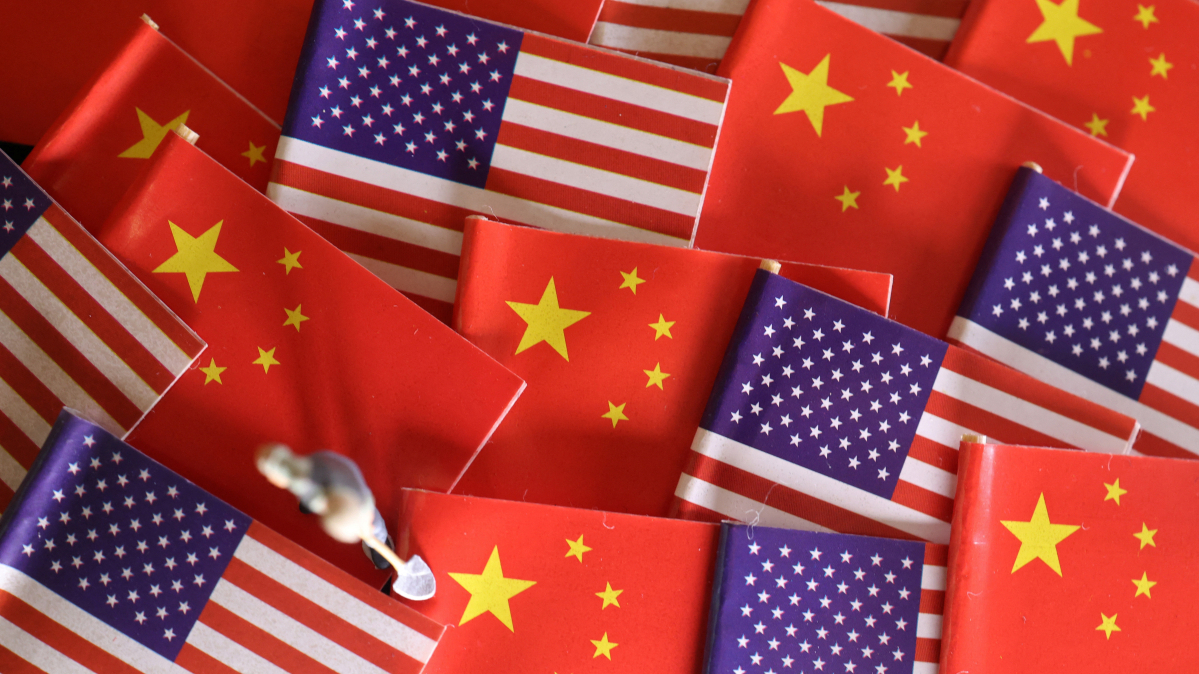
Meanwhile, U.S. President Donald Trump is due to meet Chinese President Xi Jinping in May during his first visit to China in eight years, a closely watched trip that comes just a year after Washington rolled out sweeping and at times erratic global tariffs.
The confrontation between the world's two top economies has evolved from slapping tit-for-tat tariffs to managing tensions following numerous rounds of trade talks, as well as phone calls and a meeting between their presidents last year.
'Path of peace'
Cheng said she aimed to foster peace with her visit, when China unveiled measures it said would benefit Taiwan, such as easing controls on exports of food, though it did not cease regular military activities around the island during her trip.
Taiwan's government says it should be leading engagement efforts with China rather than private party-to-party contacts.
Cheng, whose visit was a month before one planned by U.S. President Donald Trump, hopes China and the United States can reconcile and cooperate.
"We can definitely go down the path of peace," Cheng, the Chairwoman of Taiwan's largest opposition party, the Kuomintang, told a Taiwan radio station on Wednesday.
"This is the important message I hope to send to Washington," Cheng said.
China has never renounced the use of force to bring Taiwan under its control, but says it prefers "peaceful reunification", a message it has ramped up in recent weeks.
Chen hoped Taiwan's people would see the advantages of such a step, from cheaper living costs to sprucing up aged housing.
"In short, national reunification is not only a great moral cause, but also of great benefit," he added.











What is your opinion on this topic?
Leave the first comment