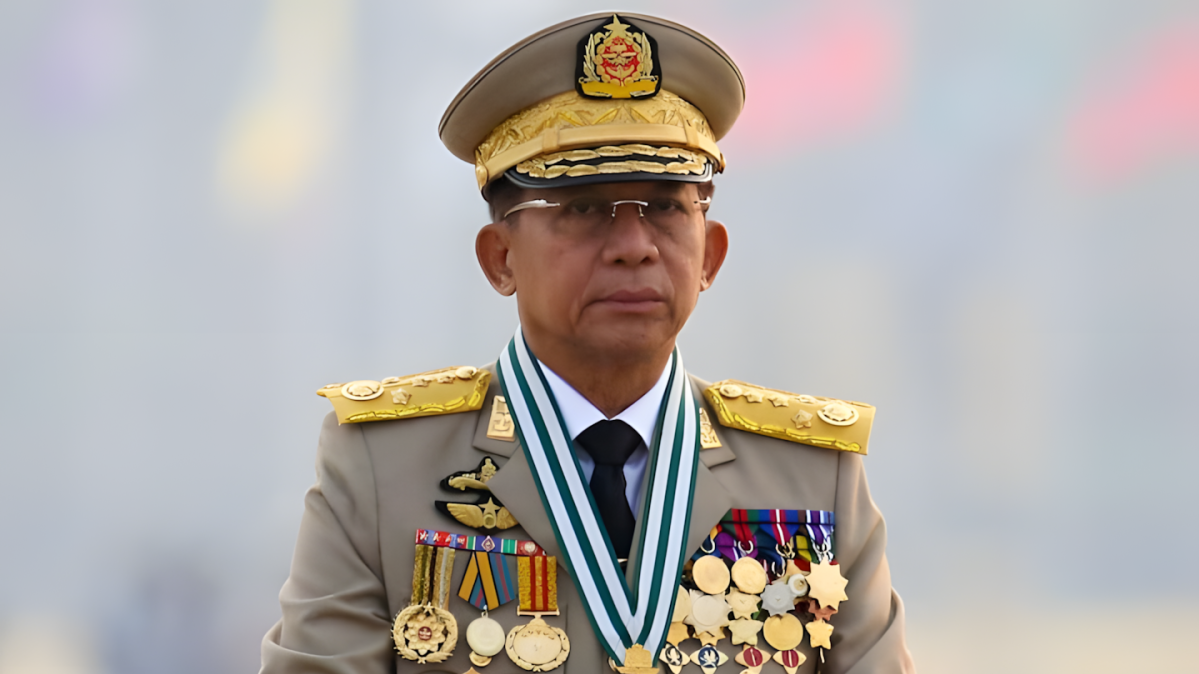
Myanmar’s newly formalised head of state, President Min Aung Hlaing, has authorised an amnesty that will see 4,335 prisoners released from the country’s overcrowded jails, state television reported on Friday.
The mass pardon is the third such move by the regime in the past six months and coincides with the traditional Buddhist New Year festival in April. Amnesties are a customary political tool in Myanmar, typically used to mark both the New Year and Independence Day in January.
However, the announcement broadcast on state-run MRTV did not include specific details. The names of those granted amnesty were not disclosed, making it difficult for independent monitors to verify whether any political prisoners or journalists were among those released.
Commutations and foreign deportations
The MRTV report confirmed that 179 of those freed are foreign nationals, who will be deported immediately upon release.
It also outlined changes to sentencing. Existing death sentences will be commuted to life imprisonment, while life sentences will be capped at 40 years. Other prisoners will receive reductions of one-sixth of their terms. The report did not specify how these reductions would be applied.
The lack of transparency remains a key concern for international observers. According to the Assistance Association for Political Prisoners (AAPP), more than 30,000 people have been detained on political charges since the military, led by then-Senior General Min Aung Hlaing, seized power in February 2021. The group says many are imprisoned for opposing military rule.
The shadow of Aung San Suu Kyi
Uncertainty remains over whether any senior political figures are included in the amnesty. Those still detained include former leader and Nobel laureate Aung San Suu Kyi, ex-president Win Myint, members of the National League for Democracy (NLD), and thousands of activists and protesters.
Aung San Suu Kyi is serving a cumulative 27-year sentence on charges widely condemned by her supporters, international legal experts and Western governments as politically motivated. These include incitement, corruption, election fraud and breaching a colonial-era state secrets law.
Now aged 80, she has not been seen in public since her trials concluded, and her whereabouts remain undisclosed. In interviews with Reuters last year, her son Kim Aris said he had received only limited updates and expressed concern about her health, citing her age and the conditions of her detention.
Rebranding amid ongoing conflict
The amnesty forms part of a broader effort by Min Aung Hlaing to present himself as a civilian leader rather than a military ruler. Previous amnesties in November and January saw thousands of prisoners released.
This is his first such move since formally assuming the presidency. The 69-year-old was elected by the military-dominated parliament on 3 April, consolidating his control under what critics describe as a nominal constitutional transition.
Speaking at his inauguration in Naypyitaw last week, he said “peace, stability, and reconciliation” were his government’s priorities. However, conflict continues across the country, with ethnic armed groups and pro-democracy forces battling the military.
The fighting has displaced more than 3.5 million people and created a severe humanitarian crisis. Many international observers view the amnesties as largely symbolic unless political prisoners are released and hostilities end.










What is your opinion on this topic?
Leave the first comment