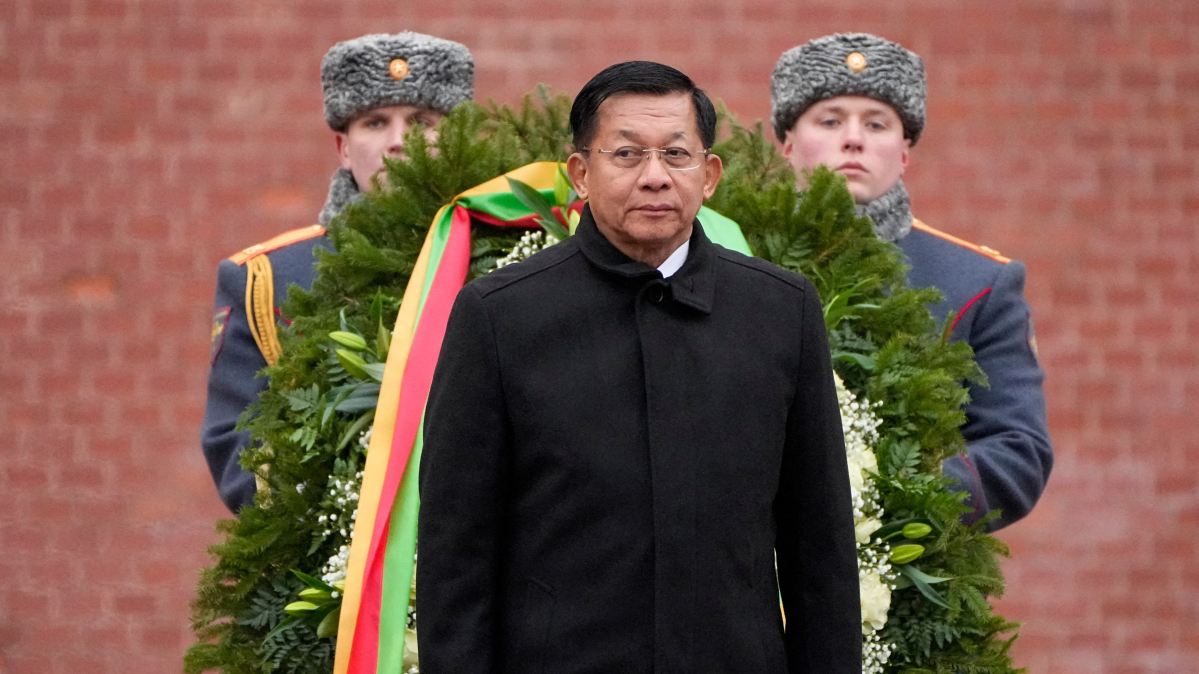
Myanmar’s newly installed president, Min Aung Hlaing, has said his government faces major challenges and must work to restore the country’s international standing, including rebuilding strained ties with Southeast Asia after years of isolation.
Speaking at his inauguration in the capital, Naypyidaw, the former army chief and architect of the 2021 coup said his administration would focus on democracy, peace and economic recovery, while trying to encourage foreign investment back into the resource-rich country.
“Myanmar is now well on its way toward democracy but the new government has a lot of challenges to overcome,” he told a packed parliament made up largely of military-backed lawmakers and appointees.
He said the government would pursue a roadmap based on “democracy and federalism”, adding that its priorities would be stability and national reconciliation. However, the brief speech offered few concrete details on how those goals would be achieved.
Min Aung Hlaing also signalled an intention to improve relations with the Association of Southeast Asian Nations (ASEAN), which has largely frozen Myanmar out of regional diplomacy since the military takeover five years ago.
“We will enhance international relations and strive to restore normal relations with ASEAN,” he said, in remarks delivered in front of more than 50 foreign delegates, including representatives from China, Russia and Thailand - among the few countries that have maintained engagement with the junta.
His rise to the presidency formalises his hold on power following the 2021 coup that overthrew an elected government, triggered mass protests and plunged Myanmar into civil war. The military now faces widespread armed resistance across the country, alongside accusations of serious human rights abuses, which it denies.
The inauguration also saw the swearing-in of a new cabinet dominated by former military officials and long-time allies of the armed forces, which has ruled Myanmar directly for much of the past six decades.
Min Aung Hlaing said his government would consider “appropriate amnesties” as part of efforts towards reconciliation, though he gave no further detail.
Thousands of political detainees remain in custody, including former civilian leader and Nobel laureate Aung San Suu Kyi.
The president urged unity and stability as priorities for his administration. When asked by reporters about his first steps in office, he said he would focus on peace, order and development, calling on the country to “work hard” together.
Despite the rhetoric of reform, his speech contained little indication of how Myanmar plans to resolve its ongoing conflict or end the international sanctions and diplomatic isolation that have deepened since the coup.










What is your opinion on this topic?
Leave the first comment