The U.S. Senate on Wednesday rejected two legislative resolutions aimed at stopping the sale of heavy bombs and military bulldozers to Israel.
The measures failed as President Donald Trump’s fellow Republicans united in support of his administration’s continued military backing for Israel.
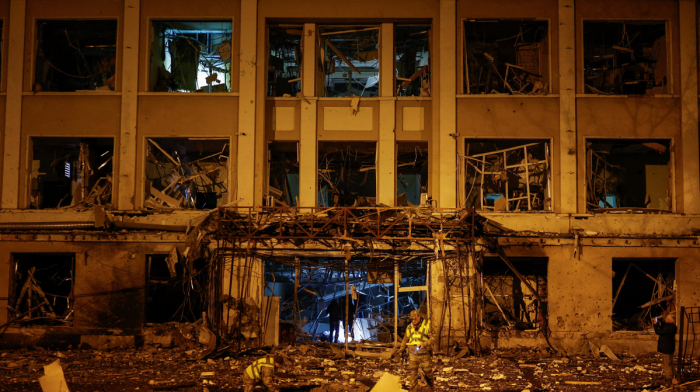
Despite their defeat, the votes highlighted a widening political divide. A large majority of the 47-member Senate Democratic caucus supported the resolutions, reflecting growing concern within the party over the impact of Israeli strikes on civilians in Gaza, Lebanon and the escalating conflict involving Iran.
For decades, bipartisan support for Israel in the U.S. Congress has made efforts to block weapons sales highly unlikely to succeed. However, supporters of the resolutions hope that forcing public votes will increase pressure on both Israel and future U.S. administrations to do more to protect civilians.
Backers of the sales argue that Israel remains a key democratic ally in a volatile region and that the United States has both a strategic and moral duty to provide military support.
The debate over bombs and bulldozers
Senator Bernie Sanders of Vermont, an independent who caucuses with Democrats, led the opposition. He brought the resolutions to the Senate floor, arguing the proposed sales breach conditions set out in the U.S. Foreign Assistance Act and the Arms Export Control Act, which restrict arms transfers to countries engaged in persistent human rights violations.
The first resolution targeted a $295 million deal for armoured D9R and D9T Caterpillar bulldozers, including spare parts and support. The Senate voted 59 to 40 against advancing it. Seven Democrats joined Republicans in opposing the measure, while Republican Senator Cynthia Lummis of Wyoming did not vote.
The second resolution sought to block the $151.8 million sale of 12,000 BLU-110A/B 1,000-pound unguided bombs and related support. It was defeated by a wider margin of 63 to 36, with eleven Democrats voting alongside Republicans. Republican Senator Thom Tillis of North Carolina was absent.
During the debate, Sanders described how the equipment is used by Israeli forces. He said the bombs are deployed in urban attacks in Gaza and Lebanon, while bulldozers are used to demolish homes and infrastructure in Gaza, Lebanon and the occupied West Bank. "The United States must use the leverage we have - tens of billions in arms and military aid - to demand that Israel ends these atrocities," Sanders said.
Israel has repeatedly denied intentionally targeting civilians, stating that its operations are aimed at militant groups and infrastructure embedded within civilian areas.
A shifting political tide
Although the resolutions failed, the vote counts suggest growing support in Congress for restricting military aid to Israel.
In July last year, similar measures introduced by Sanders were defeated by much larger margins of 73 to 24 and 70 to 27. The increase to roughly 40 senators backing restrictions indicates that unconditional support for military aid is no longer universally accepted within the Democratic Party.
The handling of the arms sales has also drawn criticism. The Trump administration bypassed the standard congressional review process earlier in the current U.S.-Israeli conflict with Iran, invoking emergency powers to expedite the transfers. Officials argued that the urgency of the situation required immediate action, avoiding the usual 15-to-30-day notification and debate period.


















What is your opinion on this topic?
Leave the first comment