The World Bank is preparing a major financial support package to prevent the Middle East war from triggering a global economic crisis.
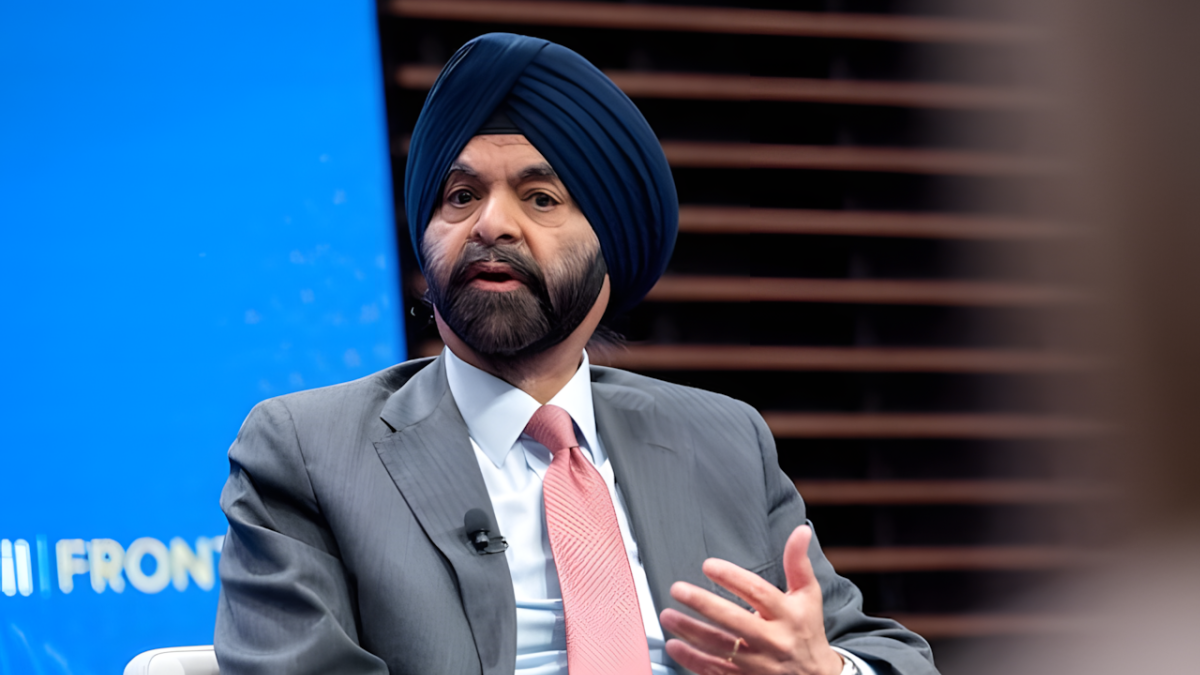
Speaking in Washington on Tuesday, World Bank President Ajay Banga said the institution could mobilise between $80 billion and $100 billion in emergency funding over the next 15 months to support countries hit by the conflict’s economic fallout.
The proposed intervention would exceed the $70 billion the World Bank deployed during the COVID-19 pandemic, highlighting growing concern among global financial leaders about the war’s impact on growth, supply chains and inflation. Highly indebted developing nations are expected to be the most affected.
A tiered approach to crisis management
Addressing an event hosted by the Bretton Woods Committee during the spring meetings of the International Monetary Fund and the World Bank, Banga outlined how the funding would be delivered.
He said vulnerable countries could access an initial $20 billion to $25 billion in the coming months through a “crisis response window”, allowing them to draw up to 10 per cent of pre-approved development funds earlier than planned. A further $30 billion to $40 billion could be made available within six months by redirecting existing programmes towards economic stabilisation.
"I'm trying to create a toolkit that has a tiered response capacity, depending on how this continues, to at least be able to bring adequate firepower to do something about it," Banga stated.
He added that if the war in the Persian Gulf continues and economic conditions worsen, the World Bank would use its balance sheet to expand lending further and reach the $100 billion target. This would be in addition to its regular lending activities.
Downgraded forecasts and energy market volatility
The urgency of the plan was reinforced by data released by the IMF, which on Tuesday downgraded its global growth forecast, citing war-driven increases in energy prices.
The IMF warned of slower growth alongside persistent inflation. It also said that without the conflict, it had expected to raise its global growth forecast by 0.1 percentage point to 3.4 per cent.
Banga, who held talks on Monday with the head of the International Energy Agency and IMF Managing Director Kristalina Georgieva, said there was no quick solution. He warned that energy markets would take time to stabilise even if a ceasefire were agreed immediately.
The inflation trap: Targeted relief over subsidies
Georgieva, speaking separately at the same event, said the global economy could recover if the conflict ends within weeks, but warned conditions would worsen significantly if it continues through the summer.
She confirmed the IMF is already in discussions with countries facing rising fuel costs and supply chain disruption to assess financial needs and prevent sovereign defaults.
Both Banga and Georgieva urged governments to avoid broad energy subsidies, warning they are costly and risk fuelling inflation. Instead, they said support should be targeted at the most vulnerable through temporary cash transfers to ensure the funding supports stability rather than adding inflationary pressure.











What is your opinion on this topic?
Leave the first comment