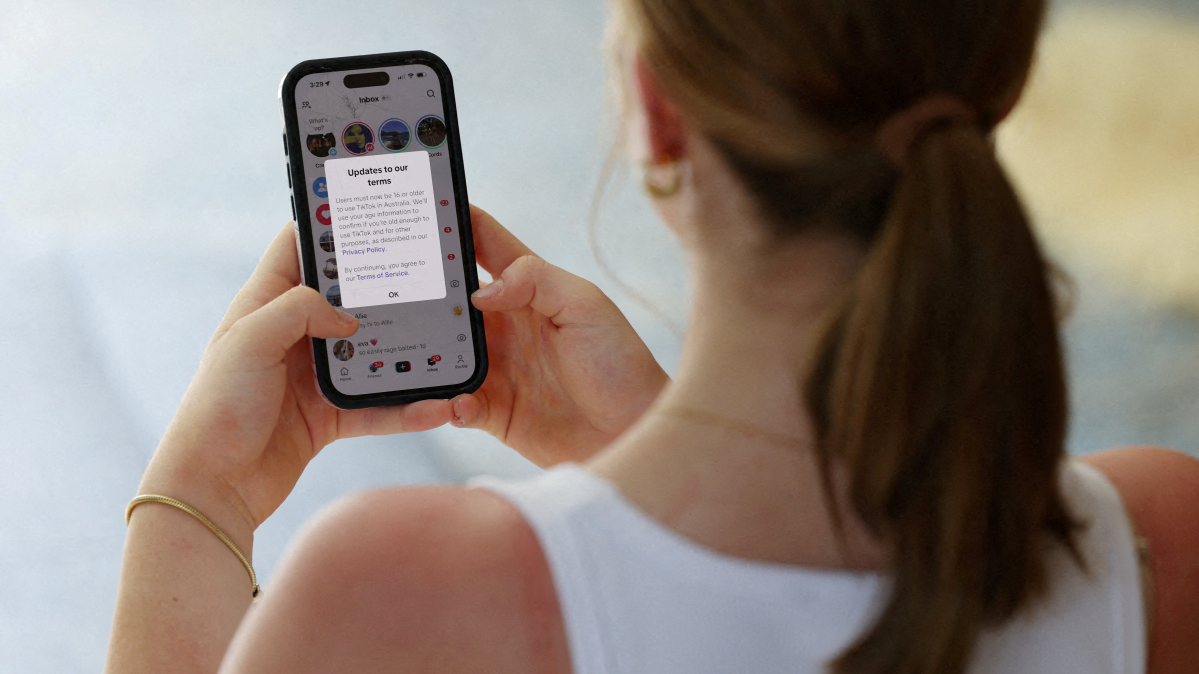
The Australian government has threatened to go to court in a bid to sue social media giants for allegedly flouting a ban on under-16s, as its internet regulator disclosed it is investigating some of the biggest platforms for suspected non-compliance with the world-first measure.
Three months after the ban came into effect, the eSafety Commissioner Julie Inman Grant said her office was probing Meta's platforms Instagram and Facebook, Google's YouTube, Snapchat and TikTok for possible breaches of the law.
In support of Grant's efforts, Communications Minister Anika Wells said the government was gathering evidence "so that the eSafety Commissioner can go to the Federal Court and win".
"We have spent the summer building that evidence base of all the stories that no doubt you have all heard ... about how kids are getting around that," Wells told reporters in Canberra.
At the launch of the ban, the tech giants said they had deactivated 4.7 million suspected underage accounts, however the government said it has faced daily headlines of teenagers evading restrictions or simply keeping their accounts without being asked their age.
Meta and Snap said they were committed to complying with the ban, and a Meta spokesperson added the government's own trial of age-assurance technology found "natural error margins" around the 16 age cutoff.
TikTok declined to comment while a Google spokesperson was not immediately available for comment.
Under the Australian law, the platforms must show how they are taking reasonable steps to under-16s off their services or face fines of up to $34 million (A$49.5 million) per breach. Any fine would have to be pursued in a civil court, with evidence.
The legal threat marks a departure from the warm tone the government was giving in December, when the ban was launched, praising the cooperation of social media companies.
Governments around the world are watching Australia's moves to rein in the tech giants and to see how the ban is enforced and how effective it is, with many countries considering similar regulation to protect children from harms including bullying and body-shaming associated with social media.
Regulation vs compliance
The first comprehensive compliance report since the ban took effect, said measures taken by the platforms were substandard and it would make a decision about next steps by mid-year. The regulator previously said it would only take enforcement action in cases of systemic noncompliance.
The regulator reported major compliance gaps, including platforms prompting children who had previously declared ages under 16, to make fresh age checks, allowing repeated attempts at age-assurance tests until a child got a result over 16 and poor pathways for people to report underage accounts.
"We are now moving into an enforcement stance" Grant said in a statement. "Many Australian children aged under 16 have been able to create accounts on age‑restricted social media platforms by simply declaring they are 16 or older" she continued.
Some platforms did not use age-inference, which estimates age based on someone's online activity, and some only used age-assurance measures such as photo-based checks after a user tried to change their age, rather than at sign‑up.
Nearly one-third of parents reported their under-16 child had at least one social media account after the ban took effect, of which two-thirds said the platform had not asked the child's age, it added.

















What is your opinion on this topic?
Leave the first comment