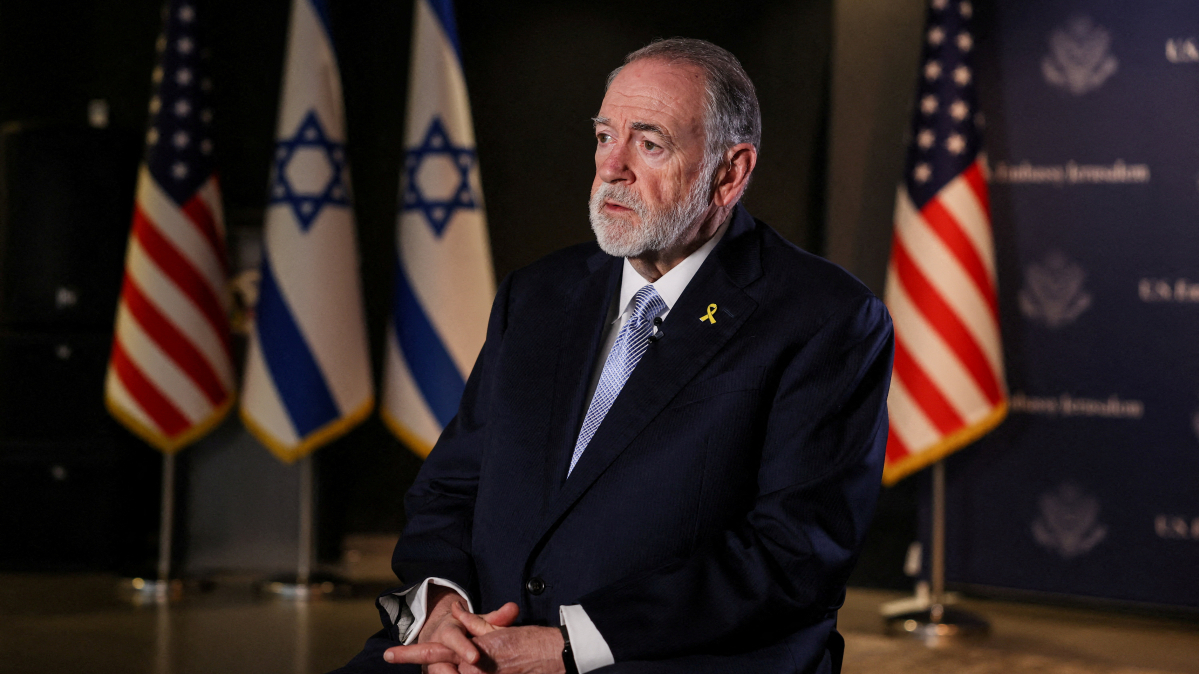
Comments by U.S. Ambassador to Israel Mike Huckabee suggesting that Israel had a biblical right to much of the Middle East drew condemnation over the weekend from countries across the region, which described the remarks as “dangerous and inflammatory”.
Huckabee, an evangelical Christian, has been a staunch supporter of Israel throughout his political career and a longtime defender of Jewish settlements in the West Bank, land which the Palestinians seek for a state.
Most countries view the Israeli settlements in territories captured in the 1967 conflict as illegal. Israel disputes this view and cites biblical and historical ties to the land.
In the interview conducted on Wednesday in Israel and aired on Friday, Carlson asked Huckabee about Israel’s right to exist and about Jewish roots in the ancient land.
Citing the book of Genesis, Carlson questioned whether the modern state of Israel had a right to lands promised in the Bible by God to Abraham, stretching from the Euphrates River to the Nile.
In response, Huckabee said, "It would be fine if they took it all. But I don't think that's what we're talking about here today."
Huckabee continued, "We're talking about this land that the state of Israel now lives in and wants to have peace in, they're not trying to take over Jordan, they're not trying to take over Syria, they're not trying to take over Iraq or anywhere else. They want to protect their people."
Regional reaction
In a joint statement, the Palestinians and several countries in the Middle East and beyond, including Jordan, the United Arab Emirates, Saudi Arabia, Türkiye, Indonesia and Pakistan, said Huckabee’s remarks constituted a violation of international law and the United Nations Charter and posed a threat to regional security.
They said his comments were, "Dangerous and inflammatory remarks, which constitute a flagrant violation of the principles of international law and the Charter of the United Nations, and pose a grave threat to the security and stability of the region."
Egypt’s Foreign Ministry condemned the statements, describing them as a “flagrant departure” from the principles of international law and the UN Charter.
Saudi Arabia said it “strongly condemned” and rejected what it described as Huckabee’s “reckless remarks”, calling them a dangerous precedent for a U.S. official and warning that such statements threatened international peace and security.
Iraq’s Foreign Ministry said in a statement that it supported state sovereignty and rejected policies of domination or imposed realities, urging respect for international law to strengthen regional security and peace.
Iran also condemned Huckabee’s comments. Iranian Foreign Ministry spokesman Esmaeil Baghaei wrote on X that the remarks were “a bold testament to American active complicity” and accused Washington of enabling what he described as Israeli expansionist policies.
He said Iran opposed “such extremist ideological rhetoric,” arguing it would encourage Israel to continue actions against Palestinians and heighten regional tensions.
A U.S. Embassy spokesperson said Huckabee’s comments did not reflect any change in U.S. policy and that his full remarks made clear Israel had no desire to alter its current boundaries.
Israeli officials did not immediately comment on the interview or on the reaction from the countries that signed the joint statement.















What is your opinion on this topic?
Leave the first comment