Türkiye has signalled readiness to contribute to a proposed Gaza stabilisation force during the inaugural Board of Peace meeting on Thursday (19 February), but according to former Turkish diplomat Mehmet Öğütçü, the decisive factor will be whether Israel and the United States agree on Ankara’s role.
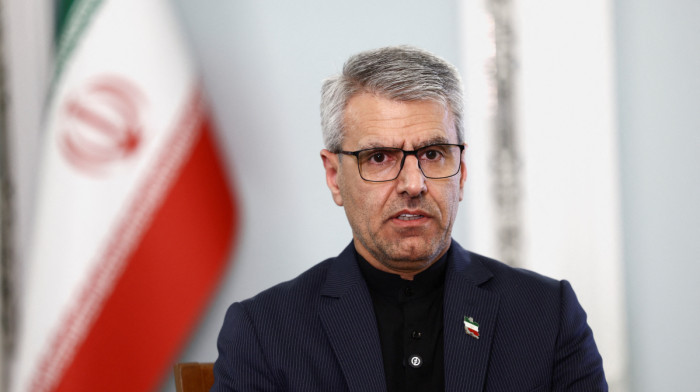
Speaking to AnewZ from London, Öğütçü said Türkiye’s capabilities are not in question and that the uncertainty lies in the political environment.
“What Türkiye can provide is quite open and clear,” he said, pointing to Ankara’s ability to deliver not only financial assistance but also military support, reconstruction of roads and hospitals, police training and humanitarian aid.
However, he noted that Israel, which currently occupies Gaza and seeks to maintain control over its future security and reconstruction architecture, may be reluctant to accept Turkish troops on the ground.
“In Israeli politics there is a very strong anti-Turkish sentiment now,” Öğütçü said.
Whether Israeli authorities would allow Turkish boots in Gaza, he added, remains an open question.
For Ankara’s involvement to move forward, Öğütçü argued that a clear understanding must be reached between United States, Israel and Türkiye regarding the scope and limits of Türkiye’s participation.
He described Türkiye as a potential “bridging country” - a powerful regional actor capable of providing not only financial aid, as Gulf states are expected to do, but also tangible reconstruction and security support. He added that many residents of Gaza view Türkiye as a source of hope, giving Ankara a degree of local legitimacy.
At the same time, Öğütçü cautioned that without a clearly defined mandate, Turkish engagement could carry significant political and economic risks.
“Before Turkey and other nations - Indonesia, Pakistan, Kazakhstan, Morocco - send troops, the role of each country must be well defined at the outset,” he said. Responsibilities in areas such as security, reconstruction, training and peacekeeping would require precise coordination.
Much, he argued, depends on how U.S. President Donald Trump chooses to proceed. Trump would likely face friction with Israeli Prime Minister Benjamin Netanyahu over Türkiye’s role, making Washington’s diplomatic management critical to the initiative’s success.
Even with U.S. backing, Öğütçü warned, the plan could fail if political differences are not reconciled.
“Otherwise, this could prove to be a catastrophe for Gaza again,” he said.
He added that Trump is likely to proceed cautiously, aiming to ensure that any stabilization initiative delivers results acceptable to both Israel and the Palestinians, while avoiding further destabilisation in the region.








What is your opinion on this topic?
Leave the first comment