The United Nations Security Council has expressed deep concern over Israel’s plans to expand control in the West Bank, warning the move threatens the prospects of a two-state solution.
Widespread raids, home takeovers, mass detentions, movement restrictions, and displacement of Palestinian families are raising alarm at the United Nations.
“We are witnessing the gradual de facto annexation of the West Bank,” UN Under-Secretary-General for Political and Peacebuilding Affairs Rosemary DiCarlo told the Security Council on Wednesday.
The session, chaired by UK Foreign Secretary Yvette Cooper, stressed the need to preserve the viability of a Palestinian state.
Somalia, a non-permanent council member, urged the international community to “stand together against any attempt to alter the demographic composition of the Palestinian territories by force or coercion.”
A joint statement issued by UN missions from 85 countries condemned Israel’s actions, calling them “unilateral decisions aimed at expanding Israel’s unlawful presence in the West Bank.”
Israel’s Foreign Minister Gideon Saar dismissed the criticism, calling the council “infected with an anti-Israeli obsession” and emphasising Israel’s historical and documented rights to the territory.
The moves drew strong condemnation from Palestinian side, who view the West Bank as essential for a future independent state.
Khaled Dudin, the Palestinian governor of Hebron, told NBC News last week: “The measures on the ground constitute annexation in every sense of the word. Although it is not publicly announced. In other words, the real annexation exists on the ground while the media talks about non-annexation.”
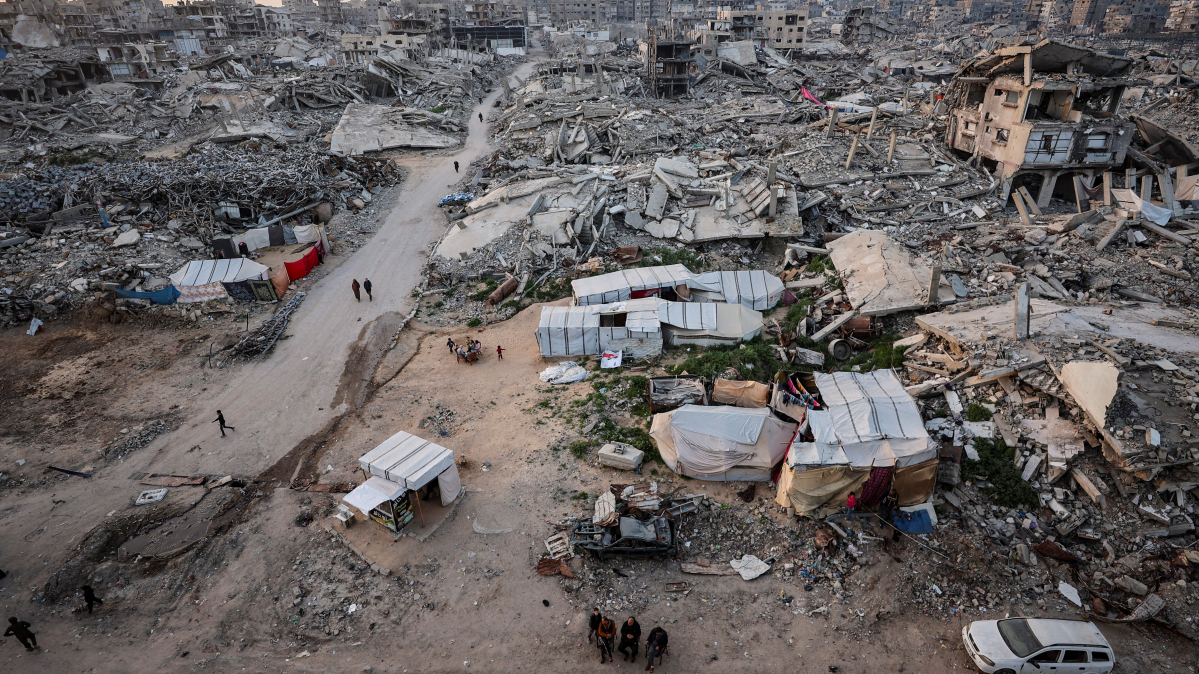
The UK government, which has not joined the U.S.-led Peace Board, will host a peace-building conference in March aimed at supporting Gaza reconstruction and broader regional stability. Unlike the U.S., which is leading the Board of Peace with a focus on Gaza governance and reconstruction, the UK has emphasised a multilateral approach and remains committed to the traditional two-state solution, reflecting its cautious stance on direct U.S.-led initiatives.
West Bank land policy
The Security Council debate comes as Israel advances its land policies in the West Bank. On 15 February 2026, Israel’s government approved a plan easing land purchases for Israeli settlers, shifting parts of land administration from military to civilian authorities, and introducing the first formal land registration in the territory since 1967.
The policy mainly affects Area C, where Israel has full military and civilian control, but registration rules could extend to other areas in the West Bank. More than 700,000 Israeli settlers live there alongside roughly 3 million Palestinians.
Israeli officials described the plan as a step to strengthen security, administrative control, and freedom of action.
The Palestinian Authority criticised the move as de facto annexation, while the European Union, Germany, and several Arab states expressed concern over potential violations of international law.
These developments in the West Bank come just a day before the U.S. convenes its Peace Board to address reconstruction and governance in Gaza.
UN concerns and U.S.-led Peace Board
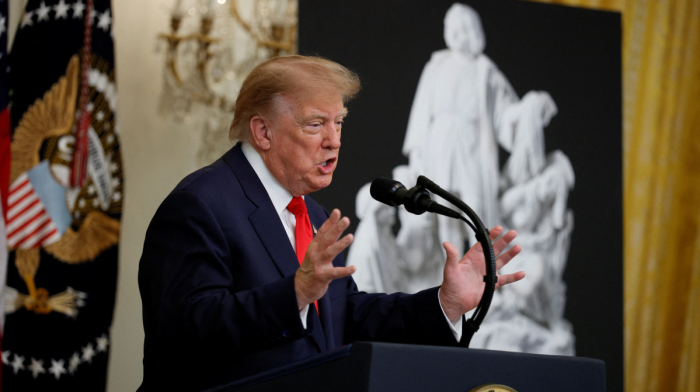
U.S. President Donald Trump will host the inaugural meeting of the Board of Peace in Washington on 19 February, tasked with overseeing Gaza’s reconstruction and demilitarisation.
The board builds on the October 2025 Israel-Hamas framework, a 20-point U.S.-mediated plan and endorsed by the UN Security Council in November 2025 with UK support.
This first phase framework aims to maintain a ceasefire, expand humanitarian aid, and prepare for post-conflict reconstruction in Gaza. Several European allies have declined the invitation, citing concerns over the board’s broad mandate and U.S.-centred structure.
Stages of the framework
Stage one of the October 2025 framework brought an immediate halt to fighting, the release of hostages in exchange for some Palestinian prisoners, increased humanitarian aid, and the withdrawal of Israeli forces to a designated “yellow line.”
Despite progress, violence and humanitarian restrictions in Gaza and the West Bank have continued. The United Nations Relief and Works Agency (UNRWA) and international non governmental organisations (NGOs) have limited aid access, and crossings such as Rafah remain closed.
In January, U.S. Middle East envoy Steve Witkoff announced the start of stage two. This phase introduced a transitional committee to govern Gaza and supervise reconstruction and demilitarisation under the U.S.-chaired Board of Peace.
Israeli Prime Minister Benjamin Netanyahu described Witkoff’s announcement as a “declarative move.” Netanyahu emphasised that reconstruction in Gaza should not begin before Hamas is disarmed and reiterated his opposition to a Palestinian state.
Despite ongoing political debates, the U.S.-led Peace Board is expected to advance practical arrangements for Gaza’s reconstruction.
The board, chaired by President Trump, includes up to 35 member states and a Gaza executive board with figures such as Sir Tony Blair and Jared Kushner.
A Palestinian National Committee for the Administration of Gaza, led by former Palestinian minister Ali Shaath, will manage reconstruction and aid. The committee currently operates from Egypt and does not include Hamas or the Palestinian Authority. Hamas has indicated it is willing to cede governance to the committee.
While the U.S.-led Peace Board focuses on implementing stage two of the framework and directly managing reconstruction in Gaza, the UK has maintained a more cautious, multilateral approach, prioritising the traditional two-state solution.
The March peace-building conference hosted by the UK aims to support reconstruction and regional stability without joining the U.S.-centred board.











What is your opinion on this topic?
Leave the first comment