live Pezeshkian calls for greater economic cooperation among Muslim countries
Iranian President Masoud Pezeshkian has called for greater economic cooperation among Muslim countries, saying their combined economic weight remai...
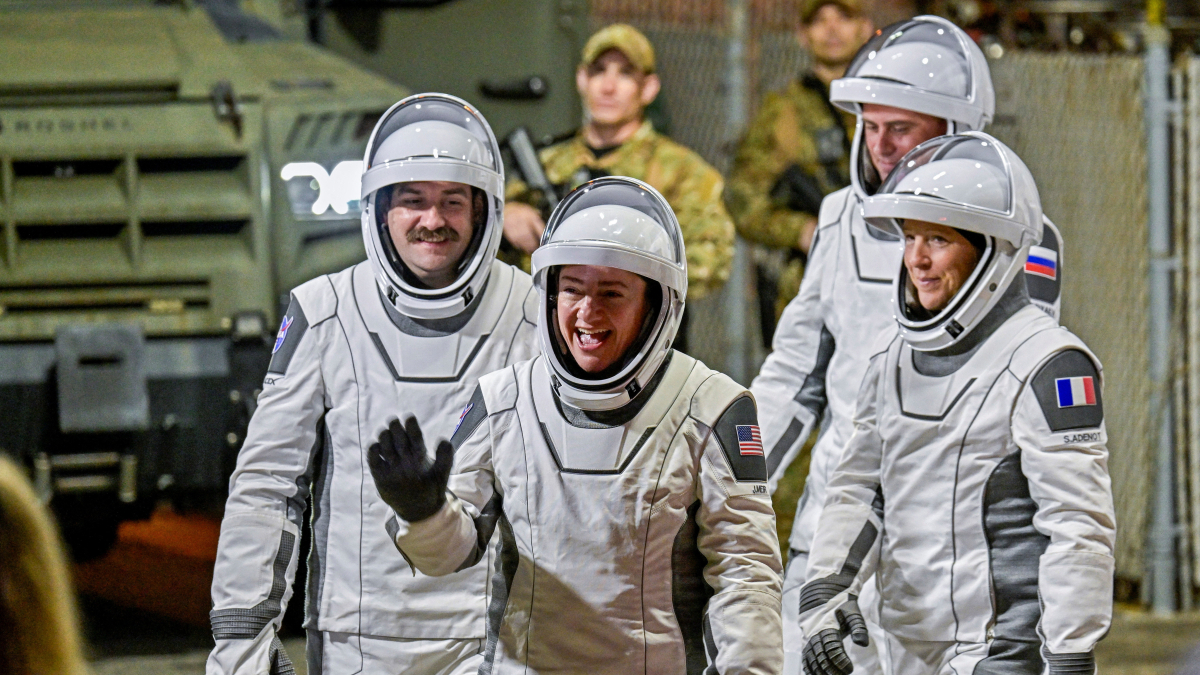
A SpaceX Falcon 9 rocket launched early on Friday, 13 February, from Cape Canaveral, Florida, carrying four astronauts and cosmonauts on an eight-month mission to the International Space Station (ISS). The Crew-12 team includes two Americans, a French astronaut and a Russian cosmonaut.
The 25-storey rocket, topped with the autonomously operated Crew Dragon capsule Freedom, lifted off at 10:15 GMT, its nine Merlin engines producing a dramatic display of fire and vapour.
The crew is expected to dock with the ISS on Saturday after a 34-hour flight, where they will join the station’s current occupants: NASA astronaut Chris Williams and Roscosmos cosmonauts Sergey Kud-Sverchkov and Sergei Mikaev.
Crew-12 is led by veteran NASA astronaut Jessica Meir, who is returning for her second mission following a historic all-female spacewalk in 2019.
Joining her are rookie astronaut Jack Hathaway, European Space Agency astronaut Sophie Adenot of France and Russian cosmonaut Andrey Fedyaev, who is embarking on his second mission to the ISS.
During their time aboard the station, the team will conduct scientific, medical and technical research. This will include studies on pneumonia-causing bacteria, as well as experiments involving plants and nitrogen-fixing microbes aimed at supporting future space agriculture.
Their arrival follows the early departure of four Crew-11 members due to a medical evacuation in mid-January.
The ISS, which spans the length of an American football field, is operated by a US-Russian-led consortium that includes Canada, Japan and 11 European nations. It has been continuously inhabited for more than 25 years.
NASA has confirmed its commitment to maintaining the station until at least 2030, continuing a decades-long multinational effort that began after the Cold War.

Oil prices fell after the U.S. expanded economic sanctions on Iran, as Tehran vowed to retaliate and warned it had tools to respond, raising concerns over potential disruption to regional oil supplies.
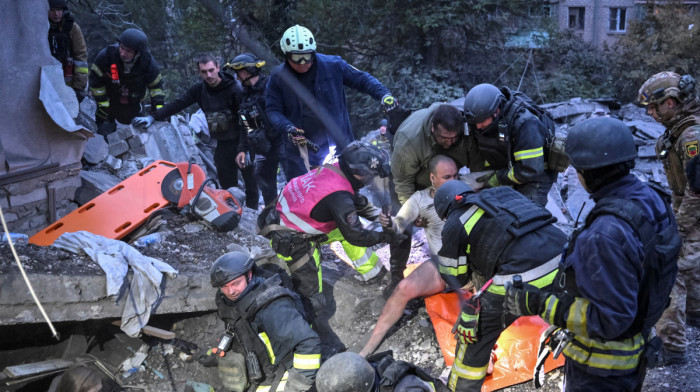
Rescuers in Nepal used helicopters on Thursday to scour for hundreds still missing after a wall of mud and rock collapsed into a river on the Himalayan border with China's Tibet, sending catastrophic floods through towns and valleys, killing 162 people.
Secretary of State Marco Rubio told allied foreign ministers Washington will focus on sanctions and other pressure on Iran “for the time being”, Axios reports. Meanwhile, Iran and Oman have resumed talks on a temporary shipping route through the Strait of Hormuz.
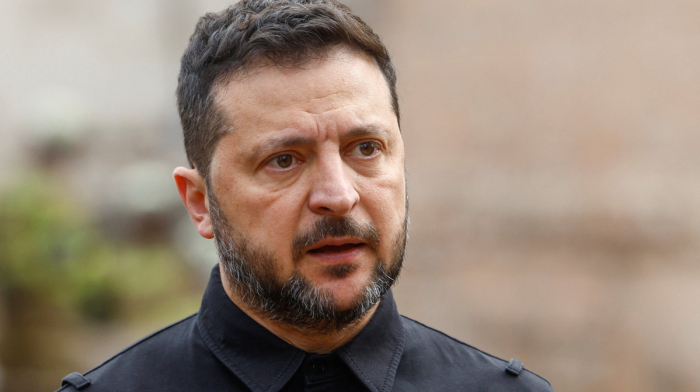
Kyiv has recently received a small number of U.S.-made Patriot interceptors capable of downing Russian ballistic missiles, Ukrainian President Volodymyr Zelenskyy has said. It comes as Britain and France pledged stronger military support for Ukraine.
Iranian President Masoud Pezeshkian has called for greater economic cooperation among Muslim countries, saying their combined economic weight remains disproportionately small compared with their population, strategic location and resources.
Ratko Mladić, the former Bosnian Serb military commander convicted of genocide for his role in the 1995 Srebrenica massacre, has died, according to a United Nations official.
A glacial collapse that triggered catastrophic flooding along the Nepal-Tibet border on Wednesday has killed at least 270 people, with more than 1,000 still missing. Here are some of the most devastating glacier-related disasters recorded around the world:
The UN Children’s Fund (UNICEF) says 3.7 million children across Afghanistan are suffering from acute wasting, a dangerous form of malnutrition, including around one million with severe acute malnutrition, as hospitals and aid services face rising demand and funding shortages.
Kremlin Spokesperson Dmitry Peskov has dismissed media reports that CIA Director John Ratcliffe visited Moscow earlier this week to warn Russia against attacking NATO, dismissing them as "scare stories," which had nothing to do with reality.
Icelanders will vote on Saturday, 29 August, on whether to resume negotiations with the European Union, in a referendum that could reopen the country’s long-debated membership question.
You can download the AnewZ application from Play Store and the App Store.
What is your opinion on this topic?
Leave the first comment