Elon Musk’s rocket company SpaceX has acquired his artificial intelligence firm xAI, as the billionaire moves to bring more of his technology businesses under one structure.
The deal values SpaceX at around $1 trillion and xAI at $250 billion, a source familiar with the transaction said.
SpaceX confirmed the deal on Monday (2 February), publishing a memo from Musk that described the merger as the creation of an “innovation engine” combining artificial intelligence, rockets, space-based internet and media platforms.
Financial terms were not disclosed. Musk said the combination will allow deeper integration between AI development and SpaceX’s space infrastructure, arguing that the world’s growing demand for computing power cannot be met solely on Earth.
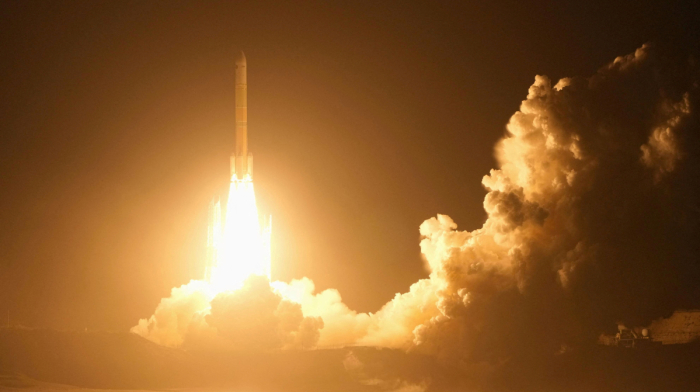
“In the long term, space-based AI is obviously the only way to scale,” Musk wrote, adding that launching AI-focused satellites will be an immediate priority.
"This marks not just the next chapter, but the next book in SpaceX and xAI's mission: scaling to make a sentient sun to understand the Universe and extend the light of consciousness to the stars!" Musk said.
The move follows a series of internal mergers and investments across Musk’s companies. Last year, xAI was combined with his social media platform X, while electric vehicle (EV) maker Tesla disclosed a $2 billion investment into xAI.
Musk has previously told Tesla investors that he envisions xAI acting as a central system coordinating robotics and automation inside Tesla factories.
Some Tesla shareholders have raised concerns about the strategy, questioning whether resources are being diverted away from the carmaker’s core business.
In his memo, Musk said advances enabled by space-based data centres could eventually support self-sustaining bases on the Moon, human settlements on Mars and broader expansion into space.
SpaceX has also filed plans with U.S. regulators to deploy large numbers of satellites that could support orbital data centres.
The acquisition underscores Musk’s long-term ambition to tightly link artificial intelligence, space technology and advanced manufacturing into a single ecosystem.
However, the agreement could draw scrutiny from regulators and investors over governance, valuation and conflicts of interest given Musk's overlapping leadership roles across multiple firms, as well as the potential movement of engineers, proprietary technology and contracts between entities.
SpaceX also holds billions of dollars in federal contracts with NASA, the Department of Defense and intelligence agencies, which all have some authority to review M&A transactions for national security and other risks.

















What is your opinion on this topic?
Leave the first comment