Türkiye and Greece signalled renewed political will to ease long-standing tensions during high-level talks in Ankara on Wednesday (11 February). Maritime borders, migration and trade topped the agenda as both leaders struck a cautiously optimistic tone.
Greek Prime Minister Kyriakos Mitsotakis travelled to Türkiye with a large delegation for talks with President Recep Tayyip Erdoğan, in a meeting aimed at resetting relations between the two NATO allies.
Although details of the closed-door discussions were not immediately disclosed, diplomatic sources said the talks focused on bilateral ties, long-running maritime disputes in the Aegean and Eastern Mediterranean, migration flows, minority rights and economic cooperation.
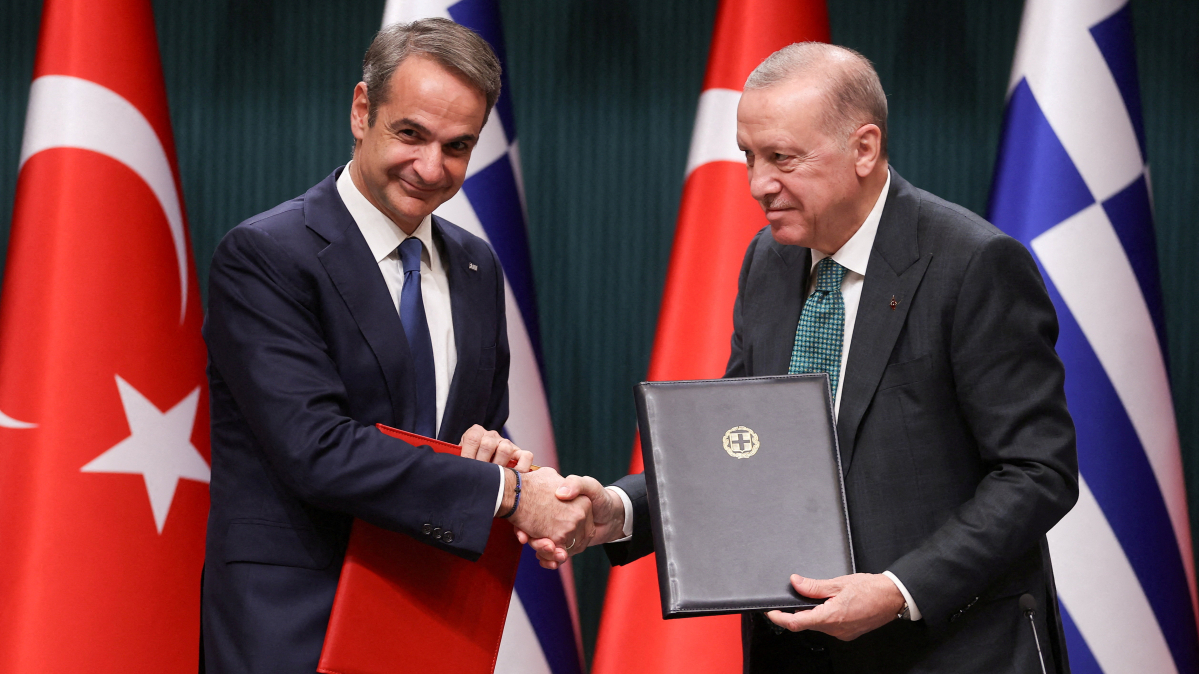
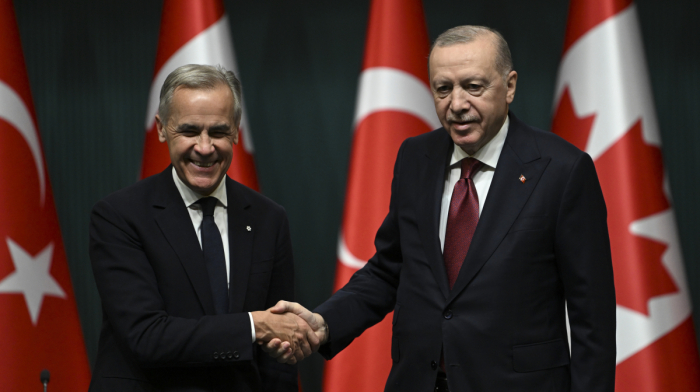
After their one-on-one meeting, Erdoğan and Mitsotakis presided over the sixth session of the Türkiye–Greece High-Level Cooperation Council, attended by cabinet ministers from both sides.
The two countries signed seven agreements covering areas of cooperation and business councils from both countries met to explore new economic opportunities.
At a joint press conference, Erdoğan said Türkiye and Greece remain committed to strengthening dialogue and cooperation as both neighbors pursue a more stable phase in bilateral ties.
He stressed that communication channels must remain open “as neighbouring allies are committed to cooperation,” and described disputes in the Aegean and Eastern Mediterranean as “complex but not unsolvable” within the framework of international law.
He added that the two leaders held frank discussions on maritime disputes and agreed that diplomacy is the most constructive path forward.
"While the issues may be thorny, they are not unsolvable on the basis of international law. I saw that we were in agreement with my friend Kyriakos" Erdoğan said, expressing confidence that the positive momentum since 2023 could help both sides advance on interconnected issues.
Mitsotakis said he hoped conditions would allow Athens and Ankara to resolve their long-standing disagreements over maritime borders.
Both leaders reaffirmed their shared goal of increasing bilateral trade from roughly $7 billion last year to $10 billion annually.
Tensions remain despite dialogue
Türkiye and Greece remain divided over maritime boundaries in the Aegean Sea, an area believed to hold significant untapped energy resources, as well as airspace and overflight issues.
Disputes also extend to Cyprus and the militarisation of certain Aegean islands.
Last December, Greece announced plans to bolster its military presence on several islands. The following month, Athens said it reserved the right to extend its territorial waters by up to 12 nautical miles, a move Ankara has long viewed as a potential casus belli.
In 2023, the two sides issued a joint declaration committing to friendly relations and good neighbourliness, laying the groundwork for renewed dialogue despite decades of mistrust.
Diplomats from both countries met last month in Athens as part of what they described as a “positive agenda” process aimed at easing friction and building confidence.










What is your opinion on this topic?
Leave the first comment