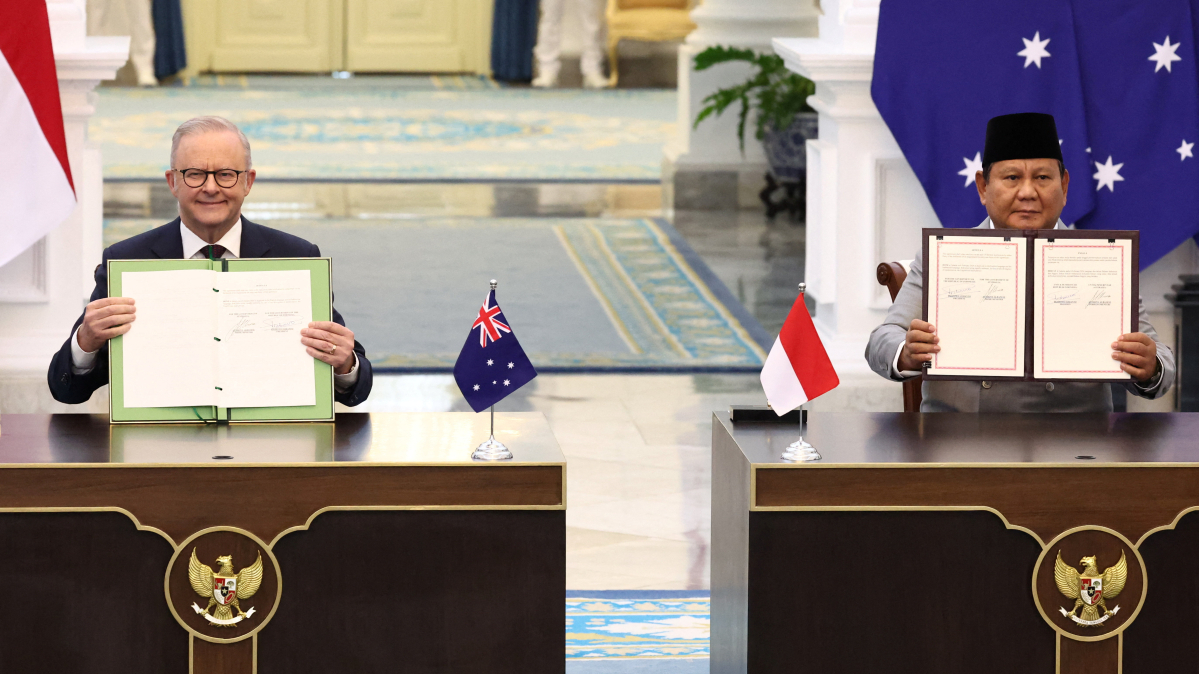
Indonesia and Australia have signed a security treaty on Friday (6 February) that commits them to consult each other if either country is threatened, Indonesian President Prabowo Subianto said.
The full details have not yet been disclosed but was first announced in November during Indonesian President Prabowo Subianto’s visit to Australia.
The agreement commits both countries to consult each other in the event of security threats, though it does not specify what would constitute such adverse challenges.
The treaty also commits both sides to expanding “mutually beneficial cooperative activities” in the security field.
Australian Prime Minister Anthony Albanese described the treaty as a significant extension of existing security and defence cooperation, underscoring the depth of trust between the two countries.
“This agreement signals that Australia and Indonesia's relationship is stronger than it has ever been,” Albanese said in Jakarta on Friday.
Prabowo also noted that the deal reflects Indonesia’s commitment to good neighbour principles and its long-standing “free and active” foreign policy.
“Indonesia and Australia are destined to live side by side, and we chose to build that relationship on the foundations of trust and good intentions,” he said.
Indonesia maintains a non-aligned foreign policy, pledging friendship with all countries without joining any formal military bloc.
Expanded defence cooperation
Albanese also announced new initiatives to deepen defence cooperation, including embedding a senior Indonesian official within the Australian Defence Force, supporting the development of joint training facilities, and expanding military education exchanges.
Australia’s Foreign Minister Penny Wong said the treaty was modelled on a 1995 security agreement between the two countries.
That earlier pact was withdrawn in 1999 after Australia led a United Nations peacekeeping force in East Timor, following violence linked to the territory’s push for independence from Indonesia.














What is your opinion on this topic?
Leave the first comment