Hong Kong's High Court began hearing on Thursday a landmark national security trial of the three former leaders of a disbanded group that organised annual vigils marking Beijing's 1989 Tiananmen Square crackdown on pro-democracy protesters.
The events on 4 June, 1989, when Chinese troops opened fire to end student-led protests, are not publicly discussed in China, which treats the date as taboo and allows no public remembrance.
Three veteran activists appeared before the High Court to face charges that strike at the heart of Hong Kong’s transforming political landscape, initiating a legal battle that observers say will define the limits of free speech and historical memory in the Chinese territory.
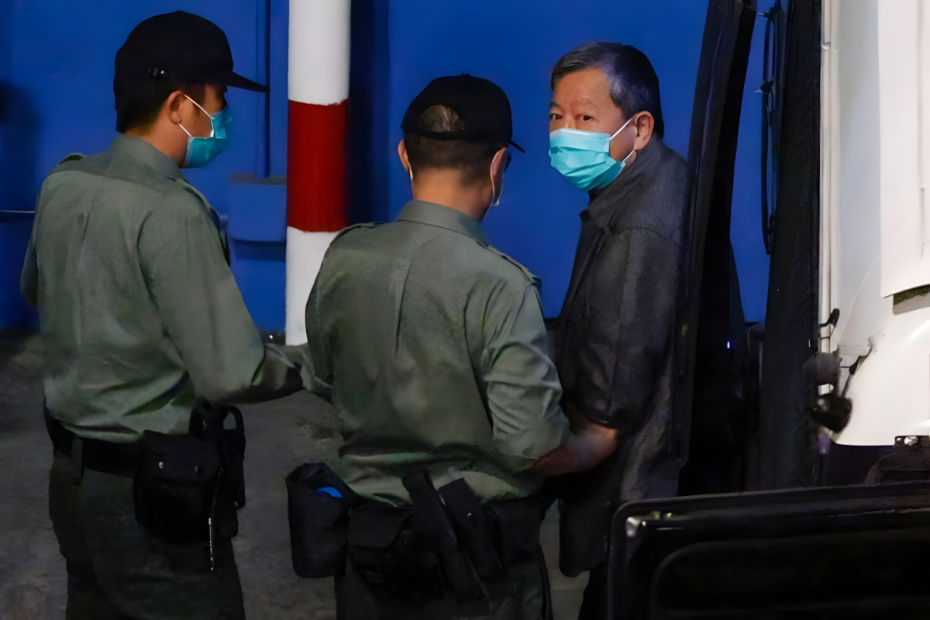
The proceedings against Lee Cheuk-yan, Albert Ho, and Tonyee Chow Hang-tung are viewed by international legal experts as a litmus test for the rule of law under the Beijing-imposed national security legislation. The trio faces charges of "inciting subversion of state power," a serious offence that carries a potential sentence of up to 10 years in prison.
Tang Ngok-kwan, a former senior member of the disbanded group, the Hong Kong Alliance in Support of Patriotic Democratic Movements of China and colleague of the defendants, remarked to reporters that "history will bear witness," a sentiment echoed by supporters who braved the winter chill to gather outside the heavy police cordon.
"Justice resides in the hearts of the people, and history will bear witness," said Tang Ngok-kwan said.
While Albert Ho, a 74-year-old former chairman of the Democratic Party, entered a guilty plea, both Lee Cheuk-yan and Chow Hang-tung have pleaded not guilty.
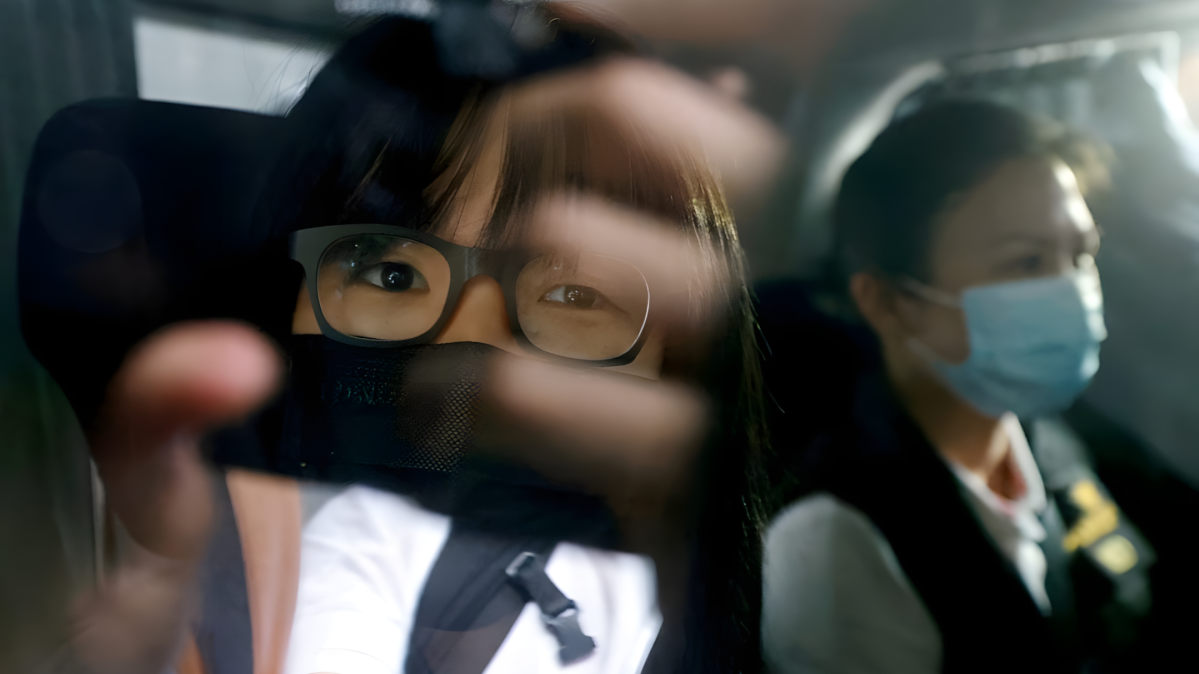
Chow, a 40-year-old barrister who has spent more than 1,500 days on remand after being denied bail multiple times, has become a symbol of defiance. She was permitted to leave the dock to conduct her own defence, a move that underscores her determination to use the courtroom as a platform to challenge the narrative that criminalises the remembrance of 4 June.
This trial represents one of the final chapters in the prosecution of the city’s most prominent pro-democracy figures following the sweeping crackdown that began in 2020.
Blocked in 2020 over COVID-19 curbs, the Hong Kong memorials have never resumed since China imposed a tough national security law that year. Several 4 June monuments, such as the "pillar of shame", have also been removed from the city's universities.
'Ending one-party rule'
The prosecution’s case rests heavily on the interpretation of the Hong Kong Alliance’s longstanding operational slogan: "Ending one-party rule."
For three decades, this phrase was shouted legally through the streets of Hong Kong, but prosecutors now argue it constitutes a direct incitement to overthrow the fundamental system of the People’s Republic of China.
In his opening statement, prosecutor Ned Lai asserted that the Alliance’s goals were not merely aspirational but were actively illegal under the new constitutional order established by the National Security Law.
Lai’s argument hinges on the assertion that "ending one-party rule" is synonymous with dismantling the leadership of the Chinese Communist Party (CCP).
Since the Chinese constitution enshrines the leadership of the CCP, the prosecution contends that advocating for its end is an act of subversion. To support this, the prosecution has entered a vast array of evidence, including slogans chanted at candlelight vigils, speeches made by the defendants over the years, and exhibits from the now-shuttered 4 June Museum, which was dedicated to preserving the history of the 1989 military crackdown.
The defence, particularly regarding the Alliance’s historical stance, has previously argued that their objective was a democratic China with free elections, rather than the violent destruction of the state. However, the legal landscape in Hong Kong shifted dramatically in 2020. Actions and speech that were once protected under the "One Country, Two Systems" framework - which promised Hong Kong a high degree of autonomy until 2047 - are now scrutinised through the lens of national security.
The High Court has already signalled a strict approach, rejecting Chow’s earlier application to terminate the trial and stating that the court would not allow judicial procedures to be used for political grandstanding. This section of the trial will determine whether a political slogan used for 30 years can retroactively become the basis for a decade-long prison sentence.
Erasure of memory and international condemnation
The trial of the Hong Kong Alliance leaders is inextricably linked to a broader campaign to erase the public memory of the events of 4 June, 1989. For more than 30 years, Hong Kong was the only place on Chinese soil where mass public commemorations of the Tiananmen crackdown were permitted. The annual vigil in Victoria Park often attracted more than 100,000 attendees, creating a sea of candlelight that served as a potent symbol of the city’s unique freedoms compared to mainland China, where the topic remains strictly taboo and heavily censored.
Since 2020, authorities have banned the gathering, initially citing public health concerns during the COVID-19 pandemic, before the crackdown became explicitly political. The physical remnants of this history have also been dismantled; the "Pillar of Shame," a harrowing sculpture by Danish artist Jens Galschiøt depicting torn bodies from the massacre, was removed from the University of Hong Kong under cover of darkness.
This systematic removal of monuments and the disbandment of civil society groups such as the Alliance suggest a comprehensive effort to align Hong Kong’s historical narrative with that of Beijing.
The international community has reacted with alarm to these developments. Rights groups and foreign governments, including the UK and U.S., have frequently criticised the National Security Law as a tool for silencing dissent rather than restoring order.
Sarah Brooks, Asia deputy director at Amnesty International, condemned the proceedings, stating, "This case is not about national security – it is about rewriting history and punishing those who refuse to forget."
Beijing, however, maintains that the law was a necessary intervention to restore stability following the violent pro-democracy protests that rocked the financial hub in 2019.
For Chow Hang-tung, who told Reuters that the state "can lock up people but not their thinking," the trial is the ultimate test of that conviction.












What is your opinion on this topic?
Leave the first comment