Washington signals new economic drive in Central Asia at Bishkek B5+1 forum
A landmark gathering of commercial and political minds has convened in the Kyrgyz capital, signalling a significant shift in Washington’s foreign po...
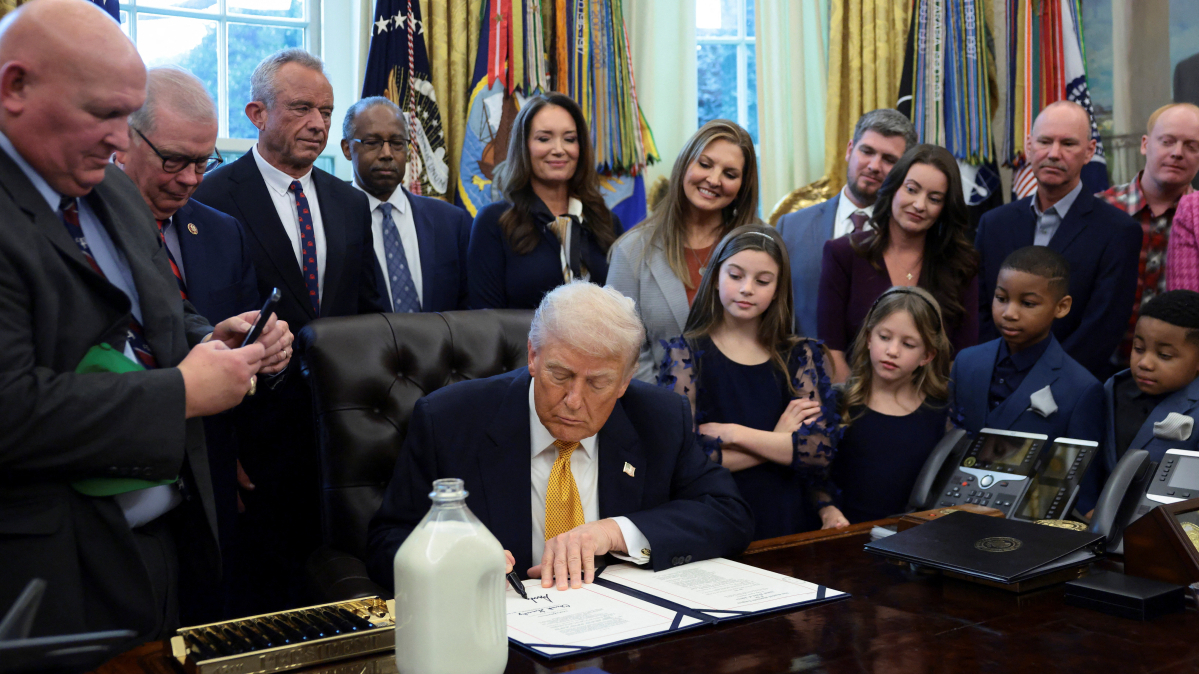
Whole milk is heading back to school cafeterias across the U.S. after President Donald Trump signed a bill overturning Obama-era limits on higher-fat milk options.
The Whole Milk for Healthy Kids Act, signed Wednesday (14 January) at the White House, allows schools in the National School Lunch Program to serve whole and 2% milk alongside skim and low-fat options. Nondairy alternatives such as fortified soy milk may also be offered if they meet nutritional standards.
Trump praised the change at the signing ceremony. “Whether you're a Democrat or a Republican, whole milk is a great thing.”
Lawmakers, dairy farmers, and children attended the event.
The law also permits parents, not just doctors, to provide notes requesting nondairy milk alternatives for students with dietary restrictions.
The move coincides with the release of the 2025–2030 Dietary Guidelines for Americans, which encourage full-fat dairy consumption, reversing previous guidance recommending low-fat or fat-free milk for those over age two.
The change could take effect as early as this fall, though schools may need time to adjust supply chains and gauge demand.
The return of whole milk reverses provisions of the Healthy Hunger-Free Kids Act, championed by former First Lady Michelle Obama, which aimed to reduce saturated fat intake and combat childhood obesity.
Supporters argue whole milk is nutritious and may even help prevent obesity, while critics point to past efforts to limit saturated fat in school meals. Advocates also note that children often dislike low-fat milk, leading to missed nutrition and food waste.

Talks with the U.S. should be pursued to secure national interests as long as "threats and unreasonable expectations" are avoided, President Masoud Pezeshkian posted on X on Tuesday (3 February).
Cuba’s Deputy Foreign Minister Carlos Fernández de Cossío has denied that Havana and Washington have entered formal negotiations, countering recent assertions by U.S. President Donald Trump, while saying the island is open to dialogue under certain conditions.
Mexico said it will stop sending oil to Cuba as U.S. President Donald Trump ramped up pressure on the Caribbean nation.
Iranian media outlets have backtracked on claims President Masoud Pezeshkian ordered a return to nuclear talks with the United States, fuelling fresh uncertainty over the state of diplomacy between the two rivals.
Web Summit Qatar 2026 opened in Doha on Sunday, drawing tens of thousands of founders, investors, policymakers and technology leaders to what organisers describe as one of the region’s largest digital economy gatherings.
Thousands of documents linked to the late sex offender Jeffrey Epstein have been taken down from the U.S. Justice Department’s (DOJ) website after victims and their lawyers warned that sensitive personal information had been exposed.
Start your day informed with AnewZ Morning Brief: here are the top news stories for the 4rd of February, covering the latest developments you need to know.
U.S. Secretary of State Marco Rubio met with Indian Foreign Minister Subrahmanyam Jaishankar on Tuesday (February 3) one day after the U.S. and India signed a trade deal.
British Prime Minister Keir Starmer spoke to U.S. President Donald Trump on Tuesday and discussed the situation in Ukraine, including the overnight Russian attacks on the country, the UK government said.
U.S. President Donald Trump on Tuesday (3 February) signed a spending deal into law that ends a partial U.S. government shutdown and gives lawmakers time to negotiate potential limits on his immigration crackdown.
You can download the AnewZ application from Play Store and the App Store.
What is your opinion on this topic?
Leave the first comment