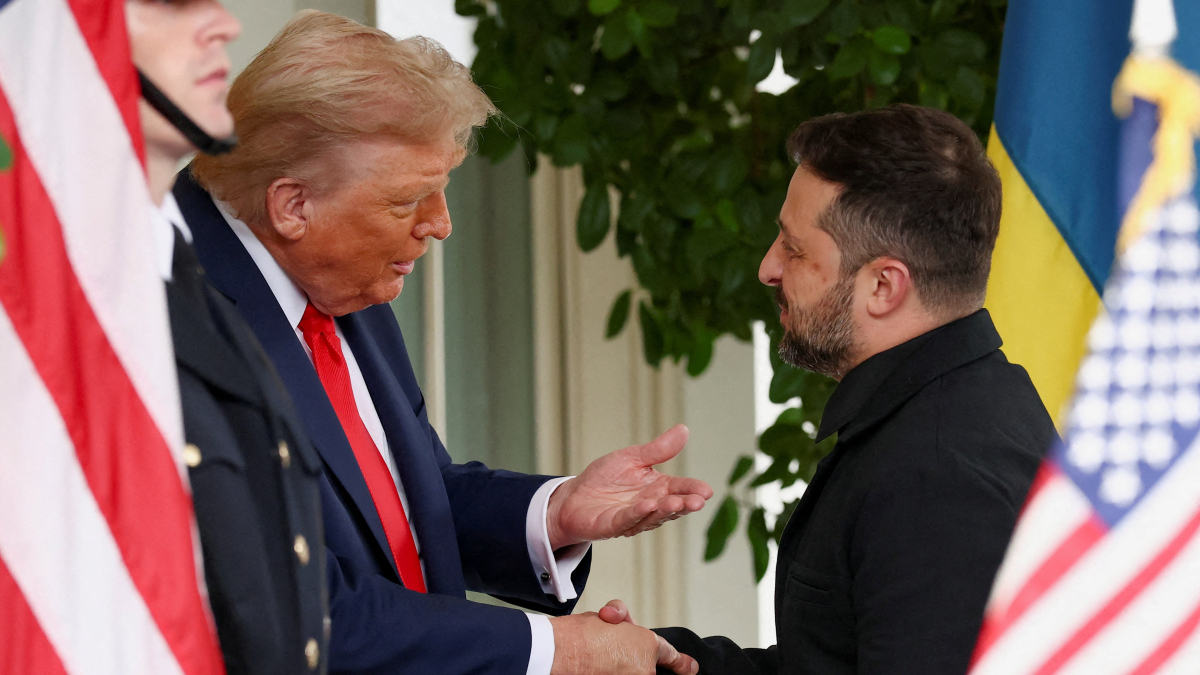
Ukrainian President Volodymyr Zelenskyy is travelling to the United States to meet President Donald Trump in Florida on Sunday, in what officials describe as a critical step in ongoing U.S.-led diplomatic efforts to end Russia’s full-scale war against Ukraine.
Territorial disputes remain the primary obstacle to any agreement. Zelenskyy highlighted that sensitive issues, including the status of eastern Ukraine and the Zaporizhzhia Nuclear Power Plant, must be addressed. “As for the sensitive issues, we will discuss both Donbas and the Zaporizhzhia Nuclear Power Plant. We will certainly discuss other issues as well,” he told reporters. Moscow has demanded that Kyiv withdraw from parts of Donetsk under Ukrainian control, a proposal Ukraine has rejected, instead calling for a halt to hostilities along existing front lines.
Security guarantees are central to the negotiations. Zelenskyy stressed that legally binding guarantees depend on both the U.S. president and Congress, with their scope, timing and duration determining Ukraine’s acceptance. “The key question is what security guarantees (U.S.) President Trump is prepared to give Ukraine. We appreciate the teams’ discussion and the fact that there is a shared vision. However, it will depend on the U.S. President: what he is ready to provide, when he is ready to provide it, and for how long,” he said.
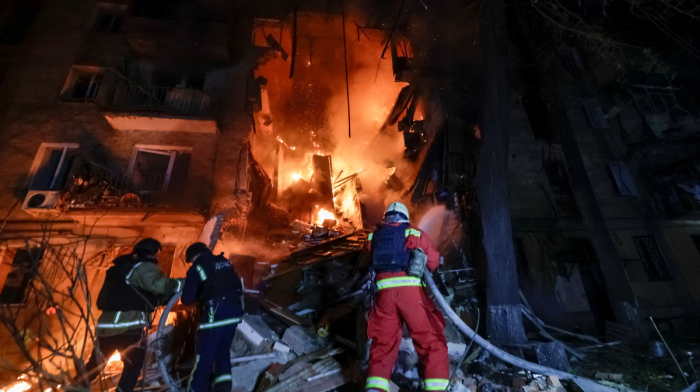
The Ukrainian leader also underlined the need for safe conditions for citizens and military personnel during any future elections or referendums, adding that the presence of observers across the country is crucial. European support, including additional air defence systems and missiles, remains vital as Ukraine faces ongoing Russian attacks. Zelenskyy noted that “we need a steady supply of systems and missiles. We need more missiles because Russia attacks with more drones and rockets.”
Trump has positioned himself as the decisive authority behind any potential agreement, signalling that Kyiv’s proposals require his approval. Speaking to Politico, he stated, “He doesn’t have anything until I approve it. So we’ll see what he’s got.” The White House has scheduled the meeting for 3 p.m. on Sunday, though it has not provided further details.
The meeting comes amid bipartisan pressure in the U.S. for a firm approach to Russia. Three Republican senators joined five Democrats in a statement denouncing Russian attacks over Christmas and calling Vladimir Putin a “ruthless murderer who has no interest in peace,” while stopping short of critiquing Trump’s handling of the talks.
Zelenskyy has framed the meeting as a potential turning point. “We are not losing a single day. We have agreed on a meeting at the highest level with President Trump in the near future. A lot can be decided before the New Year,” he wrote on X after receiving a briefing from his negotiator Rustem Umerov.
Zelenskyy announced that Kyiv is also working with the U.S. on a strategic "roadmap for Ukraine's prosperity" through 2040, targeting long-term economic stability and investment.
Zelenskyy estimated the reconstruction effort will cost between $700 billion and $800 billion. To manage these funds, Ukraine and Washington plan to establish several financial vehicles, including a Ukraine Building Fund, a sovereign investment platform, a Ukraine Development Fund, and a Fund for Ukraine's Growth and Opportunities.
Negotiations are also underway on a Human Capital Fund to support refugee returns and job creation. Zelenskyy is scheduled to meet former US President Donald Trump in Florida on Sunday to discuss territorial disputes and ways to end the Russia-Ukraine conflict.
He mentioned that he will hold talks with European leaders after meeting Trump.
With U.S. officials reporting progress on key elements of the draft deal, including the structure of security guarantees, the meeting in Florida will test whether these frameworks can be finalised into a concrete agreement and whether Trump is ready to deliver the commitments needed to secure peace.
Background on Russia–Ukraine Peace Efforts
Efforts to end Russia’s war in Ukraine have included multiple rounds of negotiations involving Ukraine, Russia, European powers and the United States. Early attempts date back to December 2019, when Russian President Vladimir Putin and Ukrainian President Volodymyr Zelenskyy met in Paris alongside French President Emmanuel Macron and German Chancellor Angela Merkel. The summit focused on prisoner exchanges and reaffirming the ceasefire in eastern Ukraine’s Donbas region but failed to resolve core political disputes.
Ceasefire talks resumed on the Belarusian border on 28 February 2022, days after Russia launched its full-scale invasion of Ukraine. The meetings, held in Gomel, Belarus, highlighted Belarus’s early involvement in facilitating dialogue between the two sides.
Türkiye has also played a key mediating role. NATO member Türkiye repeatedly offered to mediate, hosting both sides in an effort to restart diplomacy after initial talks faltered.
Negotiations gained momentum under U.S. involvement in 2025. In February, President Donald Trump reported that Russian President Putin had expressed a desire for peace during a phone call. Later, U.S. and Russian officials held talks in Saudi Arabia, with Ukraine noting that it had not been invited and emphasising that no agreement could be made on its behalf.
In April 2025, Trump and Zelenskyy met one-on-one at the Vatican, marking the first meeting since tensions in the Oval Office earlier that year. The discussion focused on reviving stalled negotiations and exploring security guarantees. In May, Putin proposed direct talks with Ukraine in Istanbul to address the root causes of the conflict, leading to the first direct Russia–Ukraine negotiations in over three years.
Over the summer, Trump met Putin in Alaska, raising concerns among European and Ukrainian leaders about potential concessions favouring Moscow. A subsequent meeting at the White House on 18 August 2025 between Trump, Zelenskyy and European officials focused on advancing security guarantees and peace proposals.
In the autumn, the United States drafted a 28-point peace framework, prompting discussions in Geneva, Berlin and Florida between U.S., Ukrainian, Russian and European representatives. U.S. envoy Steve Witkoff, Jared Kushner and other officials met with Ukraine and Russia to refine proposals, focusing on security guarantees, economic reconstruction and timelines for implementation.
The latest rounds of talks, held in Miami in December 2025, involved Russian special envoy Kirill Dmitriev and Ukrainian officials including Rustem Umerov and Lieutenant General Andriy Hnatov. Both sides described the discussions as productive and constructive, reflecting ongoing U.S. efforts to broker a just and sustainable resolution while aligning positions with European partners.
Meetings between Trump and Zelenskyy
U.S. President Donald Trump and Ukrainian President Volodymyr Zelenskyy have met multiple times since Zelenskyy’s election in 2019, ranging from bilateral talks in New York to international events in Europe and the Vatican.
- 2019: Zelenskyy met Trump during the UN General Assembly in New York. Zelenskyy stated he was not pressured to investigate U.S. political figures, including then-Vice President Joe Biden, and emphasised Ukraine’s independence in the U.S. electoral context. Trump praised Zelenskyy’s anti-corruption efforts.
- 2024: In September, Zelenskyy visited the U.S., meeting Trump at Trump Tower following criticism from Trump during the 2024 campaign over Ukraine’s military situation. They also appeared alongside French President Emmanuel Macron during the Notre-Dame re-opening in Paris.
- February 2025: A contentious Oval Office meeting saw public clashes over Ukraine’s war with Russia. Zelenskyy expressed frustration over unfulfilled agreements, while Trump and U.S. Vice President JD Vance emphasised U.S. support and pressed Zelenskyy to consider diplomatic solutions to limit casualties.
- April 2025: On the sidelines of Pope Francis’s funeral, the leaders held a private discussion described by Zelenskyy as potentially historic, coinciding with ongoing negotiations to end the conflict.
- September–October 2025: Trump and Zelenskyy met during the UN General Assembly and at the White House. Trump highlighted economic pressure on Russia and expressed confidence in Ukraine’s ability to regain lost territory with NATO and EU support. Zelenskyy reiterated the need for a ceasefire and international pressure on Russia.
Across these encounters, the relationship between Trump and Zelenskyy has alternated between cooperative dialogue, public disputes, and strategic discussions focused on the Ukraine–Russia conflict, international diplomacy, and military support.
















What is your opinion on this topic?
Leave the first comment