live Ceasefire strains as Israel intensifies attacks on Hezbollah in Lebanon killing hundreds - Thursday 9 April
Iran suggested it would be "unreasonable" to proceed with talks to forge a permanent peace d...
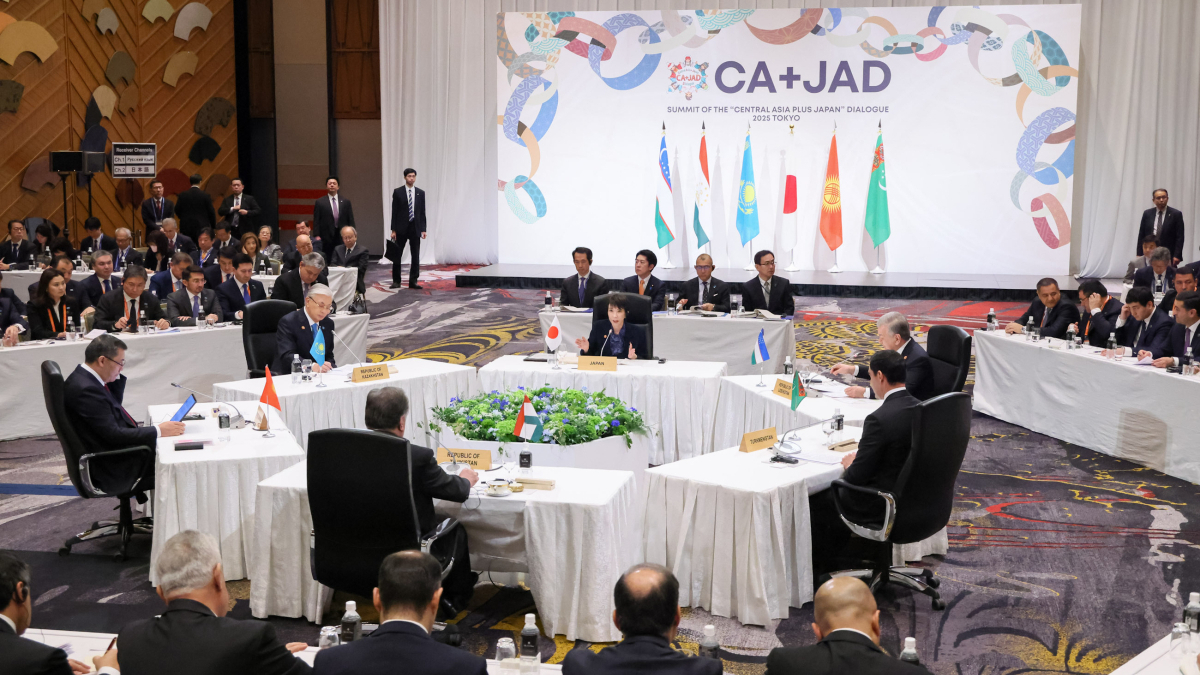
Japan and five Central Asian nations have unveiled a range of initiatives aimed at strengthening critical minerals supply chains and fostering broader regional cooperation, following their first summit in Tokyo on Saturday.
The Central Asia plus Japan Dialogue brought together Japanese Prime Minister Sanae Takaichi and the presidents of Kazakhstan, Kyrgyzstan, Tajikistan, Turkmenistan, and Uzbekistan: Kassym-Jomart Tokayev, Sadyr Zhaparov, Emomali Rahmon, Serdar Berdimuhamedov, and Shavkat Mirziyoyev.
The leaders agreed on three key areas of cooperation: Green and Resilience, Connectivity, and Human Resource Development. Green and Resilience will focus on energy transition, disaster risk reduction, climate change measures, and securing critical minerals supply chains. Connectivity projects include the further development of the Trans-Caspian International Transport Route and the establishment of a Japan-Central Asia AI Cooperation Partnership.
In addition, the nations will collaborate on health and medical initiatives and set a target of 3 trillion yen (around $19 billion) in joint business projects over the next five years.
Prime Minister Takaichi underlined the strategic importance of Central Asia, citing its location between Europe and Asia, its abundant energy and mineral resources, and its potential for strong economic growth and population expansion.
The summit also saw the signing of more than 150 agreements by public and private sector representatives, alongside one-on-one meetings between Takaichi and the Central Asian leaders.

China and Russia vetoed a United Nations Security Council resolution on Tuesday aimed at coordinating defensive efforts to protect commercial shipping in the Strait of Hormuz, leaving no agreed international framework for securing the vital route.
Lebanon’s Hezbollah said it had stopped firing on northern Israel and Israeli forces on Wednesday as part of a two-week ceasefire in the Middle East brokered between the United States and Iran. However, a Hezbollah lawmaker warned that the pause could collapse if Tel Aviv does not adhere to it.
Pakistan’s Prime Minister Shehbaz Sharif said Iran and the United States, along with their allies, have agreed to an immediate two-week ceasefire covering all areas, but Israel says the deal excludes Lebanon. Tel Aviv says the U.S. is committed to achieving shared goals in upcoming negotiations.
Recent U.S. complaints about NATO allies and threats to quit the alliance are pushing European countries to seek alternative security arrangements, Spanish Foreign Minister Jose Manuel Albares said on Tuesday.
Construction has begun on a major new solar power project in Xizang, as China continues to expand its renewable energy capacity and push towards a greener future.
North Korea has tested a new cluster-bomb warhead mounted on a tactical ballistic missile, alongside advanced electromagnetic and infrastructure-targeting weapons, in a significant escalation of its military capabilities.
A barrage of Russian drones targeted and damaged a critical power substation in Ukraine's southern Odesa region on Wednesday, Ukrainian officials confirmed.
Start your day informed with the AnewZ Morning Brief. Here are the top stories for 9 April, covering the latest developments you need to know.
Greece will ban access to social media for children under 15 from 1 January 2027, Prime Minister Kyriakos Mitsotakis said on Wednesday, citing rising anxiety, sleep problems and the addictive design of online platforms.
Trade discussions between China and the U.S. are expected to remain virtual for now, with no major investment initiatives planned before a potential meeting between Xi Jinping and Donald Trump, according to U.S. Trade Representative Jamieson Greer.
You can download the AnewZ application from Play Store and the App Store.
What is your opinion on this topic?
Leave the first comment