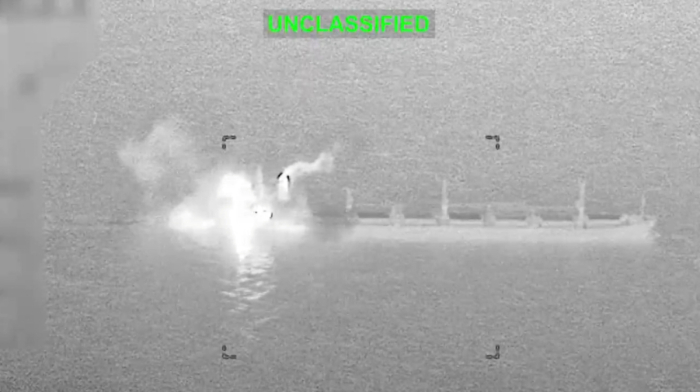
The United States military has carried out another lethal strike against an alleged drug-trafficking vessel in the eastern Pacific Ocean, marking the second such attack in the space of a week and underscoring a sharp escalation in Washington’s anti-narcotics campaign.
U.S. Southern Command (SOUTHCOM) said the strike killed four people and was conducted in international waters under the authority of Defence Secretary Pete Hegseth. According to the military, no U.S. personnel were injured during the operation.
In a statement posted on social media, SOUTHCOM said Joint Task Force Southern Spear targeted a vessel it claimed was operated by a designated terrorist organisation involved in drug trafficking.
The strike followed a similar operation earlier in the week, when the U.S. military hit three alleged drug boats in the same region, killing eight people.
Together, the attacks form part of a broader campaign dubbed Operation Southern Spear, which the Trump administration says is designed to disrupt narcotics smuggling routes and weaken criminal networks operating across South and Central America.
Since the campaign began, at least 99 people have been killed in strikes on suspected drug vessels, according to official figures. Critics, however, have raised questions about transparency, proportionality and the intelligence underpinning the operations. Human rights groups and some lawmakers have expressed concern over the growing use of military force in what has traditionally been a law-enforcement domain, warning that such actions could set a dangerous precedent and risk civilian casualties.
Wider military build-up and rising tensions with Venezuela
The strikes come amidst a broader expansion of U.S. military activity in the region, particularly around Venezuela, a country President Donald Trump has repeatedly accused of undermining U.S. interests. The administration has deployed thousands of additional troops to the Caribbean and surrounding areas, along with a carrier strike group, signalling a more muscular posture towards governments and groups it sees as hostile.
Earlier this week, Trump ordered what he described as a “total and complete blockade” of sanctioned oil tankers travelling to and from Venezuela.
The move significantly escalated pressure on Caracas and raised fears of further confrontation. U.S. officials argue that the measures are necessary to combat narcotics trafficking, organised crime and what they describe as Venezuela’s exploitation of regional instability.
Critics, however, see the actions as part of a broader strategy aimed at isolating the Venezuelan government and potentially forcing political change.
Venezuelan President Nicolás Maduro responded sharply, accusing Washington of pursuing regime change and seeking control over his country’s territory and natural resources. Speaking in Caracas, Maduro described U.S. actions as “warmongering and colonialist”, claiming that recent events had exposed the true intentions of the Trump administration.
His remarks reflect growing anxiety in the region that U.S. military operations, even when framed as anti-drug measures, are increasingly intertwined with geopolitical objectives and long-standing disputes over sovereignty and influence.
Congress pushes back over transparency and oversight
Scrutiny is mounting on Capitol Hill, with lawmakers from both parties demanding greater transparency from the Trump administration. Particular attention has focused on a controversial follow-up strike carried out in September, which killed two crew members who had survived an initial attack on an alleged drug boat.
Lawmakers have questioned why lethal force was used again and whether the rules of engagement were properly followed.
Following a closed-door briefing with Defence Secretary Pete Hegseth, several members of Congress voiced frustration that they were not shown unedited video footage of the strike. Hegseth later confirmed that while key committees would be granted access to the material, it would not be released publicly.
Senate Democrats, in particular, criticised the decision, arguing that withholding evidence undermines accountability and public trust.
In response, Congress has taken steps to strengthen its oversight powers. The annual defence policy bill, sent to Trump’s desk this week, includes a provision that would withhold 25% of Hegseth’s travel budget until unedited videos of the strikes are shared with the House and Senate Armed Services Committees.
The move signals growing unease among lawmakers about the scope and secrecy of Operation Southern Spear, as debates continue over the balance between national security, transparency and the use of military force in counter-narcotics operations.









What is your opinion on this topic?
Leave the first comment