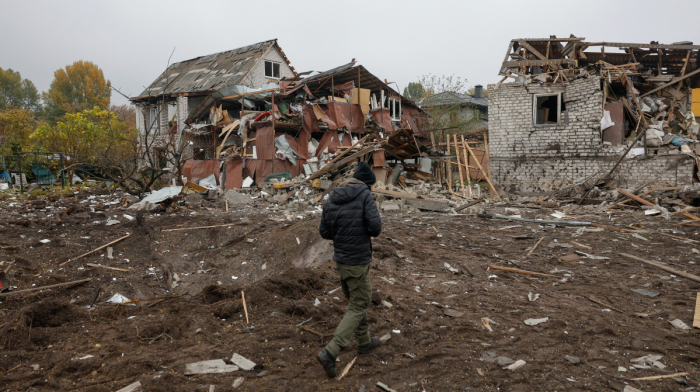
Odesa residents remained without power for a third straight day on Monday (15 December) after a Russian missile and drone strike crippled the power grid on Saturday (13 December).
However, power was restored to almost all critical infrastructure in the port city and the wider region over the past day, local power operator DTEK said. It meant around 185,000 people in the region have had their electricity restored. But many households remain without it.
Police stepped up patrols across the city to maintain order during the outage as repair crews worked to restore power.
President Volodymyr Zelenskyy said on Saturday that Russia had attacked Ukraine with more than 450 drones and 30 missiles.
Around 300 aerial targets of various types were launched at the Odesa region over the weekend, the local governor Oleh Kiper said on Sunday.
The attack left southern regions without electricity, water and heating.
Millions have been facing prolonged blackouts as winter sets in, after a wave of Russian drone and missile attacks targeted Ukraine’s energy infrastructure. According to analysts and officials, the move has pushed the country’s electricity network to the edge of collapse.
Since October, Moscow has carried out a sustained campaign against power plants, substations, and transmission lines, triggering widespread shortages and threatening to split the country’s grid in two. Most electricity is currently produced in western Ukraine, leaving the east highly vulnerable to blackouts if transmission systems fail.
“We are, if not at the brink, then very close to it,” said a senior European diplomat familiar with the situation.
Experts note that predicting the full impact of the attacks is difficult, as it depends on which facilities are targeted and whether Ukraine can repair them quickly.
Kyiv residents are already experiencing up to 16 hours of power cuts daily, with businesses relying heavily on diesel generators. The repeated strikes have also weakened Ukraine’s limited air defence capabilities, increasing the grid’s vulnerability.
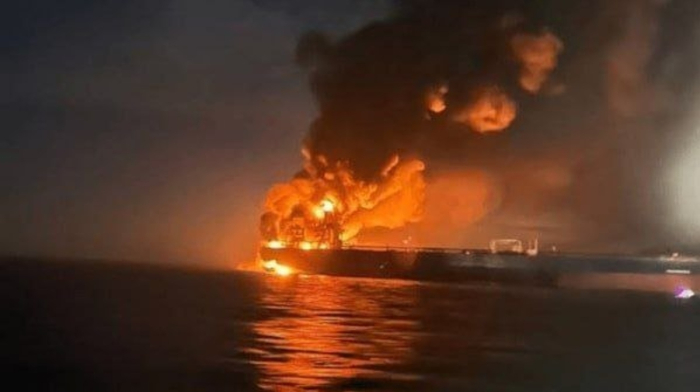
Officials say one potential solution could be an energy ceasefire, in which Russia would halt attacks on Ukrainian energy infrastructure while Kyiv stops targeting Russian oil and gas facilities. Last week, Ukrainian forces struck and shut down a Russian oil platform in the Caspian Sea, highlighting Kyiv’s ability to retaliate.
Moscow, however, has rejected the proposal, with Kremlin spokesman Dmitry Peskov saying Russia seeks “peace, not a ceasefire.”
“For weeks now, I’ve been publicly calling to offer Russians a negotiated energy truce,” said Ukrainian lawmaker Victoria Gryb.
“It could represent a vital first step toward genuine peace and make winter prospects less dire,” Gryb added.
President Volodymyr Zelenskyy echoed her call, stating he is ready for such a ceasefire, though implementation would depend on U.S. support and diplomatic negotiations.
Ukrainian Deputy Energy Minister Mykola Kolisnyk said that in November alone, Russia launched nearly 5,000 drones and missiles, more than double the monthly rate earlier this year. Hundreds of these targeted power plants, transmission grids, and gas infrastructure, often focusing on specific regions.
Maxim Timchenko, CEO of Ukraine’s largest private energy company DTEK, said the repeated strikes have caused “significant losses” to generation capacity. Authorities are now seeking replacement equipment, including transformers and gas compressors, from across Europe to maintain supply.
Valerii Osadchuk, head of communications at grid operator Ukrenergo, said attacks were increasingly strategic, aiming to isolate regions and disrupt electricity delivery across the country. From October to December, eight massive missile and drone strikes targeted the energy sector, while smaller, targeted attacks occurred almost daily.
Despite these challenges, engineers say they have managed to restore power quickly after previous blackouts.
“The situation could be much worse if not for the engineering efforts of Ukrenergo,” said Mykhailo Gonchar, President of the Center for Global Studies Strategy XXI.
However, he added that, “Power supply will remain unstable throughout the winter and even spring."
For ordinary Ukrainians, life continues under blackout conditions. Tetiana Palienko, 43, described holding a St. Nicholas Day party for her daughter by flashlight, with power returning just in time for celebrations.
“It was a real miracle,” she said.
Others are feeling the strain. Nineteen-year-old Karolina Machula said repeated blackouts make daily life exhausting.
“It’s psychologically damaging: You laugh in order not to cry. Our fridge short-circuited because it’s constantly being turned on and off. Everything spoils.”
Despite the hardships, residents say they remain determined to endure the winter without compromising their stance against Russia.
“I don’t want to leave the country at all. Never in my life. But Ukrainians are just surviving this year,” Machula said.











What is your opinion on this topic?
Leave the first comment