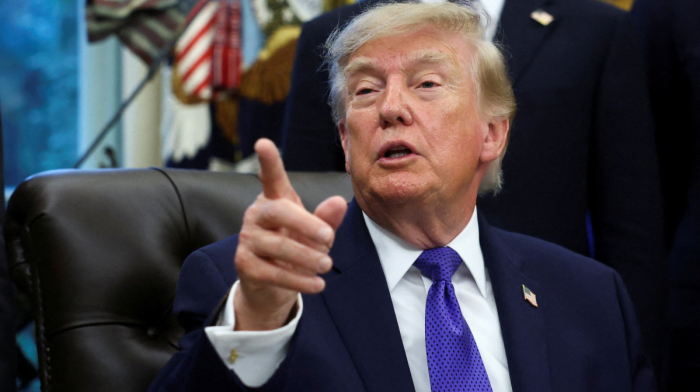
Israeli Prime Minister Benjamin Netanyahu has announced that he will meet U.S. President Donald Trump later this month, saying discussions will focus on the second phase of U.S. President Donald Trump’s Gaza plan, regional peace prospects and the future governance of the Strip.
Speaking at a joint press conference in Jerusalem alongside German Chancellor Friedrich Merz on Sunday (7 December), Netanyahu said the first phase of the plan was almost completed, noting that the return of the final hostage’s body would mark its conclusion. He stressed that the upcoming phase would be more challenging.
The prime minister's office in November said that Trump had invited Netanyahu to the White House "in the near future", although a date for the visit has not yet been made public.
Netanyahu said that he would discuss with Trump how to bring an end to Hamas rule in Gaza.
A ceasefire between Israel and Hamas is entering its second month, although both sides have repeatedly accused each other of violating the ceasefire agreement.
Netanyahu said that it was important to ensure Hamas not only upholds the ceasefire but also follows through on "their commitment" to the plan to disarm and for Gaza to be demilitarised.
Israel retained control of 53% of Gaza under the first phase of Trump's plan, which involved the release of hostages held by Hamas in Gaza and of Palestinians detained by Israel. The final hostage remains to be handed over are those of an Israeli police officer killed on 7 October, 2023.
"We'll get him out," Netanyahu said.
Netanyahu said that he would also discuss with Trump "opportunities for peace", an apparent reference to U.S. efforts for Israel to establish formal ties with Arab and Muslim states.
"We believe there's a path to advance a broader peace with the Arab states, and a path also to establish a workable peace with our Palestinian neighbours," Netanyahu said, asserting Israel would always insist on security control of the West Bank.
Trump has said he promised Muslim leaders that Israel would not annex the occupied West Bank, where Netanyahu's government is backing the development of Jewish settlements.
The "question of political annexation" of the West Bank remains a subject of discussion, Netanyahu said.
Chancellor Merz reiterated Germany’s continued diplomatic support for peace efforts and underlined that Hamas could not be allowed to return to power in Gaza.
He also said that Berlin does not support any moves by Israel towards annexation in the West Bank.
Responding to a question at the end of the briefing, Netanyahu dismissed the possibility of stepping away from political life if granted a pardon, replying simply, “No.”
Merz said that Germany was willing to help rebuild Gaza but would wait for Netanyahu's meeting with Trump, and for clarity on what Washington was prepared to do, before Berlin decides what it would contribute but that phase two "must come now".
The next stage of talks brokered under Trump’s plan is expected to include the establishment of an interim technocratic administration in Gaza, backed by an international security presence and aimed at stabilising the territory.
Although violence has eased since the ceasefire came into force, sporadic incidents continue. Under the exchange agreement, Hamas returned 20 living hostages and the bodies of 27 others in return for the release of around 2,000 Palestinian detainees. One hostage’s body remains in Gaza.












What is your opinion on this topic?
Leave the first comment