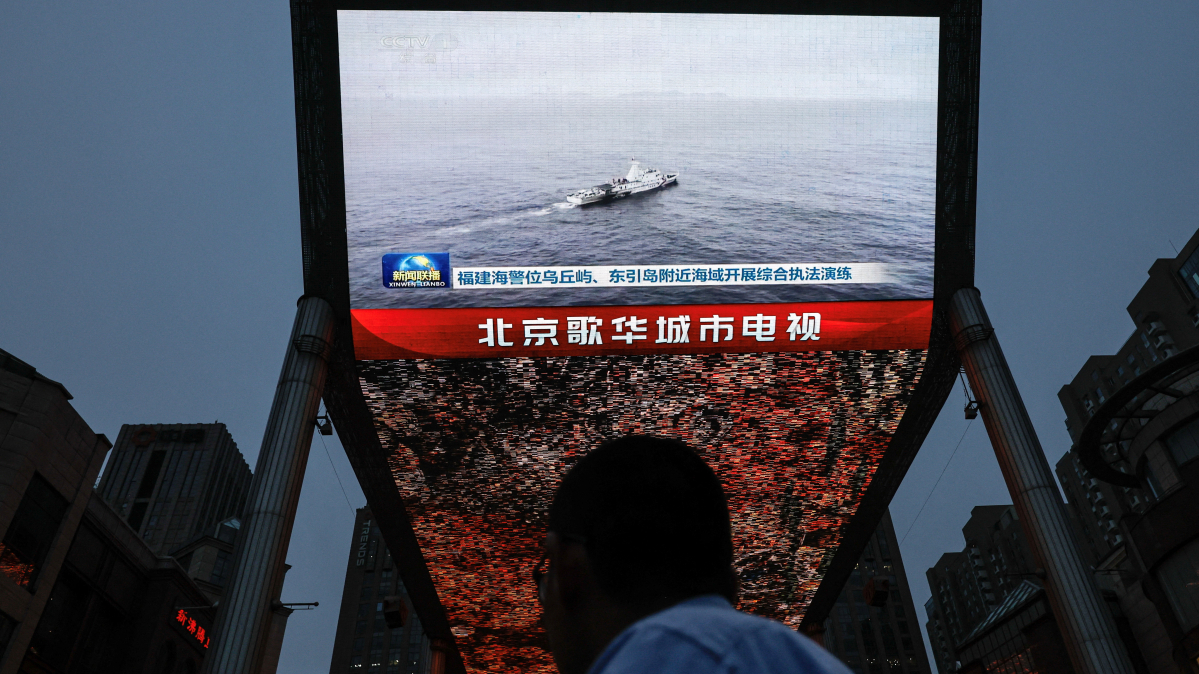
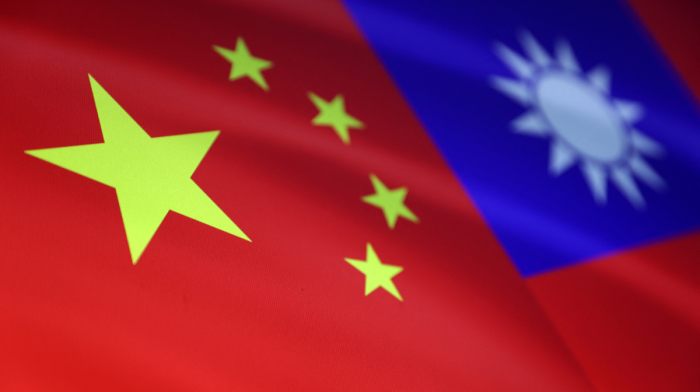
A record-breaking flotilla of Chinese warships and coast guard vessels has surged into strategic waterways across East Asia this week, triggering high-level alarms in Taipei and Tokyo.
The surge in activity follows an exclusive report by Reuters on Thursday, which revealed that China had mobilised a vast fleet exceeding 100 vessels at its peak, comprising both People’s Liberation Army Navy (PLAN) warships and militarised coast guard cutters.
Speaking to reporters in Taipei, Taiwan presidential spokesperson Karen Kuo confirmed that the Chinese manoeuvres were not merely focused on the Taiwan Strait, a frequent flashpoint.
Instead, the operation stretches from the Yellow Sea in the north, past the disputed Senkaku Islands in the East China Sea, and deep into the South China Sea and the western Pacific.
"This indeed poses a threat and impact to the Indo-Pacific and the whole region," Kuo stated. "We also especially call on China to live up to its responsibilities as a major power and to exercise restraint in its actions."
The scale of the deployment suggests a test of China’s ability to control the "First Island Chain"—the string of archipelagos stretching from Japan to the Philippines that strategists view as a barrier to Chinese power projection.
Kuo noted that Taiwan President Lai Ching-te had instructed security forces to maintain full situational awareness.
Taiwan, a self-governing democracy claimed by Beijing, intends to maintain close cooperation with unspecified "friendly partners"—a likely reference to the United States and its regional allies—to safeguard stability in the Indo-Pacific.
Tokyo’s watchful eye
The sheer volume of vessels has rattled nerves in Japan, particularly regarding the Senkaku Islands (known as the Diaoyu Islands in China), which are administered by Tokyo but claimed by Beijing.
In Tokyo, Defence Minister Shinjiro Koizumi declined to comment on the specific operational details but confirmed that Japan was monitoring the situation with "great attention."
"China has been expanding and stepping up its military activities in the areas surrounding Japan, and we make a constant effort to gather and analyse information on Chinese military movements," Koizumi told reporters.
"In any event, the government will continue to monitor developments around Japan with deep concern and will make every effort to ensure thorough information gathering and surveillance."
‘Grey Zone’ Tactics
While China’s Ministry of National Defence has remained silent, Foreign Ministry spokesperson Lin Jian defended the manoeuvres.
Speaking in Beijing, Lin insisted that the navy and coast guard activities in "relevant maritime areas" adhered strictly to domestic and international law.
"There is no need for any party to overreact, overinterpret, or engage in baseless speculation," he said.
Diplomatic Deep Freeze
The timing of the drills is significant. While November and December are traditionally busy months for Chinese military exercises, security sources indicate these operations far exceed the mass naval deployment seen in December last year.
The escalation comes amidst a deepening diplomatic freeze. Relations between China and Japan have deteriorated following comments last month by Japanese Prime Minister.
Sanae Takaichi had stated stated that a hypothetical Chinese attack on Taiwan could trigger a military response from Tokyo—a departure from Japan's traditional diplomatic ambiguity.
Simultaneously, tensions across the Taiwan Strait have spiked following President Lai Ching-te’s announcement of an additional $40 billion in defence spending.
The investment is designed to bolster the island's asymmetric defence capabilities against China, which continues to view Taiwan as its own territory despite the strong rejection of such claims by the island's government and people.












What is your opinion on this topic?
Leave the first comment