South Korea aims to deepen cooperation with the United States, stabilise supply chains with China, and diversify its trading partners to navigate global challenges, its top trade envoy said as the country hosts Asia-Pacific leaders for a trade forum.
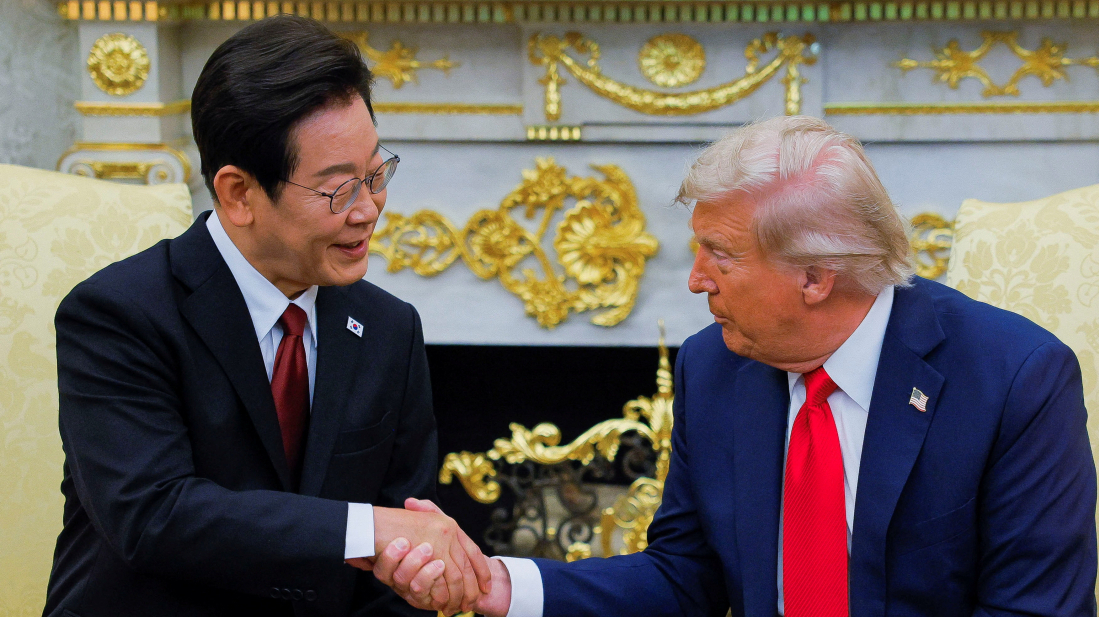
Minister for Trade Yeo Han-koo said it was still uncertain if South Korea and the United States could finalise a trade deal when U.S. President Donald Trump visits on Wednesday.
"What matters most, however, is not the timing of the agreement but achieving a mutually beneficial deal that best serves our national interest," Yeo told Reuters in response to written questions.
South Korea's political and economic high-wire act is on full display this week as President Lee Jae Myung hosts both Trump and Chinese President Xi Jinping, as well as leaders from a number of other Pacific Rim nations for the annual summit of the Asia-Pacific Economic Cooperation grouping.
Seoul has faced pressure from the Trump administration over trade imbalances and is seeking to avoid heavy tariffs by promising billions of dollars of investment.
South Korea, a close U.S. military ally and major exporter to the United States, does not have the leverage that China does, said Baizhu Chen, an economics professor at the University of Southern California.
"Korea is a much smaller economy, and its security heavily depends on the U.S. Korea can only expect to push for the best result within the scope given," he said.
South Korea has also been squeezed by China's export controls, and some South Korean shipbuilders were recently sanctioned by Beijing for cooperating with the United States, amid a trade war between its two biggest trading partners.
"It is true that heightened U.S.–China tensions have created additional uncertainty that makes global businesses attentive to the possible outcome coming out of APEC this week," Yeo said.
"In a way, such circumstances make dialogue and cooperation within multilateral frameworks like APEC all the more crucial and timely."
APEC follows a Southeast Asia summit last week in Malaysia, where China pushed for multilateralism, as Trump's tariffs overshadowed the meeting.
Through tariff negotiations, South Korea will seek to strengthen cooperation with the U.S. in various sectors, such as semiconductors, batteries, biotechnology, shipbuilding and nuclear energy, Yeo said.
The trade-reliant economy grew in the third quarter at the strongest pace in a year-and-a-half, as exports remained resilient despite stalled trade talks with Washington.
South Korea's exports have been mostly led by strong technology demand this year, while a hit from high U.S. tariffs on autos was also offset by growing car sales to Europe and emerging markets. Exports to Southeast Asia have also been a boost amid subdued momentum in U.S. and China-bound shipments.
With China, Seoul will pursue multi-layered communication to continue cooperation to stabilise supply chains, Yeo said.
"It is clear that we must diversify our trading partners to reduce dependence on any single country and open up new opportunities," Yeo said, as he vowed to expand networks with emerging economies across the "Global South", while maintaining stable and strategic relations with the U.S. and China.
Yeo, who last week signed a trade pact with Malaysia at the Association of Southeast Asia Nations summit in Kuala Lumpur, said South Korea will also pursue negotiations with Thailand and deepen cooperation with the region on digital transformation, supply chain resilience and climate change.
South Korea will also initiate talks with countries in South Asia, such as Bangladesh and Pakistan, for trade agreements, Yeo said.











What is your opinion on this topic?
Leave the first comment