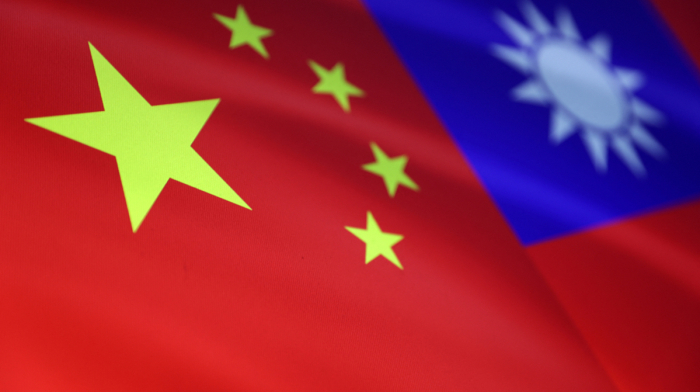
China outlines economic priorities and growth plans at National People’s Congress
China has outlined its main economic and policy priorities for the coming year in its annual government work repor...
Moscow says it will not seize European assets but warns it could reconsider if the European Union moves to confiscate frozen Russian sovereign funds.
Russia’s Deputy Finance Minister Alexei Moiseev said on Wednesday that Moscow has no plans to seize European assets, including companies and banks, unless the European Union decides to confiscate frozen Russian sovereign holdings.
He noted that EU leaders have so far avoided outright confiscation while debating how to use around $250 billion in frozen Russian assets to finance Ukraine’s defence and reconstruction. Legal and financial concerns raised by the European Central Bank and several member states have kept the proposal from advancing.
Moiseev’s comments followed speculation linking a new presidential decree on the accelerated privatisation of state assets to possible retaliatory steps. The decree, signed by President Vladimir Putin, appoints the state-controlled PSB bank as the government’s agent for property sales and shortens valuation and registration procedures.
Although the decree cites “unfriendly” actions by Western countries, Moiseev insisted it is unrelated to any plans to seize European property. He stressed that private European companies still operating in Russia remain unaffected.
Since 2022, Moscow has taken control of assets worth around $50 billion, mainly from Western firms that exited the country, marking the largest wave of property redistribution since the 1990s. Authorities say those assets will be sold swiftly to new private owners to maintain economic stability.

In an exclusive interview with AnewZ, Iran’s Deputy Foreign Minister Kazem Gharibabadi said the Islamic Republic is "not targeting neighbouring countries," amid reports of drone strikes on Nakhchivan International Airport on Thursday (5 March).
Tensions across the Middle East continue to escalate following coordinated U.S. and Israeli strikes on Iran and Tehran’s retaliatory attacks in the Gulf region, with military operations and regional security developments continuing to unfold.
A torpedo from a U.S. submarine sunk an Iranian warship off the coast of Sri Lanka, U.S. Secretary of Defense, Pete Hegseth told reporters as the Iranian conflcit entered its fifth day on Wednesday.
Türkiye has suspended day-trip crossings at its Kapıköy border and two others with Iran as regional tensions escalate following strikes involving the United States and Israel on Tehran. AnewZ's Alisultan Sultanzade was on the ground at the crossing before the restrictions came into force.
Türkiye’s President Recep Tayyip Erdoğan has told Pakistan’s Prime Minister Shehbaz Sharif that Ankara is ready to help reinforce the ceasefire between Pakistan and Afghanistan, as clashes between the two neighbours continue for a sixth consecutive day.
China has outlined its main economic and policy priorities for the coming year in its annual government work report, a key document that sets out the country’s development plans.
A Russian drone damaged a civilian Panama-flagged vessel that was transporting corn near the Ukrainian port of Chornomorsk in the Black Sea Odesa region, the Ukrainian Sea Ports Authority said late on Wednesday.
Start your day informed with AnewZ Morning Brief. Here are the top news stories for the 5th of February, covering the latest developments you need to know.
Australia and Canada said on Thursday they had signed new agreements on critical minerals as Canadian Prime Minister Mark Carney made a landmark address to the Australian parliament, a sign of the developing bond between the "middle powers".
More than 200 people died on Tuesday in a landslide triggered by heavy rains at the Rubaya coltan mine in eastern Democratic Republic of Congo, the country's mines ministry said on Wednesday.
You can download the AnewZ application from Play Store and the App Store.
What is your opinion on this topic?
Leave the first comment