Kazakhstan vows to fast-track AZAL crash investigation amid rising diplomatic tensions
Kazakhstan has vowed to speed up its investigation into the Azerbaijan Airlines (AZAL) crash near Aktau, as mounti...
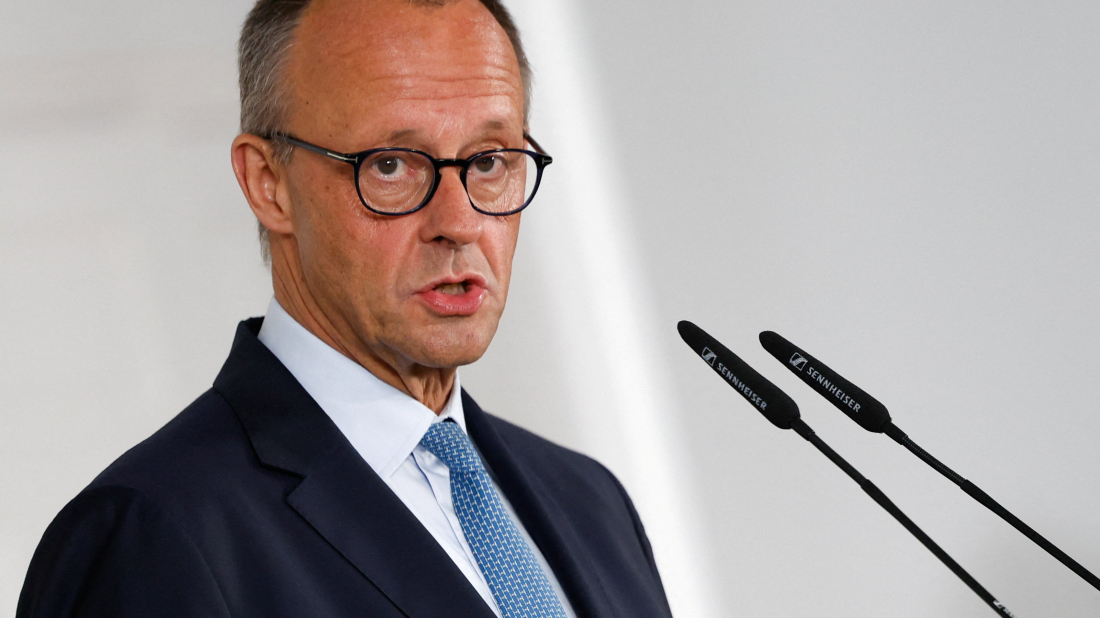
Germany will decide whether to support sanctions against Israel ahead of the European Union (EU) meeting in Copenhagen in October, Chancellor Friedrich Merz said on Thursday during a visit to Madrid.
Speaking at a joint press conference with Spanish Prime Minister Pedro Sánchez, Merz said Israel’s operations in Gaza were not proportional to its stated objectives, but Germany did not regard them as acts of genocide. He added that recognising Palestinian statehood was not currently on Germany’s agenda.
Merz’s comments indicate that while Germany is open to criticising Israel, it remains hesitant to take punitive measures against the country.
The European Commission on Wednesday proposed suspending a trade agreement covering €5.8 billion of Israeli exports due to the Gaza conflict. However, the measure currently lacks sufficient support among EU member states.
Merz stated: “We will revisit these issues at the federal cabinet level next week and aim to present Germany’s final position at the informal Council meeting in Copenhagen on 1 October.”
Germany maintains it has a special responsibility towards Israel, though the death of nearly 64,000 Palestinians in the Gaza conflict has caused concern across Europe.
Meanwhile, Israeli tanks are advancing in two key areas leading to Gaza City’s centre, and internet and phone lines have been cut, signalling a likely escalation of ground operations.

The Kremlin is utilising the recent United States and Israeli military strikes on Iran to validate its ongoing war in Ukraine. Russian officials are pointing to the escalation in the Middle East as evidence that Western nations do not adhere to international rules.
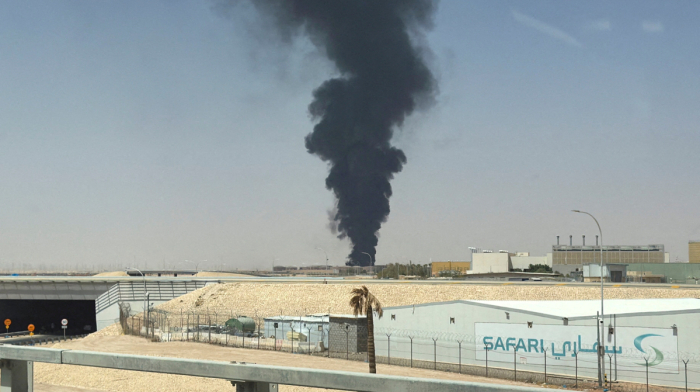
Saudi Arabia’s state oil giant Saudi Aramco closed its Ras Tanura refinery on Monday following an Iranian drone strike, an industry source told Reuters as Tehran retaliated across the Gulf after a U.S.-Israeli attack on Iranian targets over the weekend.
The Middle East crisis intensifies after the deadly attack on the compound of the Supreme Leader of Iran Ali Khamenei on Saturday that killed him, other family members and senior figures. Iran has launched retaliatory strikes on U.S. targets in the region.
U.S. President Donald Trump said the U.S. military has enough stockpiled weapons to fight wars "forever"; in a social media post late on Monday. The remarks came hours before conflict in Iran and the Middle East entered its fourth day.
Türkiye raised its security level for Turkish-flagged vessels in the Strait of Hormuz to Level 3 on Sunday (2 March). The development follows Iranian restrictions on shipping after U.S. and Israeli strikes and confirmation of Supreme Leader Ali Khamenei’s death.
Strikes across the Middle East are intensifying, fuelling travel disruption, driving up global energy prices and forcing diplomatic missions to shut their doors as tensions continue to rise.
U.S. President Donald Trump has said the United States has a “virtually unlimited supply” of munitions and is capable of sustaining military action indefinitely, as the conflict with Iran entered its fourth day.
The United Nations has called for an investigation into a deadly attack on a girls’ primary school in Iran, which Iranian officials say has killed more than 100 children. The U.S. has said its forces “would not” deliberately target a school.
U.S. first lady, Melania Trump chaired a UN Security Council meeting on children and education in conflict on Monday (2 March), a move criticised by Iran as hypocritical following U.S. and Israeli strikes that triggered a UN warning about risks to children.
Start your day informed with AnewZ Morning Brief. Here are the top news stories for the 3rd of February, covering the latest developments you need to know.
You can download the AnewZ application from Play Store and the App Store.
What is your opinion on this topic?
Leave the first comment