U.S. skiing great Lindsey Vonn underwent surgery in an Italian hospital on Sunday after her attempt to win Olympic downhill gold ended in a violent crash just seconds into the race at the Milano Cortina Winter Games.
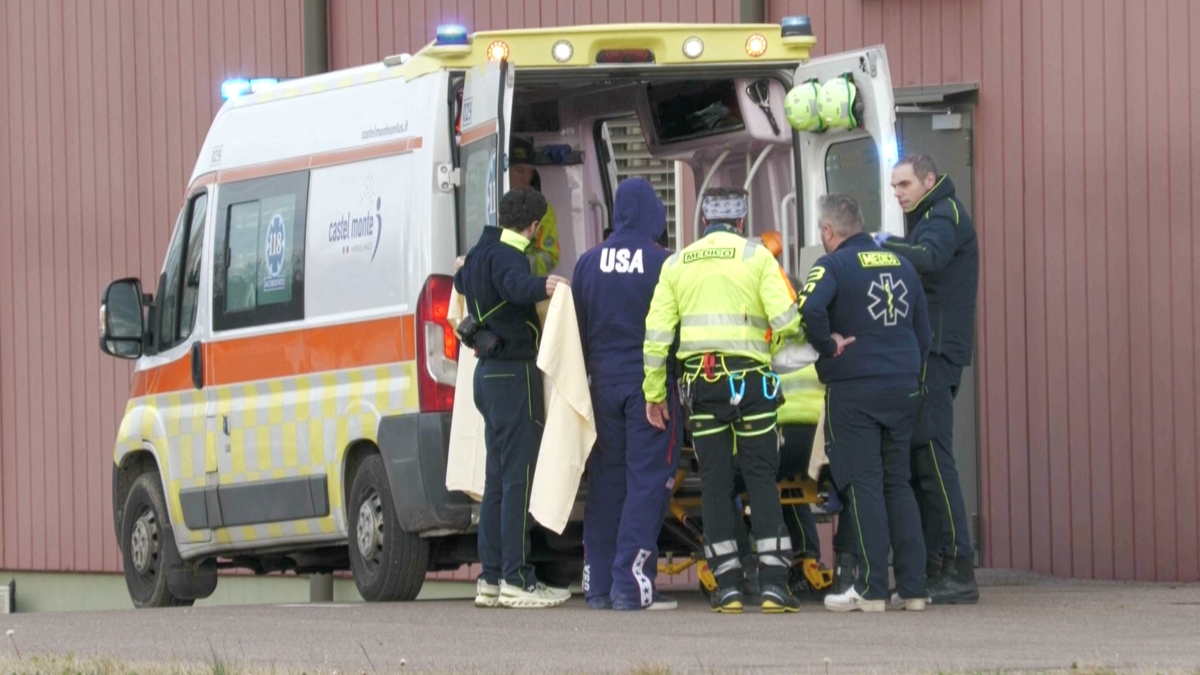
The 41-year-old was treated at Ca’ Foncello Hospital in the northern city of Treviso after being airlifted from the Olimpia delle Tofane piste in Cortina d’Ampezzo, where she fell at high speed around 13 seconds into her run.
Hospital officials said Vonn underwent orthopaedic surgery later in the afternoon to stabilise a fracture in her left leg. A source familiar with her condition told Reuters she was being monitored in an intensive care unit to ensure privacy, stressing there was no threat to her life.
Vonn had been flown by helicopter to Treviso after first receiving treatment at a hospital in Cortina. She was secured in a medical stretcher and winched off the slope under clear skies as the Olympic race was temporarily halted.
Her comeback attempt, despite racing with a ruptured knee ligament, had dominated the early days of the Games. The dramatic fall brought her unlikely Olympic bid to an abrupt and painful end.
Rescue operation
Members of the helicopter rescue crew described the evacuation as technically demanding but smoothly executed.
Winch technician Annalisa Raffin said the team was following the race when the emergency call came in.
“As soon as we were activated, we left immediately, the pilot, myself, the technician and the doctor, and headed to the target area,” she said.
Raffin explained that the helicopter had to remain at significant height while a prolonged winching manoeuvre was carried out, requiring precise coordination.
“It’s all about coordinating movements and the helicopter’s positioning to reach the target as accurately as possible,” she said, adding that Vonn was fully covered during extraction to protect her from wind and cold generated by the rotors.
Pilot Roberto Cit said weather conditions on Sunday were ideal, contrasting with disrupted training sessions the previous day.
“It was a truly special day,” Cit said. “The conditions were optimal, and the flight to Treviso went perfectly.”
Both Raffin and Cit are members of Avincis, Europe’s largest emergency air service provider, which is supporting rescue operations during the Winter Olympics.
Reaction and broader context
An official from the International Ski and Snowboard Federation (FIS) described the crash as part of the inherent risks of elite alpine racing.
“I think it was a mistake of the racer, as what happens most of the time,” said FIS alpine ski chief race director Peter Gerdol. “This happens in our sport. It’s an Olympic medal race, so it has to be challenging.”
Vonn was not the only athlete to crash during the event. Andorra’s Cande Moreno was also airlifted to hospital, while Austria’s Nina Ortlieb managed to stand up and leave the course unassisted.
Asked whether the U.S. team had taken a risk in allowing Vonn to compete after injuring her knee in Crans-Montana on January 30, Gerdol said such decisions rest with national ski federations and Olympic committees.
He cited the case of Norwegian skier Marte Monsen, who travelled to Italy hoping to compete but was ultimately withdrawn after medical evaluations determined she had not fully recovered from a concussion and knee injury.
For Vonn, a former Olympic downhill champion and four-time World Cup overall winner, the crash marked a dramatic end to one of the most closely watched comeback attempts of the Games.




















What is your opinion on this topic?
Leave the first comment