live Iran says no progress on reviving interim peace deal with U.S.
Iran and the United States remain at loggerheads over efforts to agree a permanent end to the war in the Gulf, according to a senior Iranian source wh...
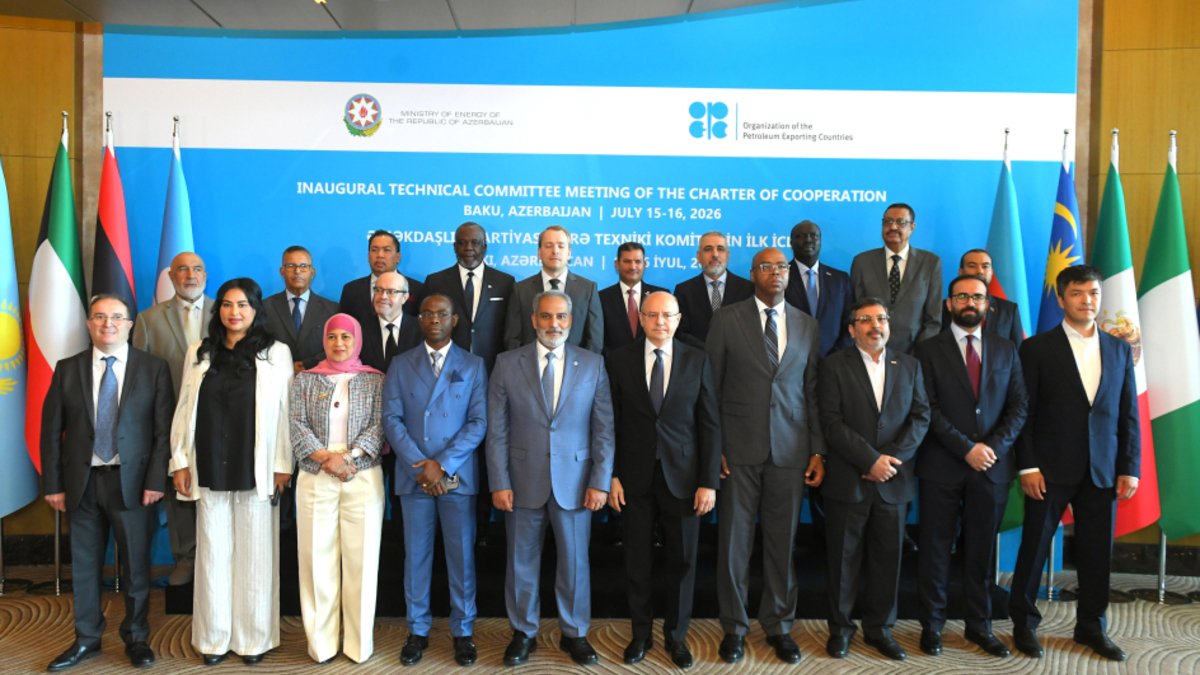
Officials from more than 20 oil-producing countries have agreed on a roadmap to strengthen international cooperation in the oil industry during a meeting in Azerbaijan. The plan aims to deepen collaboration across key areas, including markets, technology, investment and regulation.
Delegates from OPEC members and other oil-producing nations established a work plan for the Charter of Cooperation (CoC), a platform adopted by many oil-producing countries in 2019 to advance their shared interests.
The blueprint covers market fundamentals, energy dialogue, technology, innovation, investment, policy and regulation, as well as industrial standards.
OPEC Secretary General Haitham Al Ghais, who chaired Wednesday's meeting in Baku, said the participating countries had reaffirmed their commitment to strengthening cooperation.

“The participating countries’ commitment to further unlocking the full potential of the CoC has once again been clearly evident today," he said.
The meeting built on the outcomes of the 40th OPEC and non-OPEC Ministerial Meeting, held in November 2025, which approved the CoC framework and tasked the OPEC Secretary General with developing a work plan and translating it into programmes to achieve the charter's objectives.
The next Technical Committee meeting is scheduled to take place at the end of September.
Azerbaijan's Energy Minister Parviz Shahbazov, who also chaired the event, said hosting the meeting reaffirmed Baku's role in helping to maintain stability in international oil markets.
“Holding the inaugural meeting of the Technical Committee of the Charter of Cooperation in Baku - the cradle of the modern oil industry - is a clear recognition of Azerbaijan’s role in global energy cooperation, as well as the trust and reputation it has earned as a reliable and responsible partner within the OPEC+ framework.
“We are confident that this meeting will make a meaningful contribution to further strengthening dialogue and mutual trust within OPEC+, preserving stability and predictability in the global oil market, and advancing long-term cooperation among participating countries.”

One hundred years after the First World War and more than eighty years after the devastation of the Second World War gave rise to the United Nations, humanity once again finds itself living in an age of permanent crisis.
Iran said it was nearing a final pact with Oman defining new shipping lanes between them through the Strait of Hormuz but repeated that the U.S. must meet other conditions.
U.S. President Donald Trump has called for Iran to pay compensation for decades of deaths and damage, adding a new demand to peace talks as Tehran seeks compensation and sanctions relief before reopening the Strait of Hormuz.
Iran and the United States remain at loggerheads over efforts to agree a permanent end to the war in the Gulf, according to a senior Iranian source who said there had been no progress in talks to revive the interim deal agreed in June and define a timeframe to implement it.
A criminal court in Damascus has sentenced former Syrian President Bashar al-Assad to death in absentia for premeditated murder, torture, arbitrary detention and crimes against humanity, according to Syria’s state news agency SANA.
Central Asia’s economy has surpassed $543 billion, driven by Kazakhstan’s economic weight, strong exports and foreign investment, while growing trade across Asia points to an increasingly connected region.
The United Nations refugee agency is planning a settlement and carpet-weaving workshop for Afghan returnees in Kabul as the country grapples with large-scale returns and growing pressure on housing, jobs and basic services.
Iran will soon join the New Development Bank (NDB), the lender established by BRICS nations, Central Bank Governor Abdolnaser Hemmati said in a state media report on Wednesday ahead of a BRICS finance meeting in India.
Azerbaijan's President Ilham Aliyev has outlined an expanded vision for the Zangezur Corridor, describing it not simply as a transport route connecting mainland Azerbaijan with the Nakhchivan exclave, but as a future platform for energy, telecommunications and wider regional integration.
Iran and Russia are seeking closer cooperation on arms control and Iran’s nuclear programme as the two countries deepen strategic ties amid heightened tensions with the U.S. and Israel.
You can download the AnewZ application from Play Store and the App Store.
What is your opinion on this topic?
Leave the first comment