Central Asia is moving beyond experiments with digital assets as governments begin putting new forms of digital money into practice.
Countries across the region are taking markedly different approaches. Kazakhstan has introduced the digital tenge as a new form of the national currency, Kyrgyzstan has launched a gold-backed stablecoin, while Uzbekistan is preparing to pilot its own central bank digital currency.
The developments come as digital assets take on a growing role in the global financial system. The global cryptocurrency market is worth around $2.3 trillion, with more than 560 million people estimated to own cryptocurrencies.
Digital finance was also a key focus of the inaugural Silk Road Finance & Technology Forum in Tashkent, where financial and technology leaders discussed digital assets, stablecoins and cross-border payments.
Kazakhstan puts digital tenge into circulation
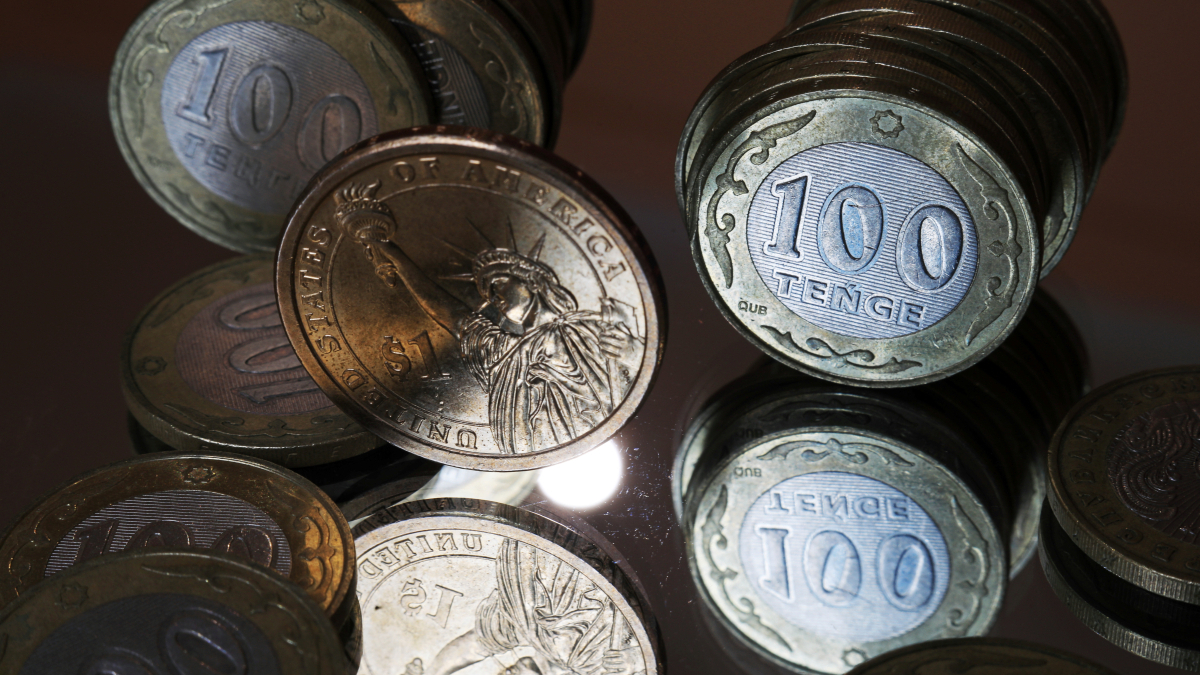
Kazakhstan has moved furthest among the region’s major economies. The country officially introduced the digital tenge on 18 July 2026, making it the third form of the national currency alongside cash and traditional non-cash money.
The digital tenge is issued exclusively by the National Bank of Kazakhstan and carries the same legal status as other forms of the national currency.
Users can access the digital currency through existing mobile banking applications and licensed financial partners. The system also supports programmable payments, allowing funds to be restricted to specific purposes, as well as offline transactions.
The digital tenge has been tested in areas including public procurement, smart contracts and retail payments.
Kyrgyzstan takes a different route
Kyrgyzstan has focused on stablecoins rather than a central bank digital currency. The country has introduced USDKG, a state-endorsed stablecoin pegged one-to-one to the U.S. dollar and backed by physical gold reserves. The initial issue consisted of 50 million tokens.
USDKG is designed for uses including cross-border trade, remittances, treasury management and other digital financial services.
Unlike a central bank digital currency (CBDC), USDKG is not issued by a central bank. It is a state-supervised digital asset backed by gold.
The distinction highlights the different approaches emerging across Central Asia, with governments experimenting with several forms of digital money rather than pursuing a single regional model.
Uzbekistan prepares digital currency pilot
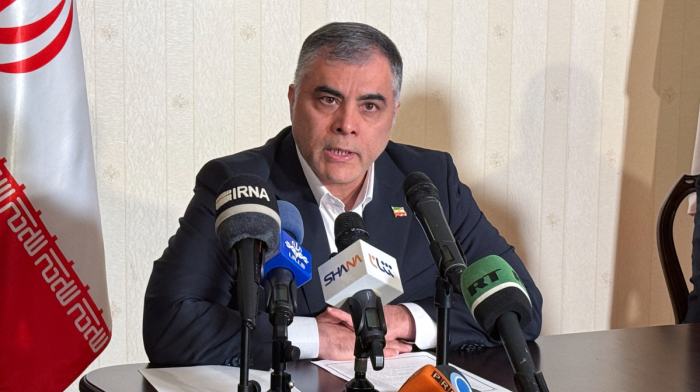
Uzbekistan is at an earlier stage. On 24 August, Central Bank Chairman Timur Ishmetov said the regulator was preparing a pilot project for a central bank digital currency.
Before launching the pilot, the Central Bank will publish a concept paper examining possible use cases, design options, advantages and limitations, and the potential impact on the financial system.
The Central Bank has made clear that Uzbekistan is not yet preparing to put a digital currency into circulation. The immediate goal is to study different models and test how a CBDC could support innovation and the development of the digital economy.
Faster, cheaper cross-border payments
For Central Asia, one of the most significant potential uses of digital currencies is cross-border payments.
The region has substantial remittance flows and growing trade links, but international transfers can still involve multiple currencies, banks and intermediaries.
Speaking to AnewZ, Pavel Khristolyubov, COO of Wallet in Telegram, highlighted the cost and settlement time involved in some international remittance corridors.
“In some countries, you have to wait three, four days to settle the remittance coming from that country, and you have to pay up to 20 per cent of various fees on those transactions,” Khristolyubov said.
He argued that blockchain-based transactions can be significantly faster, taking place in milliseconds and carrying much lower fees.
That could be particularly relevant in Central Asia, where cross-border payments and remittances make up an important part of regional financial flows. Digital currencies and stablecoins could potentially reduce the number of intermediaries involved in some transactions, making transfers faster and cheaper.
Different models, one direction
The developments in Kazakhstan, Kyrgyzstan and Uzbekistan show that Central Asia is not moving towards a single model for digital currency. Instead, countries are pursuing and testing different approaches.
While the models differ, they point towards a broader shift in how money could move across the region. Digital currencies could eventually make cross-border payments more efficient, expand access to financial services and strengthen Central Asia’s links to global financial markets.















What is your opinion on this topic?
Leave the first comment