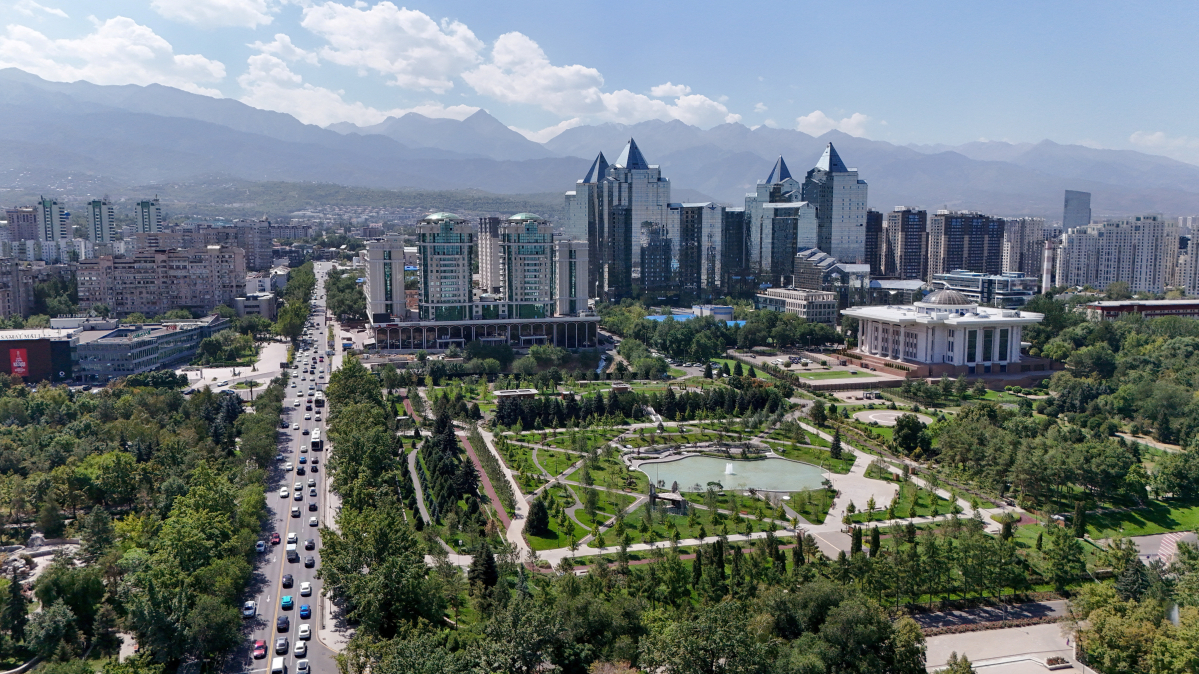
Kazakhstan has received a fresh vote of confidence in its economy after S&P Global Ratings upgraded the country’s credit rating, citing stronger public finances, solid reserves and steady economic growth.
S&P Global Ratings upgraded Kazakhstan’s long-term credit rating from BBB- to BBB and its short-term rating from A-3 to A-2 on 21 August. It also raised the country’s transfer and convertibility assessment to BBB+ and affirmed its national scale rating at kzAAA.
What is S&P Global Ratings?
S&P Global Ratings is a major international credit rating agency headquartered in New York. It assesses the ability of governments, companies and financial institutions to meet their financial obligations, as well as the risk of default on debt.
To issue a rating, the agency uses the following long-term ratings:
AAA – extremely strong capacity to meet financial commitments
AA – very strong capacity
A – strong capacity but more susceptible to adverse conditions
BBB – adequate capacity
BB, B – speculative-grade ratings
CCC, CC, C – increasingly vulnerable or dependent on favourable conditions
D – payment default
For short-term debt, the agency uses ratings including A-1+, A-1, A-2, A-3, B, C and D.
Ratings combine quantitative financial analysis with qualitative assessments. Analysts examine an issuer’s ability and willingness to meet its financial obligations, using criteria tailored to governments, companies, financial institutions and other sectors.
Kazakhstan’s economy records steady growth
Kazakhstan’s GDP grew by 4.1 per cent in the January-June period, despite disruptions to oil exports and production in the first quarter. S&P forecasts growth of 5.1 per cent in 2026, before easing to between 4 and 4.5 per cent from 2027 to 2029.
Kazakhstan is also expected to maintain strong financial reserves. Government liquid assets are forecast to remain at around 21 per cent of GDP over the next four years. Combined external assets held by the National Bank and the government exceed the country’s total external debt, giving authorities greater room to respond to potential external shocks.
Public finances improve
The country’s fiscal position is also improving. The national budget deficit stood at 1.2 per cent of GDP in the first half of the year, putting it on track to meet the government’s full-year target of 2.5 per cent. S&P expects the general government deficit to average between 1.2 and 1.3 per cent of GDP from 2026 to 2029, down significantly from 3.7 per cent in 2025.
Tax revenues rose by 17 per cent year on year in the first half, while VAT receipts jumped by 42 per cent.
“Financial discipline is what international experts like. The country is rationalizing spending and supporting accumulation, protecting the National Fund from being spent down,” political analyst Gaziz Abishev said.
Investment remains high
S&P expects investment to remain high at around 30 per cent of GDP, driven by infrastructure, raw material processing and energy projects. The investment programme is part of Kazakhstan’s efforts to reduce its dependence on natural resources and diversify its economy.
Experts at QZ Economy said the upgrade could strengthen confidence among foreign investors and international financial institutions, potentially lowering financing costs and improving conditions for Kazakh companies working with overseas creditors and investors.
Stable outlook, but challenges remain
The upgrade signals growing confidence in Kazakhstan’s economic position, while also setting a benchmark for further progress.
S&P’s stable outlook indicates that the country’s financial reserves should help it withstand potential external shocks, while continued efforts to strengthen public finances and diversify the economy will remain important.
Read more:

















What is your opinion on this topic?
Leave the first comment