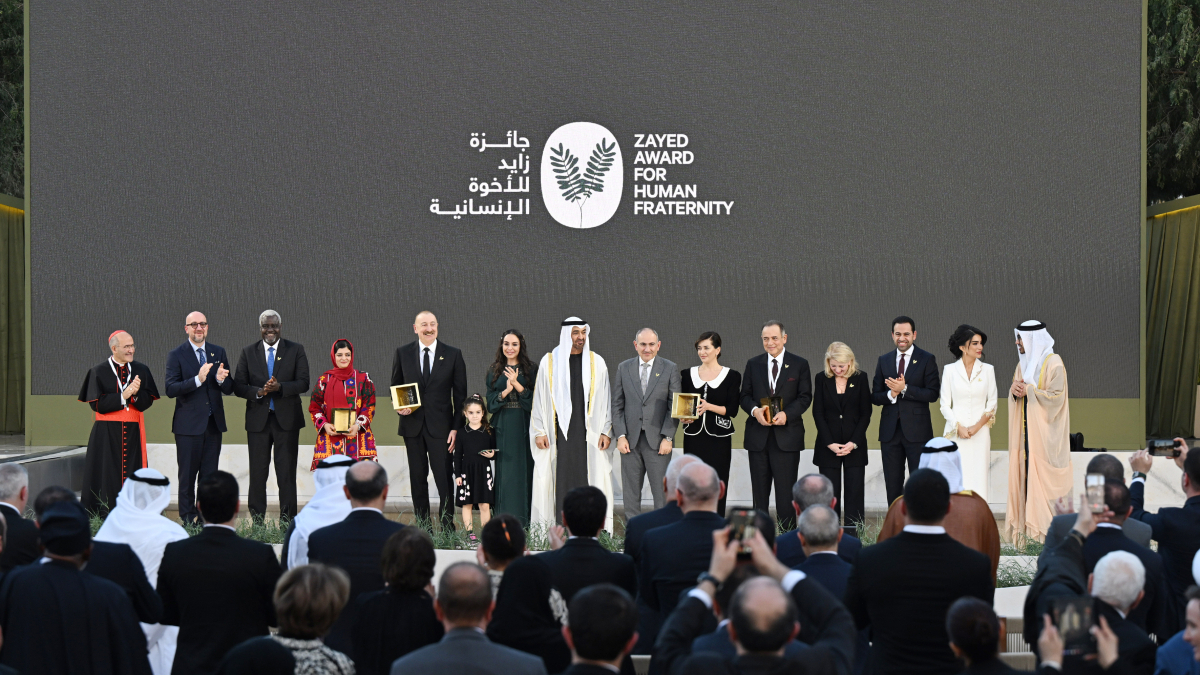
The joint awarding of the Zayed Award for Human Fraternity to Azerbaijani President Ilham Aliyev and Armenian Prime Minister Nikol Pashinyan in Abu Dhabi on 4 February underscores a shared commitment to peace and reconciliation, political analyst Fuad Karimli told AnewZ.
Karimli described the joint recognition as a “symbolic gesture”.
“It reinforces the idea that both countries are willing to move forward. There is political will and domestic populations are also tired of the conflict and want progress,” he said.
He added that the award carries particular significance because it has rarely been presented jointly. “It’s one of the first instances of it being awarded to two people at the same time, especially heads of state who are actively engaged in the peace process,” Karimli noted.
The Zayed Award, named in honour of the late Sheikh Zayed bin Sultan Al Nahyan, founder of the UAE, recognises individuals and organisations for exceptional contributions to peaceful coexistence and humanistic values..
Previous recipients include UN Secretary-General Antonio Guterres, but this is among the first times it has been conferred on leaders jointly navigating an ongoing peace process.
Karimli also emphasised the UAE’s role as a neutral facilitator in the process.
“We see that the UAE is becoming a neutral third party in terms of the conflict between Azerbaijan and Armenia, and acting as an advocate for the peace process,” he said.
“This gesture postulates the leaders and the two countries in the international space as well, signalling that both are committed to moving forward.”
The recognition comes as the two nations continue implementing outcomes from the Washington Peace Summit, including expanding bilateral trade, exporting Azerbaijani oil to Armenia and allowing transit of goods through Azerbaijan.
Karimli added that such symbolic gestures help foster a sense of shared ownership of the peace process among leaders and citizens alike.











What is your opinion on this topic?
Leave the first comment