The German and French finance ministers said on Monday that European powers would not be blackmailed and that there would be a clear and united response to U.S. President Donald Trump's threats of higher tariffs over Greenland.
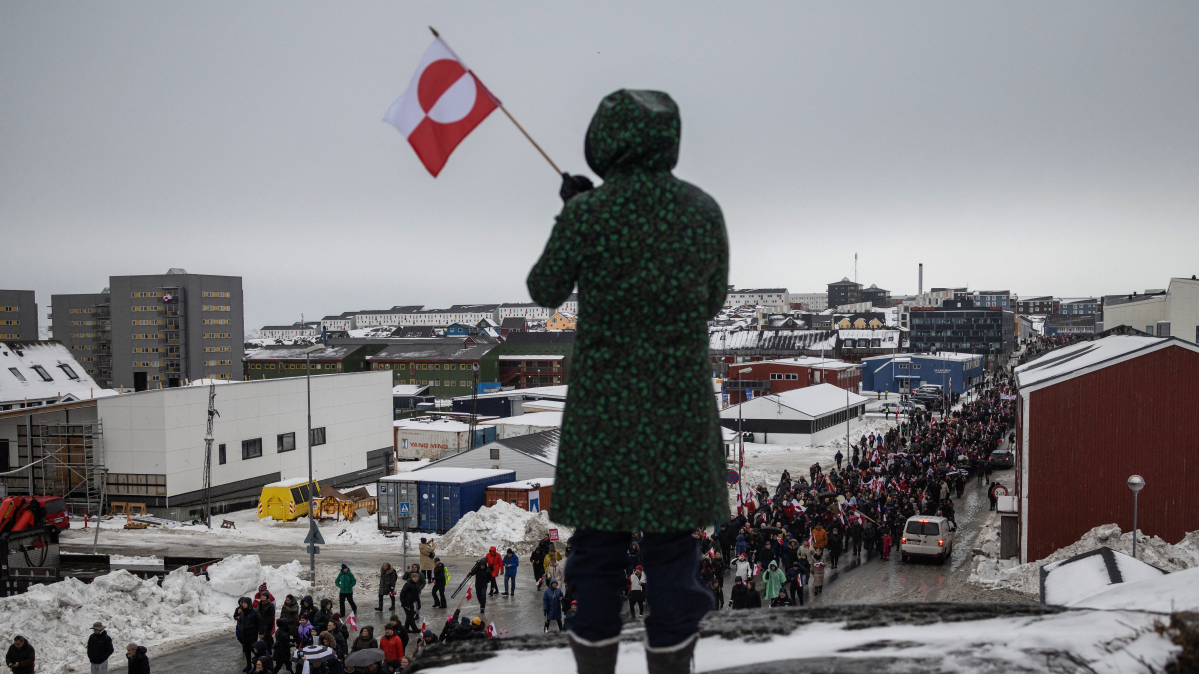
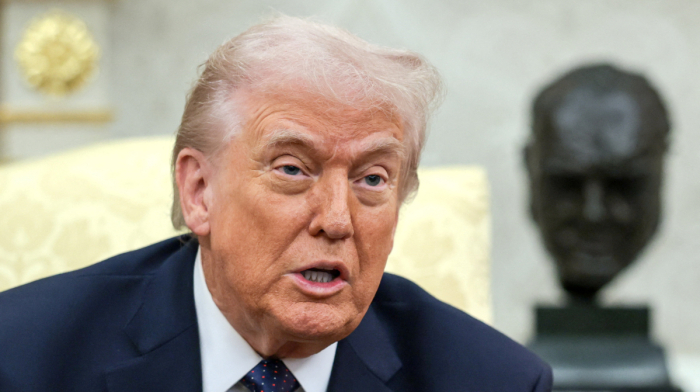
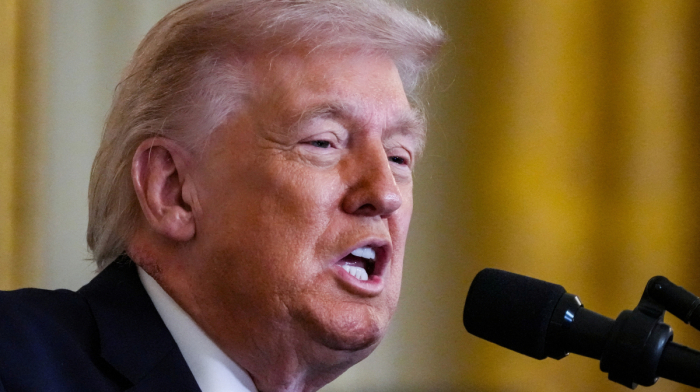
Trump vowed on Saturday (17 January) to implement a wave of increasing tariffs on imports from European allies until the United States is allowed to buy Greenland, intensifying a dispute over the future of Denmark's vast Arctic island.
"Germany and France agree: We will not allow ourselves to be blackmailed," German Finance Minister Lars Klingbeil said at his ministry, where he met with his French counterpart.
"Blackmail between allies of 250 years, blackmail between friends, is obviously unacceptable," French Finance Minister Roland Lescure said at the same event.
European Union leaders are set to discuss options at an emergency summit in Brussels on Thursday (22 January). One option is a package of tariffs on €93 billion ($107.7 billion) of U.S. imports that could automatically kick in on 6 February after a six-month suspension.
"We Europeans must make it clear: The limit has been reached," Klingbeil said. "Our hand is extended but we are not prepared to be blackmailed."
Following an emergency meeting of ambassadors on Sunday in Brussels, the European Union has signalled it is ready to activate dormant trade weapons.
The diplomatic crisis centres on Denmark’s refusal to cede sovereignty over Greenland. The world's largest island has become a strategic focal point due to its vast untapped mineral resources and its pivotal location for controlling Arctic shipping routes, particularly as ice caps melt.
President Trump’s threat targets a specific coalition of northern and western European allies: Denmark, Sweden, France, Germany, the Netherlands, Finland, Norway, and the United Kingdom. These nations have recently deepened military cooperation in the High North, deploying personnel to Greenland to deter external pressure - a move that has reportedly infuriated the White House.
Retaliatory options
According to diplomatic sources, there are two primary retaliatory options are on the table:
Snap-Back Tariffs: The reimposition of duties on €93 billion ($107.7bn) worth of U.S. imports. These tariffs had been suspended to facilitate trade talks but could automatically trigger on 6 February.
The Anti-Coercion Instrument (ACI): A powerful, never-before-used legal mechanism designed specifically for this type of scenario. The ACI allows the EU to restrict access to public tenders, block U.S. investments, and limit trade in digital services - a sector where the U.S. currently enjoys a significant surplus with Europe.
While French President Emmanuel Macron is reportedly pushing for the immediate use of the ACI, other leaders, including Irish Prime Minister Micheál Martin, have urged caution, describing the measure as "premature" while diplomacy is still active.
Showdown at Davos
The crisis is expected to overshadow the World Economic Forum in Davos this week. President Trump is slated to deliver a keynote address on Wednesday, his first appearance at the Swiss resort in six years.
"All options are on the table," an EU diplomat stated. "Talks in Davos with the U.S. will be the first step, followed by the leaders' gathering."
However, the political fallout is already spreading beyond trade. In Germany, senior lawmaker Juergen Hardt suggested to the Bild newspaper that Europe could consider boycotting the upcoming FIFA World Cup, hosted by the U.S., as a "last resort" to bring the American administration "to its senses".
Fractured alliances
The dispute has placed traditional U.S. allies in a precarious position. Italian Prime Minister Giorgia Meloni, who has maintained a close rapport with President Trump, revealed she had spoken to him directly, labelling the tariff threat a "mistake".
Meanwhile, the United Kingdom finds itself in the crossfire. Despite having left the EU, Britain is included in Trump's tariff target list. Culture Secretary Lisa Nandy told Sky News that while the UK’s position on Greenland’s sovereignty is "non-negotiable," London hopes to avoid a "war of words".
The row has effectively frozen progress on trade agreements. The European Parliament is set to suspend work on a "skinny" EU-U.S. trade deal, with key MEP Manfred Weber stating that approval is currently impossible.
Why Greenland matters
While the idea of purchasing Greenland was first floated by Trump during his first term in 2019 to widespread bemusement, the 2026 push is viewed through a darker geopolitical lens.
Washington views the island as critical for North American defence, specifically regarding missile warning systems and monitoring Russian and Chinese activity in the Arctic. However, the attempt to force a sale through economic coercion marks a severe departure from standard diplomatic norms, threatening to unravel the transatlantic alliance.
"Europe will not be blackmailed," Danish Prime Minister Mette Frederiksen affirmed, reflecting a rare moment of absolute unity across the continent.












What is your opinion on this topic?
Leave the first comment